
Who Handles Day-to-Day Maintenance of Rental Buildings?
Clarify who coordinates rental building maintenance, who cleans shared spaces and how owners, managers and service providers divide responsibilities.
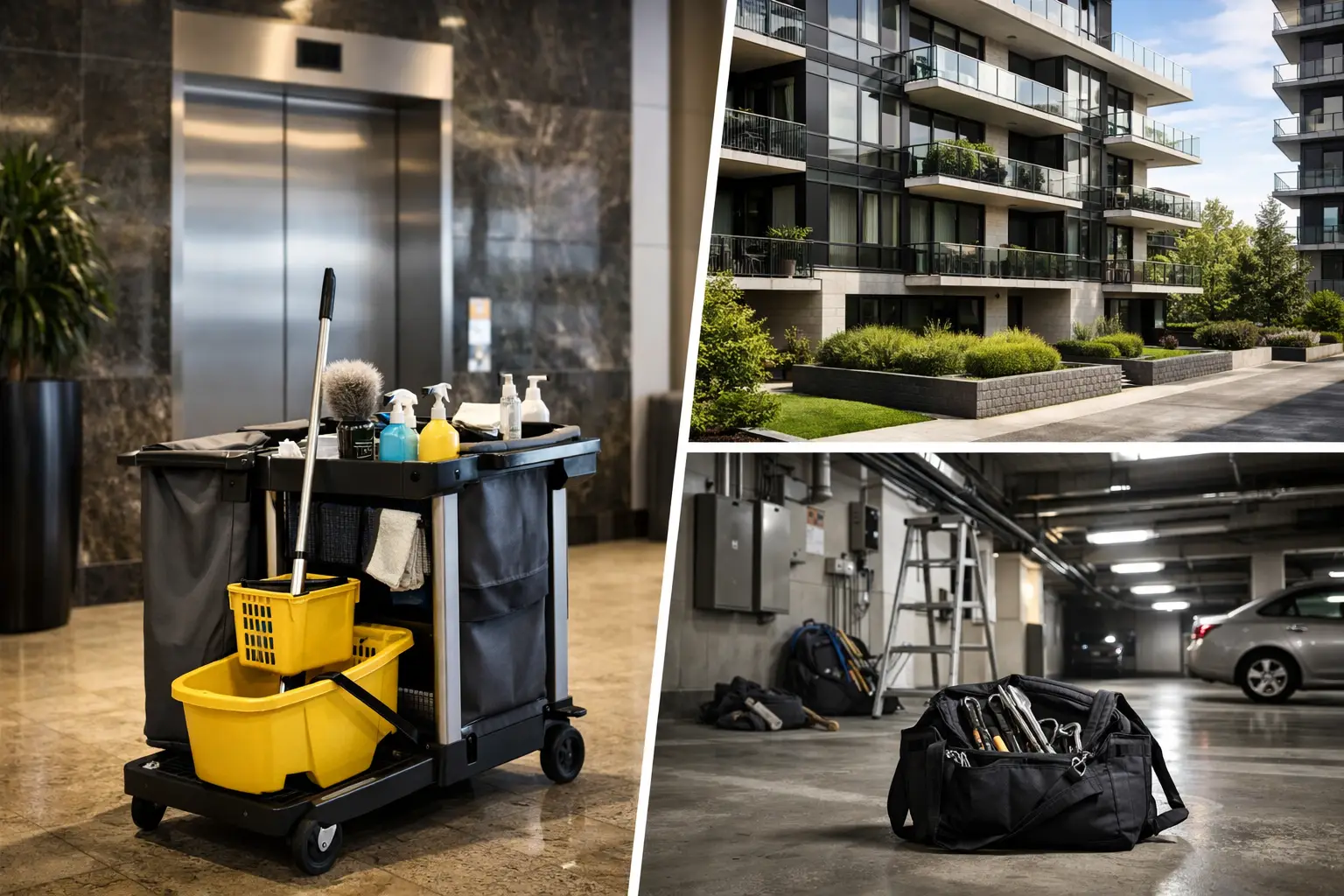
A marked elevator, a smelly waste room, or a corridor covered in fingerprints never go unnoticed. For a property manager or owner, the question "who maintains a rental building" is not simply about finding someone to sweep. It involves determining who is responsible for each area, how often to intervene, and how to maintain a consistent level of cleanliness without having to contact the supplier every week.
In a rental building, maintenance generally relies on three parties: the owner or property manager, the on-site superintendent if there is one, and a specialized building cleaning company. Their role varies depending on the size of the building, the number of units, the equipment, and the level of service expected by the residents.
Who maintains a rental building: responsibilities
The owner remains responsible for the overall condition of the building and common areas. They must ensure that the premises are safe, presentable, and functional. This responsibility includes organizing maintenance, selecting suppliers, following up on complaints, and planning occasional interventions, for example after construction or before the arrival of new tenants.
In a small complex, the owner can perform part of the tasks themselves. They can clean the entrance, take out the bins, or check the corridors. This formula can work when the foot traffic is low and availability is real. It becomes fragile, however, when the building has several floors, an elevator, a laundry room, an indoor garage, or a waste room used by many residents.
In a larger multi-unit building, maintenance is often entrusted to a resident superintendent or an external team. The superintendent can perform daily checks, report a leak, replace a bulb, or manage some simple emergencies. However, their role does not necessarily replace a professional cleaning program. Floor cleaning, odour treatment, window cleaning, garage cleaning, and post-construction restoration require time, equipment, and a suitable method.
A building maintenance company intervenes precisely to cover these needs in a structured way. It works according to a defined frequency, identified areas, and clear expectations. For the property manager, this reduces missed tasks, quality gaps, and repeated complaints.
What does a building cleaning service include?
Building cleaning aims for operational cleanliness of shared spaces. It is not private home cleaning. The work is focused on areas that directly influence the experience of residents, visitors, and suppliers.
In most rental buildings, the service covers the entrance, the lobby, the corridors, the stairwells, the elevators, and the common doors. High-traffic areas must be maintained with a consistent frequency: dust on baseboards, fingerprints on handles, marks on walls, dirt accumulated near doors, and residue on floors. A neglected appearance in these areas quickly gives the impression that the entire building is poorly managed.
Waste rooms and recycling areas require particular attention. They are a frequent source of odours, spilled liquids, sticky deposits, and complaints. Emptying the bins is not always sufficient. It is also necessary to clean the floors, the edges of the bins, the handles, the exposed walls, and the areas where bags have leaked. The frequency depends on the number of residents, ventilation, and municipal or private collection.
Indoor garages and underground parking lots are also part of the maintenance of a building when they are accessible to tenants. Dust, abrasives, salt, dirty water, and tire marks accumulate quickly, especially in winter. Planned maintenance helps preserve the appearance of the premises and avoid dirt being carried into the lobbies and elevators.
A serious cleaning service also includes visual inspections. A team regularly present in the building can detect a damaged door, a leak, a burned-out bulb, a spill, or a storage issue in a common area. It does not replace the property manager or professionals, but it contributes to better on-site follow-up.
Who cleans the common areas of a condominium?
In a condominium, the condominium board is responsible for ensuring that common areas are maintained. It may hire a superintendent, an internal employee, or an external company. The board of directors usually decides on the budget, service level, and frequency, while the property manager coordinates operations when a property manager has been appointed.
Common areas in a condo are often more sensitive than those in a traditional rental building. The lobby must be welcoming, mirrors and glass doors must remain clean, elevators must be free of marks, and floors must withstand daily traffic without losing their appearance. In high-end or very busy buildings, cleaning visits that are too far apart is quickly noticeable.
The right rhythm is not the same everywhere. A small building with six units may require weekly maintenance, while a tower with elevators, gym, common rooms, and garage may need multiple cleanings per week. The decision must be based on real foot traffic, seasons, type of flooring, and observed complaints, not on a randomly chosen frequency.
When to delegate maintenance to a specialized company?
Outsourcing becomes relevant when a building requires consistency and traceability that the owner can no longer ensure alone. This is often the case when residents report recurring odours, corridors get dirty between cleanings, elevators are frequently marked, or internal staff lack time.
A specialized team is also indicated after a renovation, construction, or localized damage. Fine dust after construction settles in corridors, door frames, air vents, and elevators. A superficial restoration often leaves visible residues for several weeks. Post-construction cleaning requires a distinct approach from regular maintenance, with products, tools, and work sequences adapted to the materials present.
Before choosing a supplier, a property manager should clarify the included areas, frequency, hours of service, products used, and the way to report an anomaly. It is also useful to plan what is excluded from the contract: cleaning of units, off-hours emergencies, window cleaning at height, snow removal, or maintenance work. This precision avoids misunderstandings and makes follow-up much simpler.
What a good maintenance plan changes in daily life
An effective maintenance program is not about cleaning more without reason. It is about intervening at the right place, at the right time. Entrances and elevators often require a high frequency. Secondary stairwells can be treated less often, but must be inspected regularly. Waste rooms require adjustments according to the season and the habits of the occupants.
Communication makes a concrete difference. When a supplier quickly informs the property manager of a problem, small issues are addressed before they become complaints or costly repairs. On the contrary, a maintenance program without checks or reports can give the impression that no one is really monitoring the building.
For property managers in Montreal, Laval, and the North Shore, Nickel & Krome S.E.N.C. offers a building cleaning service, commercial cleaning, and restorative cleaning suitable for condominiums, multi-unit buildings, and mixed-use buildings. The team works in the areas that actually get dirty: lobbies, corridors, elevators, waste rooms, stairwells, and underground garages. The company is registered under the NEQ 3381837957 and can be contacted at +1 514-974-3311.
A well-maintained building is not noticed by its promises. It is recognized by a clean lobby at all times, common areas without persistent odours, and a property manager who doesn't need to chase details.
From the guide to your project
To check the scope, access, and conditions of intervention, consult our service: Cleaning of common areas of condos and managed buildings.