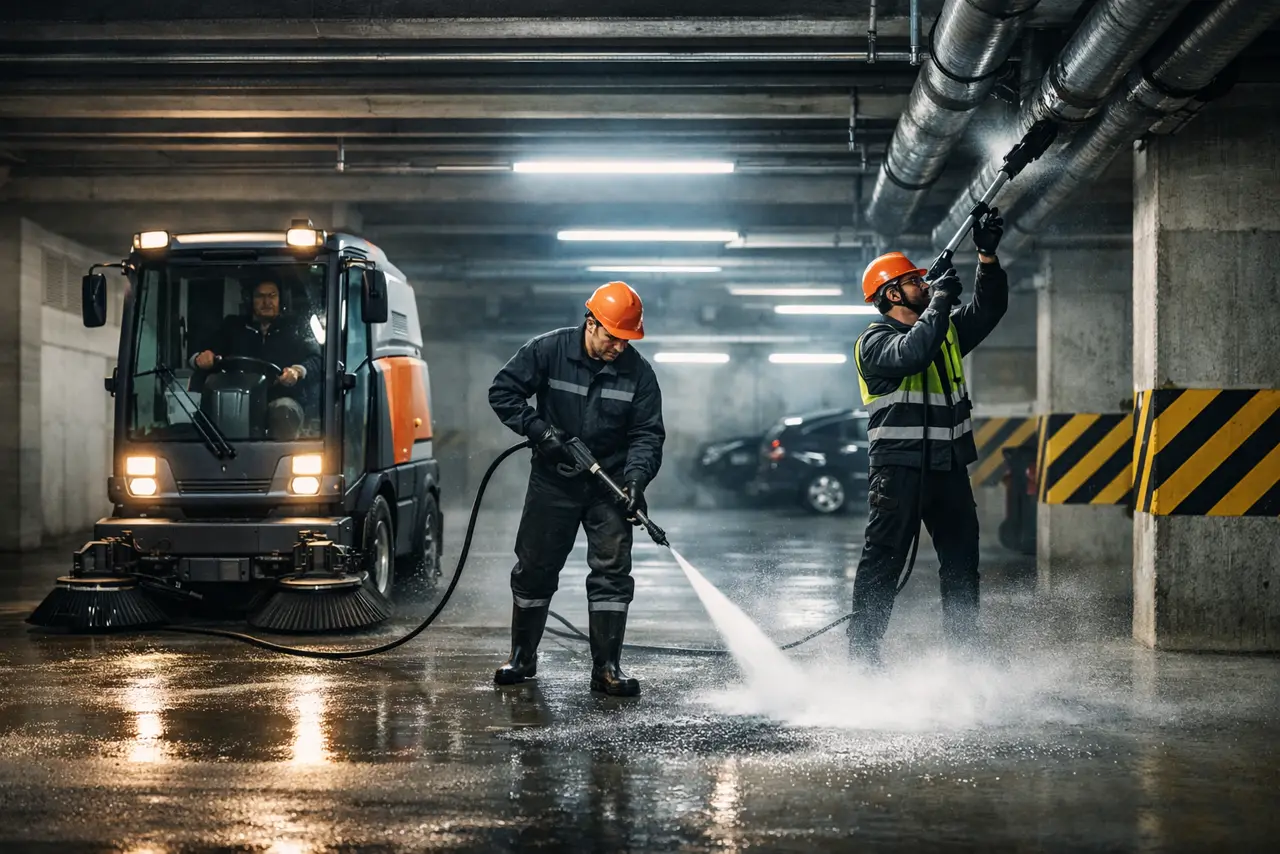
Underground parking pressure washing
Sweeping, washing and restoring underground parking lots
A cleaner, safer, more presentable underground parking.
- Scope
- Underground garages & multi-level parking
- Method
- Sweeping & Pressure Wash
- Territory
- Montreal · Laval · North Shore
Direct answer
Underground parking cleaning combines mechanical sweeping, controlled pressure washing, auto-scrubber work, wall and column washing, and site-specific logistics for shared garages. Nickel & Krome scopes each mandate around access, vehicle movement, drains, water source, residue level, and the building schedule so the garage can be cleaned without disrupting residents or operations more than necessary.
- Mechanical sweeping, pressure washing, scrubbing, walls, columns, and technical zones
- Quote inputs: spaces, levels, drains, access, water source, schedule, and residue level
Professional cleaning of underground parking lots in Montreal and Laval.
What this service covers.
A cleaner, safer, more presentable underground parking.
At Nickel & Krome, we perform mechanical sweeping, pressure washing, floor scrubbing, as well as dusting of exposed pipes and washing of walls and columns in underground parking lots, indoor garages, circulation areas, and technical spaces.
Related services
Find the service, location, or request page that best matches your project.
Service details
Mechanical sweeping of parking lots and underground garages
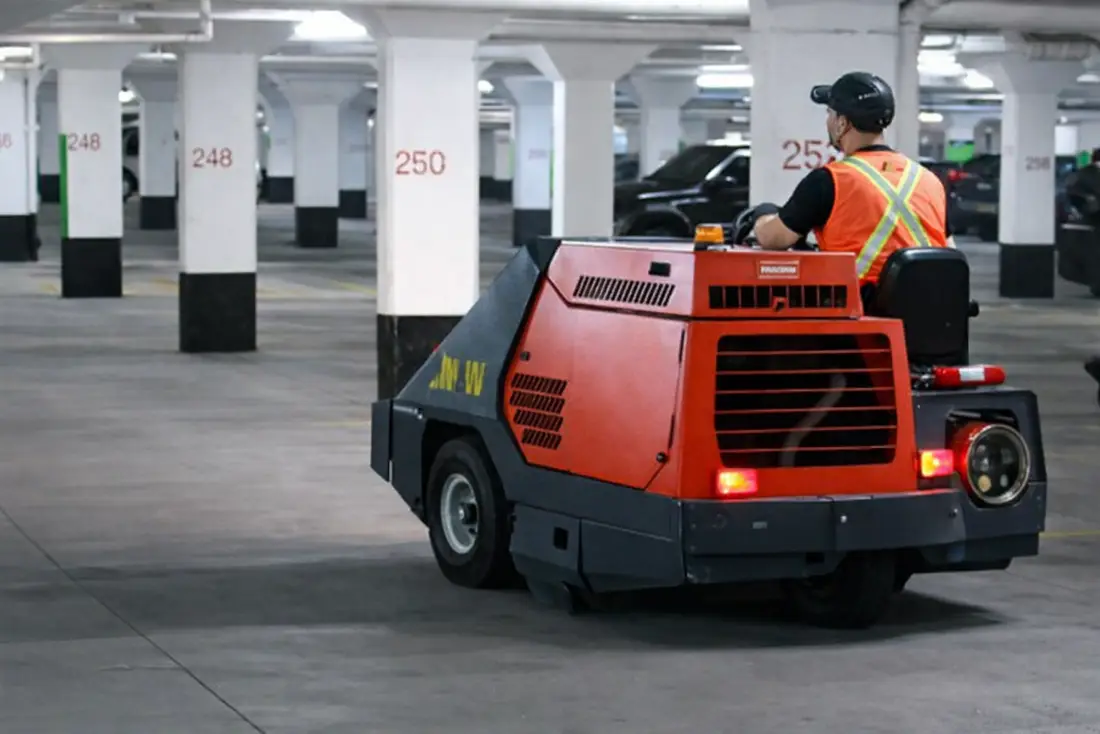
Mechanical sweeping
Mechanical sweeping is the essential first step of a serious underground parking lot cleaning.
Our equipment allows us to quickly and efficiently recover:
The size of our machines allows us to work on large surfaces as well as in narrower areas, where manual cleaning alone becomes slow, irregular, and unprofitable.
The goal is not simply to "sweep". The goal is to remove as much material from the floor as possible before the washing stages, to improve the final result and limit the unnecessary dispatch of residues to the drains.
What our mechanical sweeping concretely brings: A parking lot better prepared for washing, a visible reduction of dust on the ground, a better quality of finish, and a cleaner environment for building users.
Covered scope
- Accumulated dust
- Salt residues
- Carbon particles
- Small rocks and abrasives
- Leaves, trash, and various dirt
- Debris present in circulation and parking zones
Service details
Pressure washing of underground parking lots
1. Reduce salt and abrasive residue accumulation · 2. Remove embedded dirt · 3. Mitigate oil stains
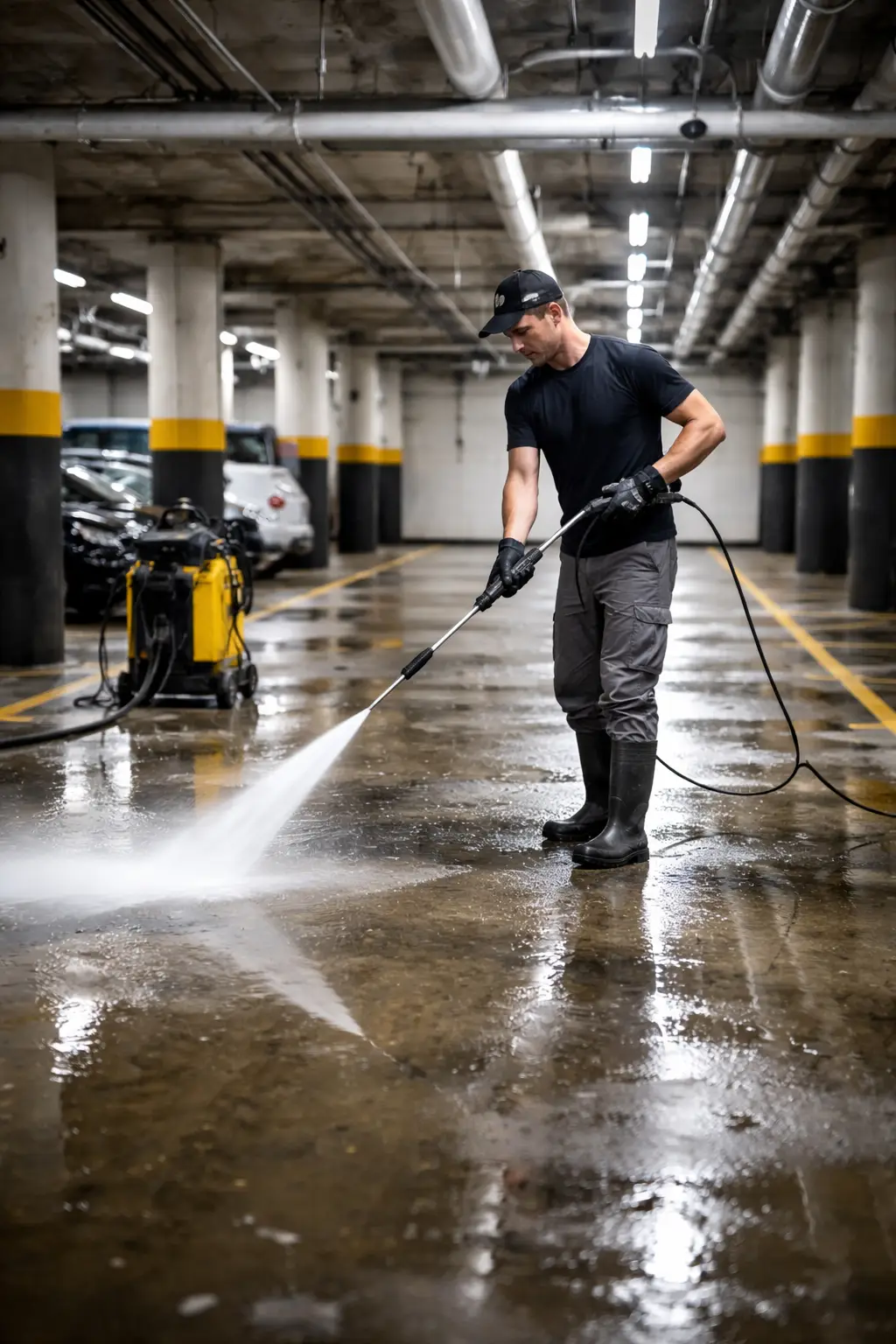
Pressure washing
Once the sweeping is done, we proceed to pressure wash the surfaces according to the condition of the premises, the level of dirt, and the type of soil.
Our intervention sequence is simple and logical:
This method aims to achieve three main objectives:
Covered scope
- Complete mechanical sweeping
- Manual sweeping of less accessible areas
- Targeted treatment of oil stains and greasy areas
- Pressure washing of surfaces
- Finishing according to site needs
Service details
Floor scrubbing machine cleaning
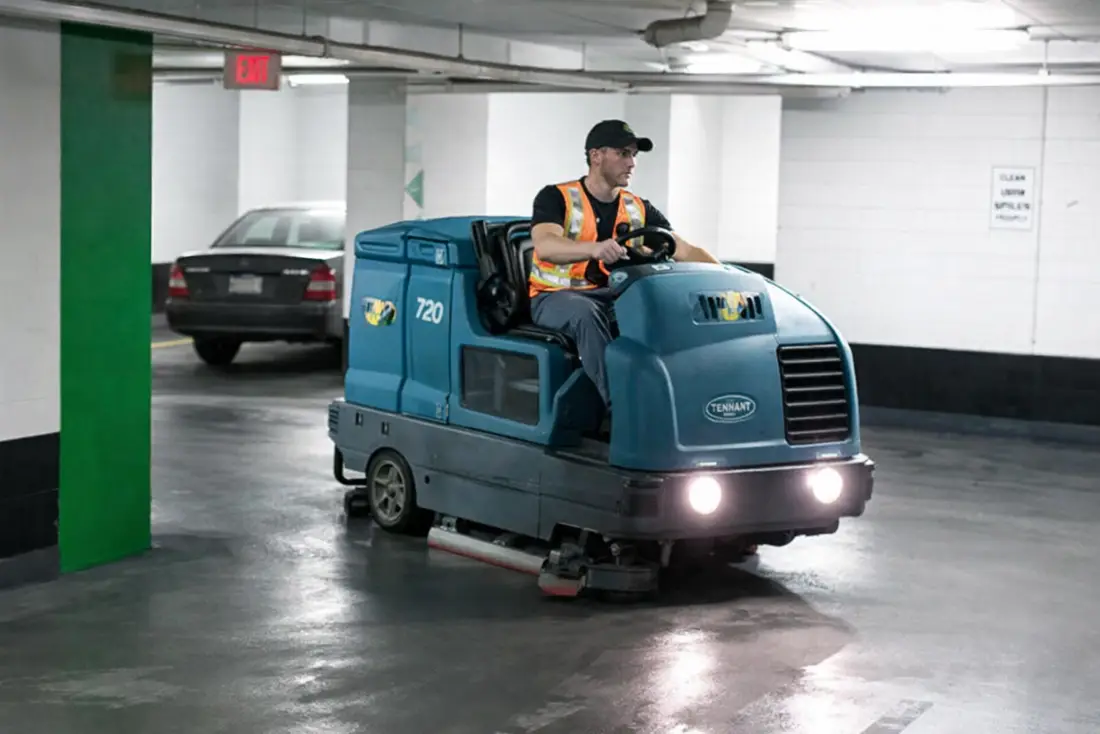
Floor scrubbing machine
For certain environments, the auto-scrubber is an excellent complementary step after deep sweeping.
It is particularly useful in:
After removing debris and gross accumulations, the auto-scrubber allows for a more uniform washing of fine dust, remaining residues, and certain stubborn soils.
The desired result is a cleaner, more homogeneous, and more presentable surface, with a better finish than a simple rinse.
Covered scope
- Multi-level parking lots
- Underground garages
- Warehouses
- Factories
- Large high-traffic indoor areas
Service details
Access, traffic, drains, and quote inputs
Exposed conduits
A garage cleaning plan is only reliable when access and vehicle movement are planned before the crew arrives. We confirm whether the work should be done by level, by zone, overnight, on a weekend, or during a lower-traffic window so residents, tenants, deliveries, and security instructions remain manageable.
Drainage and water handling also change the method. Some garages allow controlled pressure washing toward functional drains; others require tighter water recovery, lower-flow passes, or more mechanical scrubbing because slopes, drain placement, ventilation, or sensitive areas limit the use of water.
For a precise quote, the useful inputs are the approximate number of parking spaces, number of levels, access height, ramp configuration, drain locations, water source, residue level, oil-stain zones, wall or column scope, preferred schedule, and whether the garage can be cleared by phase.
Covered scope
- Vehicle logistics: levels, ramps, gates, access height, and temporary closures
- Method selection: mechanical sweeping, pressure washing, auto-scrubber, or targeted degreasing
- Water constraints: drains, slopes, recovery needs, ventilation, and sensitive rooms
- Completion check: lanes, corners, ramps, drains, walls, columns, and pedestrian access points
Service details
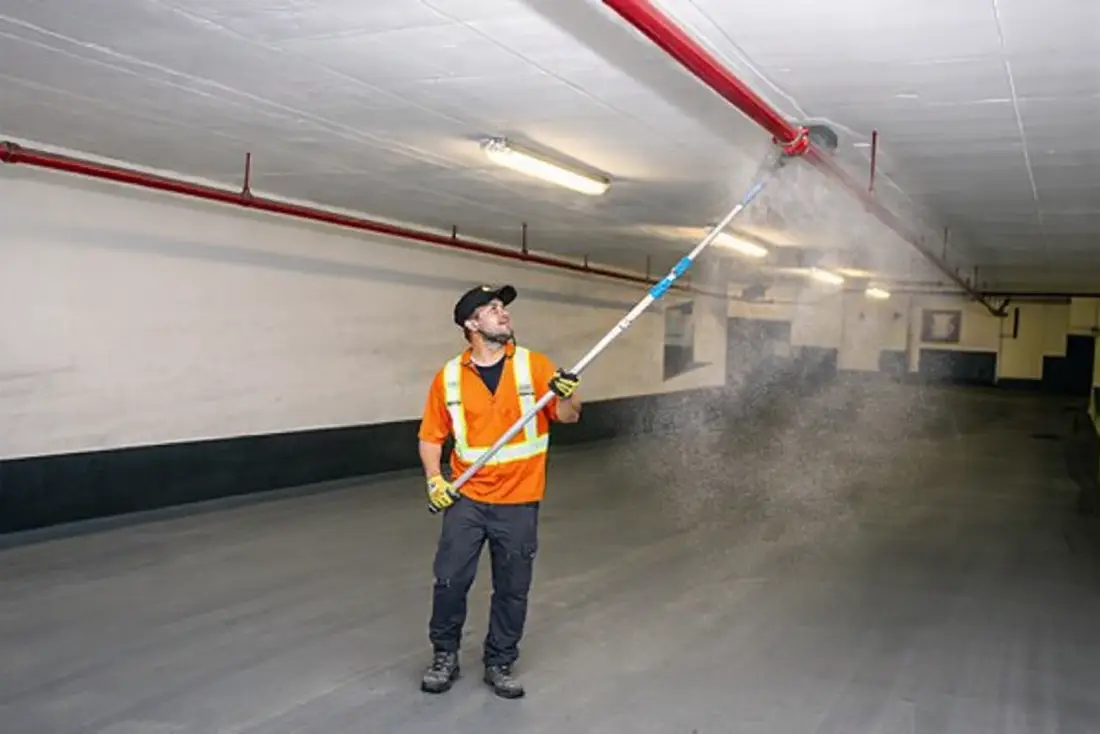
Dusting of exposed ducts
Wall and column washing
In many underground parking lots and technical spaces, exposed ducts quickly accumulate dust, dirt, and suspended residues.
Nickel & Krome dusts ducts, exposed piping, elevated surfaces, and hard-to-reach areas using equipment adapted for this type of intervention.
We aim to restore the visual cleanliness of exposed installations to:
Covered scope
- Improve the general appearance of the parking lot
- Reduce dust accumulation at heights
- Support a better overall maintenance level for the building
- Complete a more serious cleaning of technical and common areas
Service details
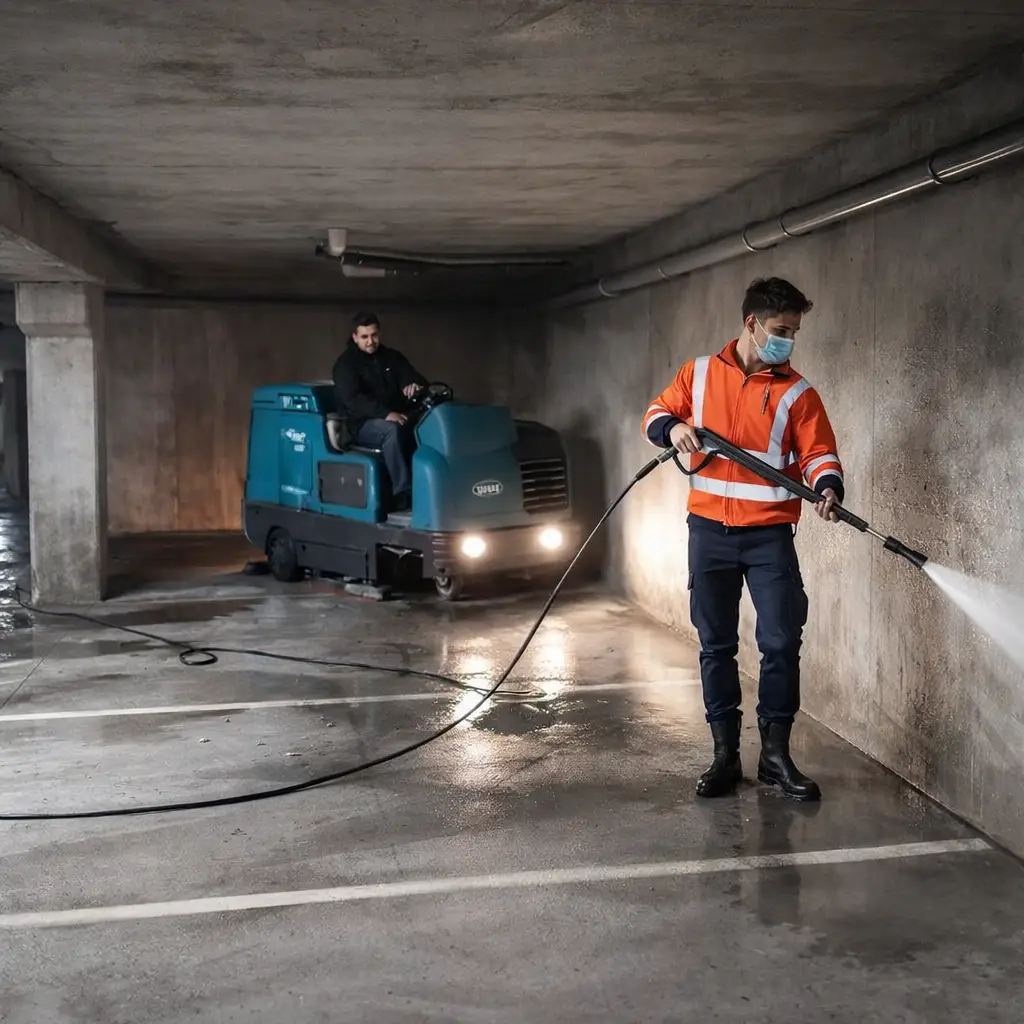
Washing of walls and columns
Walls, columns, and vertical surfaces in underground parking lots also accumulate dust, splashes, traffic marks, black deposits, and various dirt.
We offer wall and column washing depending on the nature of the surfaces and the level of dirt observed. This intervention significantly improves the visual aspect of the space, particularly in buildings where the perception of cleanliness is important for occupants, visitors, or managers.
A parking lot may have been washed on the ground, but if the columns and walls remain blackened or powdery, the result seems incomplete.
That's exactly what this step corrects.
Who do we serve? We intervene specifically in:
Covered scope
- Underground parking of residential towers
- Indoor garages of multi-residential buildings
- Condo parking lots
- Multi-level parking lots
- Warehouses and industrial spaces
- Certain service, loading, or indoor circulation areas
Service details
Montreal underground parking service
Generic scope · Montreal owner
This page remains the generic owner for the service. For occupied garages where Montreal access, resident coordination, and local project evidence matter, use the dedicated Montreal garage service.
Next step
Need a truly clean underground parking lot?
Share your building type, approximate square footage, problem zones, and preferred date. We will return a fast quote and an intervention plan tailored to your building.
(514) 974-3311 · info@nickelandkrome.ca