Recurring common-area cleaning for condos and managed buildings
Nickel & Krome provides recurring common-area cleaning for condominiums and managed residential buildings. The scope keeps lobbies, corridors, stairs, elevators, entrances, waste rooms, and shared amenities presentable without turning the service into a construction closeout or a building-concierge mandate.
Syndicates, condo boards, and property managers receive a defined program built around included zones, frequency, access, inspections, proof of service, and realistic expectations for residents.
Direct answer
Recurring common-area cleaning covers lobbies, corridors, stairs, elevators, entrances, waste and recycling rooms, and selected amenities in condos and managed residential buildings. Nickel & Krome defines the frequency, access, inspections, proof of service, and boundaries that keep it distinct from concierge service and construction closeout.
- Shared spaces in condos and managed residential buildings
- Recurring frequency, access, inspection, and service evidence
A recurring scope for occupied shared spaces
A common-area program keeps the shared zones of an occupied building consistently clean from one visit to the next. It is narrower than whole-building residential maintenance and does not replace concierge presence, post-construction closeout, or specialized garage washing.
The scope identifies each zone, its frequency, access instructions, inspection points, and the follow-up expected by the syndicate or manager.
For an occupied building that later needs scheduled cleaning and concierge observations, the coordinated managed-building service remains separate from post-construction handover.
- Condos, rental properties, and professionally managed residential buildings
- Shared spaces rather than private residential units
- Defined recurring tasks and periodic details
- Documented boundaries for managers and condo boards
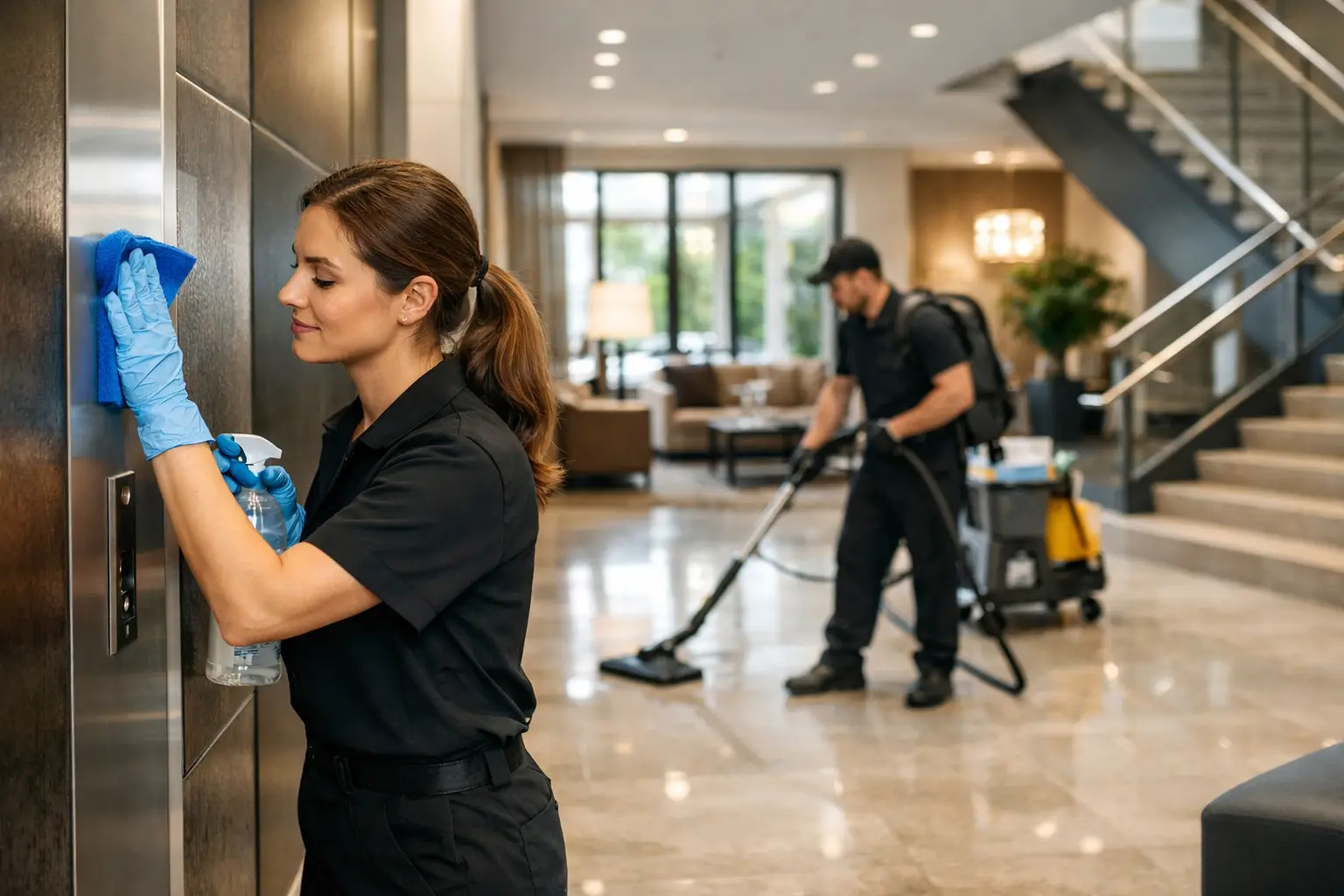
Lobbies, corridors, stairs, and elevators
Entrances and lobbies shape the first impression of the property. Corridors, landings, stairs, and elevators then show the building's actual traffic through winter grit, dust, fingerprints, deliveries, moves, visitors, and daily resident circulation.
The program can cover sweeping, washing, dusting, contact surfaces, thresholds, handrails, elevator buttons, baseboards, and other visible details according to the approved schedule.
- Lobbies, vestibules, entrances, thresholds, and entry mats
- Corridors, landings, stairs, handrails, and baseboards
- Elevator cabs, buttons, tracks, sills, and landing doors
- High-traffic touchpoints and resident circulation zones
Waste rooms, support spaces, and shared amenities
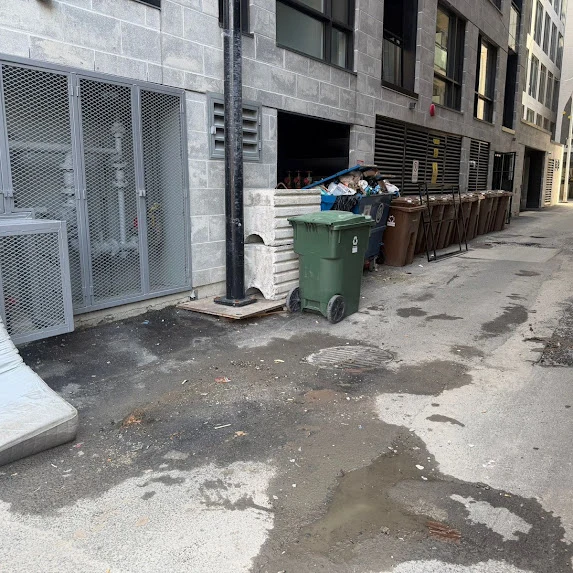
Waste and recycling rooms, mail areas, bicycle rooms, storage access, and resident amenities do not follow the same cleaning rhythm as a glass entrance or elevator. Their frequency should reflect use, odour, spills, tracked debris, and the property's operating rules.
Underground parking can be listed as a separate specialized scope when it needs sweeping, washing, drainage planning, or seasonal residue removal; it is not automatically included in common-area cleaning.
- Waste, recycling, compost, mail, and parcel areas
- Bicycle rooms, shared storage, laundry rooms, and amenity access
- Gyms, lounges, and other resident facilities when approved
- Separate garage scope when equipment or water management is required
Frequency, access, and inspection follow-up
Frequency depends on occupancy, season, complaints, resident traffic, and the visibility of each zone. A building may need frequent entrance and elevator service while scheduling waste rooms, amenities, and lower-traffic corridors differently.
Before service starts, access cards, keys, locked rooms, permitted work windows, and escalation contacts are confirmed. Inspection notes, checklists, or targeted photos can be included when the approved scope calls for them.
- Daily, weekly, periodic, seasonal, or incident-based tasks
- Keys, cards, codes, locked rooms, and access contacts
- Zone-level inspection points and service notes
- Schedule adjustments based on traffic, weather, and recurring issues
Targeted resets without taking over construction closeout
A move, unit renovation, repair call, or short trade intervention can leave temporary dust and marks in an occupied building. A targeted reset may be added for the affected corridor, elevator, service entrance, or landing without redefining the recurring program as full post-construction cleaning.
When the work affects multiple floors, includes construction residue, or belongs to a formal handover, the project should be scoped through the post-construction service instead.
- Localized touch-ups after moves or minor unit work
- Affected shared zones identified before the visit
- Construction residue and full-building handover quoted separately
- Clear exclusions to avoid scope drift
Montreal, Downtown, and Laval condo-tower ownership
Common-area cleaning remains the owner for specific shared zones. When the mandate covers recurring maintenance across an entire condo tower, use the local whole-building owner for Montreal condo towers, Downtown Montreal and Ville-Marie, or Laval condo towers.
For operational presence, observations, and coordination beyond cleaning tasks, see building concierge services. For a broader managed-building program, see residential building upkeep.
Frequently asked questions
- Which shared zones can be included?
- The approved scope can include lobbies, entrances, corridors, stairs, elevators, waste and recycling rooms, mail areas, and selected shared amenities based on the building configuration.
- How is common-area cleaning different from building concierge service?
- Concierge service adds broader operational presence, observations, and coordination. Common-area cleaning remains focused on the agreed cleaning tasks for shared zones.
- Is underground parking automatically included?
- No. Specialized underground-parking cleaning is assessed separately when the garage requires dedicated equipment, water control, drainage planning, or seasonal residue removal.
- Can you handle dust after minor work in an occupied building?
- A limited reset can be added after a move or minor repair. Formal construction closeout, multi-floor residue, and pre-occupancy handover belong to the post-construction service.
- How is the cleaning frequency defined?
- Frequency is based on occupancy, traffic, season, problem areas, amenity use, and the level of inspection or proof expected by the manager or board.