
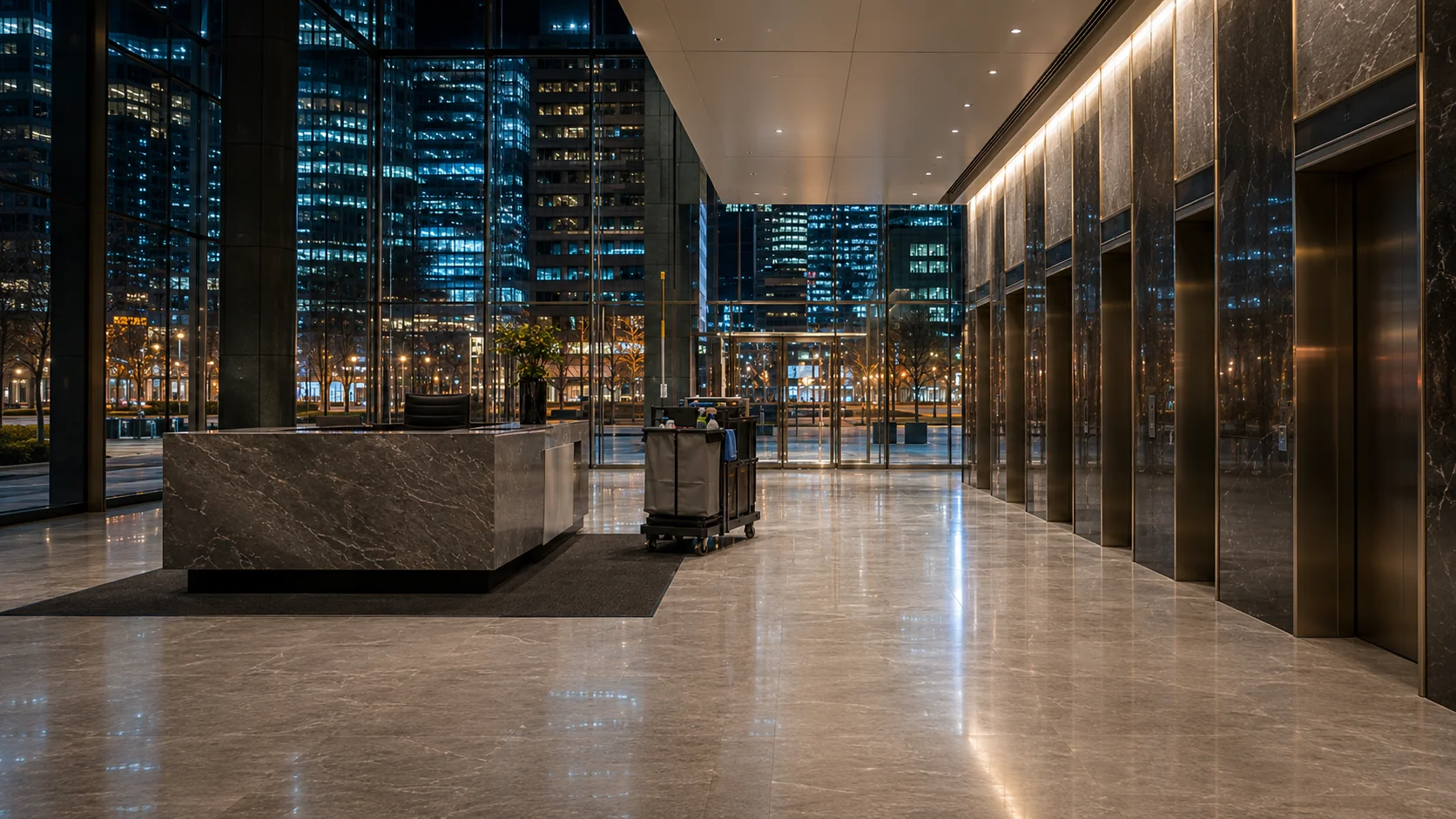
Residential building upkeep for lobbies, corridors, and shared spaces
Nickel & Krome maintains occupied residential buildings for property managers, condo boards, owners, and operators who need lobbies, corridors, stairwells, elevators, entrances, and shared spaces to stay consistent between visits.
This is recurring B2B building upkeep for rental buildings, condo properties, and multi-residential sites, with a clear cadence, quality checks, and practical reporting for management.
Recurring upkeep for occupied residential buildings
An occupied residential building does not stay presentable through improvised visits. Lobbies, corridors, elevators, stairwells, entrances, waste rooms, and amenities collect different traces depending on occupancy, deliveries, move-ins, weather, and resident habits.
We frame the work as a building program: included zones, frequency, sensitive points, access, quality checks, and the reporting rhythm expected by the manager or board.
- Rental buildings, condos, syndicates, and multi-residential properties
- Property managers, owners, condo boards, and operators
- Scope focused on shared spaces, not private residential housekeeping
- Stable cadence to keep the building's presentation consistent
Lobbies, corridors, stairwells, and elevators
Circulation areas shape the first reading of the building. A marked lobby, dusty corridor, stained elevator, or neglected stairwell quickly creates resident complaints and weakens the perception of management.
The scope can include sweeping, washing, dusting, touchpoints, interior glass, baseboards, visible details, and extra attention on repeated traffic zones.
- Lobbies, vestibules, entrances, and reception zones
- Corridors, landings, stairwells, and handrails
- Elevator cabins, buttons, rails, and thresholds
- Touchpoints, baseboards, corners, and visible details
Entrances, waste rooms, and support zones
Entrances absorb weather, salt, exterior dust, and daily traffic. Waste and recycling rooms need a different reading: odours, overflow, floor marks, doors, handles, and drop zones that are often misused.
These spaces are not always the first thing visitors see, but they often determine resident satisfaction and the amount of follow-up management has to handle.
- Entrances, vestibules, mats, thresholds, and exposed access points
- Waste, recycling, compost, and drop-off zones
- Mailrooms, bike rooms, storage rooms, and support spaces
- Follow-up on odours, overflow, marks, and recurring friction points
Amenities and shared spaces
Depending on the building, upkeep can cover community rooms, gyms, laundry rooms, terraces, resident lounges, meeting rooms, or shared washrooms. These areas need a cadence tied to actual use, not one generic frequency applied everywhere.
We define what must stay clean between major passes, what can run on a longer cycle, and what should be reported to management when usage exceeds the planned scope.
- Community rooms, resident lounges, and multi-purpose spaces
- Gyms, laundry rooms, shared washrooms, and amenities where applicable
- Terraces, shared access points, and seasonal zones when relevant
- Checkpoints for odours, dust, waste, stains, and usage marks
Recurring schedules and quality checks
The cadence can be weekly, biweekly, monthly, seasonal, or reinforced for high-traffic zones. We separate base routines from targeted resets so the program stays realistic and easy to follow.
Quality checks can include checklists, visit notes, observed points, useful photos, and frequency adjustments when the building's reality changes.
- Weekly, biweekly, monthly, or seasonal schedules
- Base routines and targeted resets separated to avoid grey zones
- Quality checklist for lobbies, corridors, elevators, entrances, and sensitive zones
- Cadence adjustments based on complaints, season, occupancy, or inspections
Management reporting and concierge boundaries
Residential building upkeep focuses first on the recurring cleaning scope and the visible standard of shared spaces. Building concierge support adds a more operational presence: inspections, anomalies, escalation, and tighter day-to-day follow-up.
The two services can complement each other when the building needs more field presence. Recurring upkeep still has its own role: maintain shared areas at a stable standard and give management a simple record that the cadence is being met.
- Simple reporting for managers, owners, or boards
- Sensitive-zone notes, useful photos, and recurring-point follow-up
- Upkeep scope distinct from a more operational concierge presence
- Written limits to keep cleaning, repairs, and building management separate
Frequently asked questions
- Is this private residential housekeeping?
- No. The service is for common areas and shared spaces in managed buildings: lobbies, corridors, stairwells, elevators, entrances, waste rooms, and amenities.
- Can different zones have different frequencies?
- Yes. The cadence can vary by zone: more frequent for entrances and elevators, lighter for less exposed areas.
- Can you report back to management?
- Yes. We can provide notes, a checklist, and observations to help management or the board track the building standard.