
How Often Should a Condominium Be Cleaned?
How often should a condominium be cleaned? A simple method to adapt common-area maintenance to traffic, seasons and building type.
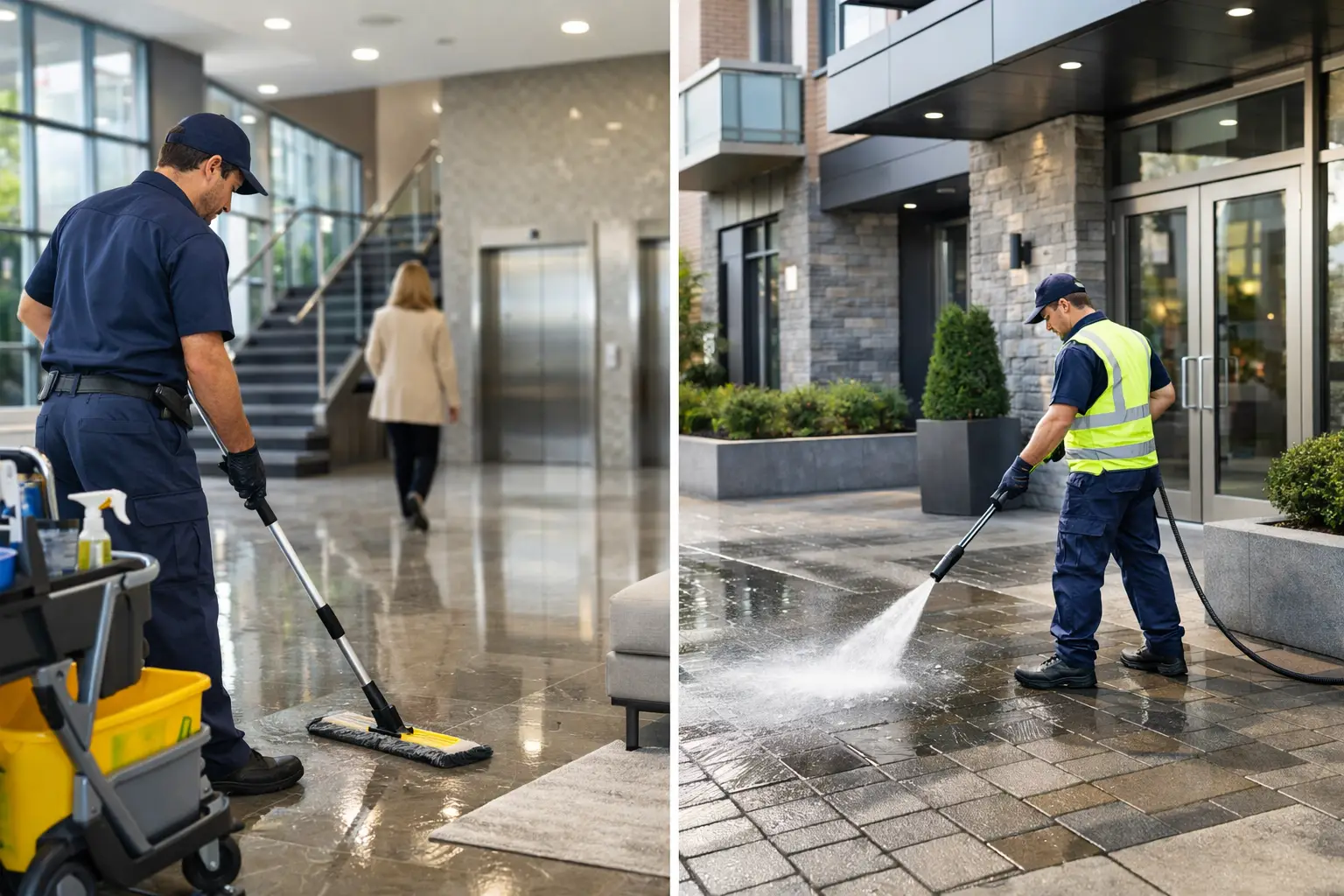
A spotless lobby on Monday morning can already look neglected by Wednesday evening if traffic is heavy, weather worsens or bins overflow. The real question is therefore not only how often a condominium should be cleaned, but at what rhythm to intervene so common areas stay clean, safe and consistent with the building’s standard.
For a property manager or condominium syndicate, cleaning frequency is never a detail. It influences occupant perception, limits premature surface wear and reduces complaints linked to odors, dust or slippery floors. A good maintenance schedule is not necessarily the one with the most visits. It is the one that matches the building’s reality.
How often to clean a condominium based on real use
There is no universal frequency that works for every building. A small six-unit condominium without an elevator does not have the same needs as a multi-floor property with indoor parking, a waste room, common room and daily movement.
The first criterion is traffic volume. The more residents, visitors, delivery people and providers circulate, the faster dirt settles. In a high-traffic building, entrance floors, handles, the elevator and landings can visually deteriorate in a few days. In a quieter and well-kept condominium, some zones can be cleaned less often without a visible loss of quality.
The second criterion is layout. Carpets hold dust, entrance glass marks quickly, enclosed stairwells collect particles, and indoor parking brings water, gravel, calcium and black residue. The more sensitive points the building has, the tighter the frequency should be.
The third criterion is seasonal. In fall and winter, entrances soil much faster. In spring, melting, abrasives and traces left by exterior work often require reinforced visits. This is especially true in Greater Montreal, where weather cycles put common areas under real pressure.
Recommended frequency by common zone
To define a realistic plan, think zone by zone rather than applying the same rhythm to the whole building.
Entrance hall and vestibule
This is the most exposed area. In most condominiums, basic maintenance several times per week is justified. For busier buildings, a daily visit is often the right rhythm, especially during rain, snow or mud periods. Glass doors, entrance mats and floors must remain clean, because this is where the overall impression is formed.
Elevators, buttons, handles and contact points
These surfaces require regular attention even when they do not look very dirty. Cleaning several times per week is a common minimum. In highly occupied buildings, daily maintenance of the most used contact points creates a real difference in perceived cleanliness.
Landings and stairwells
One to two interventions per week are often enough for routine maintenance. However, this depends on number of floors, pets, strollers, bicycles or occasional work. If stairs are used as a main access rather than a secondary one, frequency must follow.
Waste, recycling and compost room
This is not the zone where minimum service should be the goal. Weekly cleaning is generally necessary, with extra interventions as soon as there is runoff, persistent odor or residue on the floor. A neglected waste room quickly creates a problem larger than appearance alone.
Parking, garage access and technical spaces
These sectors are sometimes underestimated even though they carry much of the dirt toward the rest of the building. Regular visual maintenance is useful, complemented by deeper cleaning according to season. After winter, a reset is often essential to remove fine dust, sand, calcium and floor marks.
What a schedule that is too light eventually costs
Reducing frequency can look economical on paper. In practice, maintenance that is too spaced out often leads to heavier and therefore more expensive interventions.
When floors are not followed properly, dirt becomes embedded. When glass, frames and corners are forgotten, dust settles. When water, salt or product runoff stays too long, some surfaces lose their initial appearance. The building then moves from routine maintenance to restoration.
There is also an indirect cost. A poorly maintained condominium generates comments, more management, debates at meetings and an impression of neglect. For a manager, that means time lost on avoidable issues.
What a schedule that is too frequent can also create
On the other hand, oversizing frequency is not always relevant. If the building is lightly occupied, some visits can be redundant and poorly aligned with budget. The right balance is to maintain a constant cleanliness level without paying for interventions that bring no visible or operational benefit.
This is where a field-based approach makes the difference. Observing the zones that truly deteriorate, identifying critical days and distinguishing routine maintenance from periodic cleaning helps avoid poorly calibrated contracts.
How to set the right condominium cleaning frequency
The most reliable method is to start from the site’s reality over a few weeks, then adjust. A well-managed building does not need a theoretical schedule. It needs a calendar that matches real use.
Evaluate traffic
Count daily entrances, number of units, presence of elevators and delivery movement. A large building with several access points cannot be maintained like a small condominium with limited circulation.
Identify zones that soil quickly
Some common areas need high frequency, others do not. If the lobby marks within 24 hours but stairs remain acceptable for five days, the schedule must reflect that difference.
Include seasonal peaks
In winter, entrances and corridors require more attention. In spring, resets must be planned. In summer, glass, exterior access points and circulation zones may become priorities again. A fixed frequency all year often misses the target.
Distinguish regular maintenance from periodic interventions
Frequent cleaning does not replace more technical operations. Even with good weekly maintenance, some condominiums need deep cleaning, post-work cleaning, localized stripping or seasonal reset of exterior surfaces.
Example of a realistic rhythm for a standard condominium
For a medium-sized, well-occupied condominium with a lobby, elevator, stairs and waste room, a current rhythm may look like this: lobby and contact-point maintenance several times per week, stairs and landings one to two times per week, waste room once per week with reinforcement if needed, and deeper periodic cleaning according to season and actual condition.
This is not a fixed rule. If the building has a lot of movement, if work is underway or if winter is particularly messy, the rhythm must increase. If it is a very stable small condominium, it can be reduced on certain zones without harming the result.
The provider’s role in adjusting frequency
A good provider does not simply execute a random frequency. They help establish a coherent service level, then flag what should be reinforced, reduced or treated differently.
In condominiums and multi-unit buildings, needs change quickly. Work in one unit, increased deliveries, a harsher winter or exterior work can modify the initial balance. A specialized company like Nickel & Krome mainly brings that operational adjustment capacity, with a concrete reading of surfaces, uses and building constraints.
When should the schedule be reviewed?
Some signs show it is time to revise frequency. If complaints return, floors look dull despite visits, entrances remain permanently marked or odors persist in waste zones, the schedule is probably no longer adapted.
The opposite is also true. If some interventions make no visible difference for several months, it may be worth redistributing effort toward truly critical zones.
The right frequency is not the one that looks correct on a quote. It is the one that keeps the building clean, stable and presentable every day, without budget overload or constant catch-up. In a condominium, visible cleanliness rarely depends on occasional big cleanings. It mostly depends on a fair rhythm, followed and adjusted with method.
Apply this guide to your property
Review the scope, access requirements and service details for Services de nettoyage pour gestionnaires immobiliers et opérateurs de portefeuilles (French).