
A Sample Condo Cleaning Plan for Montreal
Use a sample condo cleaning plan for Montreal to organize common areas, visit frequencies, seasonal tasks and follow-up around your building's needs.
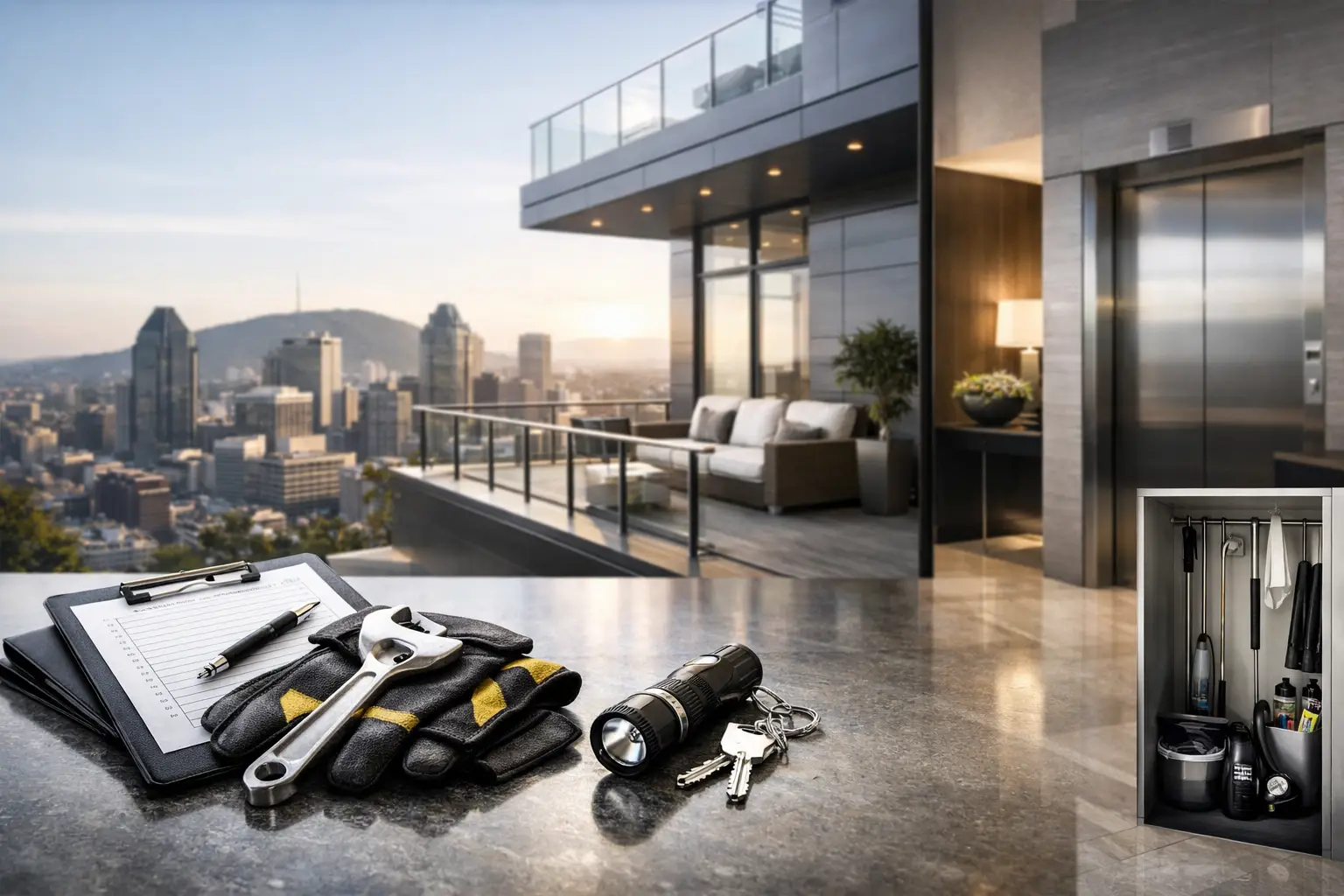
A dirty waste room, stains in the elevator on Monday morning, or a hallway marked after a rainy day are enough to trigger complaints. A good condo maintenance plan in Montreal is therefore not just about indicating "weekly cleaning." It includes the areas, frequencies, responsibilities, and the way to react when the actual condition of the building requires intervention.
For a condo board or property manager, the plan serves to maintain the quality of shared spaces without having to constantly follow up with the supplier. It must reflect the traffic, the season, the number of units, the presence of an underground parking garage, and the building’s specific features.
What is a condo maintenance plan for?
The maintenance plan turns a general expectation of cleanliness into verifiable tasks. It allows the board of directors to know what is done, when, and to what standard. It is also a preventive tool: waste is managed before odours develop, stains are removed before damaging finishes, and dust is controlled before it spreads through corridors and units.
Who cleans the common areas of a condo? In most buildings, this responsibility is entrusted to a building janitorial services company or a specialized cleaning team. Their role is not simply to sweep. They ensure the operational maintenance of entrances, corridors, stairwells, elevators, waste rooms, recycling rooms, and, according to the mandate, the interior garage.
A good plan avoids two common mistakes: paying for visits that do not match the real needs, or setting an insufficient frequency that creates recurring complaints. A 12-unit quiet building does not require the same rhythm as a 100-unit tower with pets, frequent deliveries, and underground parking.
Example of a condo maintenance plan in Montreal
Here is a base plan applicable to a residential condo. It must be adjusted after a site visit, as the surfaces, traffic, and equipment change significantly from one building to another.
At each visit, generally 2 to 5 times per week
The entrance hall, corridors, and main access points receive priority attention. The team removes visible waste, dusts accessible surfaces, cleans handles and elevator buttons, then cleans the floors or performs maintenance appropriate to the floor covering. Door glass is cleaned as needed, especially when fingerprints damage the appearance of the entrance.
Stairwells must also be inspected and maintained. They are often forgotten until dust accumulates in the corners or marks appear on the steps. In a building with heavy traffic, this area often deserves the same frequency as the corridors.
The waste room requires systematic checking. Cleaning the floors, bins, and deposit areas helps limit odours and sticky residues. If waste is regularly deposited outside the containers, the plan must include a reporting procedure for the property manager. The supplier can clean, but waste management issues or overcapacity must also be corrected at the source.
Every week
A more detailed weekly maintenance covers accessible baseboards, corridor corners, fire doors, door frames, and surfaces that quickly accumulate dust. Elevators receive a complete cleaning of the cabin: floor, walls, mirror, threshold, and visible rails.
The recycling room is treated with the same seriousness as the waste room. Cardboard, moisture, and poorly rinsed containers quickly create dirt and odours. In some condos, an additional visit after move-in or delivery periods is more effective than a uniform weekly cleaning.
Every month
The monthly plan includes work that protects the overall appearance of the building: dusting of grilles, more thorough cleaning of marked walls, treatment of glass doors, cleaning of accessible light fixtures, and deep cleaning of certain floor areas.
It is also the best time for a quality inspection. The property manager or person responsible for the contract checks sensitive areas, received complaints, and required adjustments. An effective plan remains alive: if the garage door is constantly marked or if the entrance becomes muddy in winter, the frequency must be corrected rather than letting the problem develop.
Seasonally or as needed
In Montreal, winter completely changes priorities. Calcium, water, sand, and boot prints put entrances, elevators, and corridors to the test. You need to plan more frequent visits to entrances, as well as maintenance of carpets and hard surfaces adapted to the conditions.
In spring, restorative cleaning may include a deeper clean of floors, entrances, accessible windows, and garage areas. An underground garage accumulates dust, residue from de-icing, and tire marks. Its cleaning requires professional equipment and a method adapted to ventilation, drains, and vehicles present.
After work in a unit or in common areas, regular cleaning is not always sufficient. Fine dust, plaster residue, stickers, paint marks, and debris require a post-construction cleaning or targeted restoration. Preparing this intervention separately avoids overloading the current janitorial contract.
Elements to clearly include in the mandate
A useful plan must indicate the covered areas, the planned frequency, the expected tasks, and the exclusions. Without these clarifications, an expression like "maintenance of common areas" can be interpreted in several ways.
Specify the hours of intervention. A cleaning performed during peak traffic periods may inconvenience residents, while a visit scheduled too late may leave the day's damage visible until the next day. The best time slot depends on the reality of the building and the desired level of discretion.
The document should also define the follow-up of anomalies. A burned-out bulb, a leak near a door, an overflowing bin, or visible damage do not necessarily belong to the cleaning team, but they must be reported quickly. This on-site communication reduces surprises and allows the property manager to act before a detail becomes a formal complaint.
How to choose the right frequency?
The frequency depends first on the traffic, not just on the number of units. A small building with a professional office on the ground floor, several dogs, or many deliveries may have similar needs to a larger condo. On the contrary, some less used areas can be maintained less frequently without compromising the residents' experience.
Start by observing the times when complaints appear. If the hall degrades between two visits, add a visit or target the entrance only. If the odours mainly come from the waste room in summer, adjust the cleaning of this area rather than increasing the entire contract indiscriminately.
A reliable building janitorial services company must be able to recommend these adjustments honestly. It must also distinguish regular maintenance from specialized interventions, such as high-pressure washing, floor restoration, garage cleaning, or post-construction cleaning.
A plan that remains verifiable throughout the year
The plan works better when it is accompanied by a simple follow-up: visit report, issue reporting, and a clearly identified point of contact. The condo board does not need to monitor each action, but it must be able to confirm that the planned tasks are carried out and that exceptions are communicated.
For condo managers, multi-unit buildings, and rental buildings in Montreal, Laval, and the North Shore, the goal is concrete: clean common areas, fewer reminders, and a consistent appearance of the building. The Nickel & Krome team, registered with NEQ 3381837957, structures its building janitorial services contracts according to the conditions observed on site. To discuss a tailored plan, you can contact the team at +1 514-974-3311.
A good plan does not promise that a building will never get dirty. It rather specifies what to do, how often, and with what follow-up to keep cleanliness under control, even when the building is very busy.
From the guide to your project
To check the scope, access, and conditions of intervention, consult our service: Cleaning of common areas of condos and managed buildings.