
What does post-construction cleaning include?
What does post-construction cleaning include? Steps, surfaces treated, finishes, and checkpoints to deliver a clean construction site. Learn more.
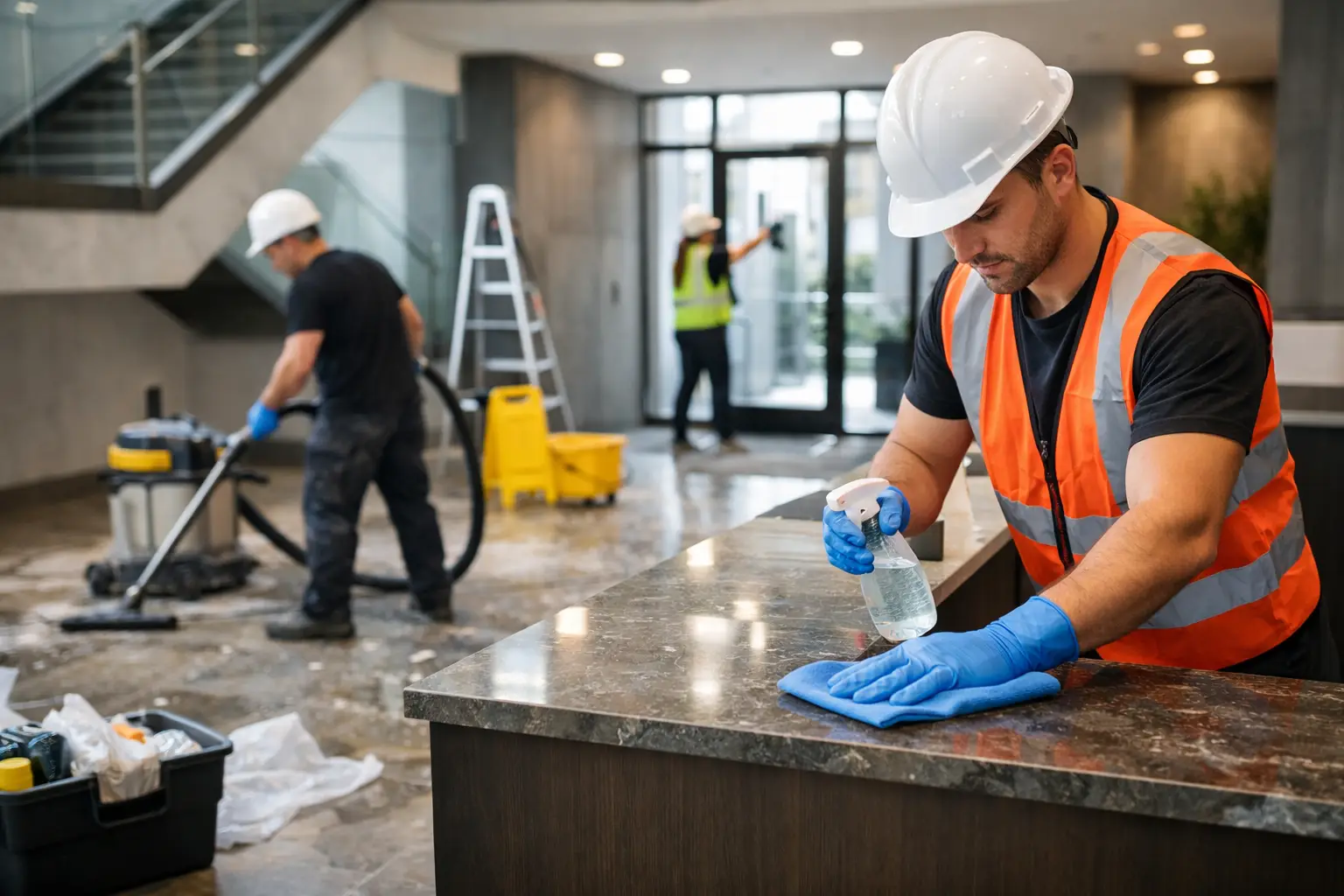
A construction site can seem finished once the trades leave, but in reality, that’s when the final decisive step begins: understanding what post-construction cleaning includes to make a space truly ready for occupancy or handover. Fine dust, material residue, window streaks, forgotten protective film, and grime in corners—none of this can be left to chance if you want a finish that meets the project’s standards.
For property managers, general contractors, or commercial owners, this cleaning isn’t just a quick tidy-up. It’s a technical, structured intervention designed to remove all traces of construction without damaging new surfaces. The quality of the result directly impacts first impressions, the building’s image, and the final acceptance of the work.
What post-construction cleaning includes in practice
The answer depends on the state of the site, the type of building, and the expected level of finish. In most cases, post-construction cleaning includes dust removal, residue cleanup, detailed surface cleaning, window washing, floor treatment, and a complete visual restoration of the spaces.
This isn’t just about making what’s visible disappear. Gypsum dust settles in tracks, baseboards, vents, light fixtures, and even the tops of doors. Residue from glue, paint, or silicone often clings to frames, windows, and finishes. A well-executed job addresses these elements methodically, zone by zone.
Removing visible debris and residue
Before any finishing touches, you need to clear what’s cluttering the space. This includes small scraps, cardboard, packaging, stickers, masking tape, plastic film, and other lightweight waste left behind after construction. On some sites, you may also find dried mortar, plaster, or thick layers of accumulated dust.
This step seems simple, but it sets the stage for everything that follows. If it’s neglected, dust redistributes during cleaning, and surfaces get dirty again. In commercial spaces or multi-unit buildings, this prolongs timelines and significantly reduces perceived quality.
Comprehensive dust removal from high and low surfaces
This is often the core of the service. A thorough post-construction cleaning typically starts with high surfaces and works its way down to the floor. It covers tops of frames, moldings, exposed ducts, light fixtures, shelves, ledges, doors, partitions, and baseboards.
The challenge is that construction dust isn’t ordinary dust. It’s finer, more abrasive, and more volatile. If the right equipment isn’t used, it simply resettles immediately. In new spaces, you need to combine vacuuming, appropriate wiping, and a rigorous work sequence to avoid unnecessary rework.
Zones that require the most attention
Not all spaces are cleaned the same way. A stairwell, entrance hall, commercial unit, or newly built residential space each come with different constraints. Yet some areas almost always demand extra care.
Windows, frames, and glossy surfaces
Windows reveal the quality of cleaning immediately. After construction, you’ll often find stuck-on dust, fingerprints, sticker residue, or fine splatters. Frames and tracks also accumulate a lot of grime.
Cleaning must be precise to avoid scratches and residual haze. This is especially true for glass facades, interior glass partitions, and commercial storefronts, where even minor flaws stand out in bright light.
New or refinished floors
Floor treatment depends entirely on the material. Tile, vinyl, floating flooring, polished concrete, or epoxy surfaces require different products and tools. This is where a specialized provider makes all the difference.
On a construction site, the floor collects most of the traces: heavy dust, boot marks, paint stains, grout residue, or protective film remnants. The right approach isn’t to rush—it’s to use a method compatible with the finish. Overly aggressive cleaning can damage a new surface right from handover.
Washrooms, kitchens, and high-touch areas
Even in a new building, these zones need detailed cleaning. Sanitary fixtures, faucets, countertops, cabinets, handles, switches, and contact surfaces must be cleared of dust, construction residue, and handling marks.
It’s also about presentation. A space might look clean from a distance, but if high-touch points still show traces, the perception changes instantly. In a handover to a tenant, commercial client, or condo board, this level of detail matters.
What sets a true post-construction cleaning apart
When asking what post-construction cleaning includes, it’s also important to understand what it should not be. It’s not standard housekeeping, nor is it an improvised job with generic products.
The difference lies in three elements: execution order, surface protection, and final inspection. On a construction site, some materials react poorly to solvents or abrasives. Others require precise dwell time or specific tools. A misstep can turn a simple cleanup into a finishing problem.
A service often performed in one or multiple phases
Depending on project progress, cleaning may be done in one pass or several. On large sites, it’s common to schedule a pre-cleaning during construction, followed by a final finish just before handover.
This approach is often more effective. It limits debris buildup, keeps certain zones accessible, and achieves a better final result. Conversely, waiting until the very end on a busy site can complicate the job if multiple crews are still active.
A level of detail tailored to future use
A space meant for immediate occupancy doesn’t require the same level of care as a closed technical area. An office ready for employees, a store about to open, or the common areas of a building must present flawless finishes.
This is where expectations should be clarified upfront. The goal isn’t always to do more—it’s to do it right. A well-defined service avoids gaps between what the client expects and what’s actually delivered on-site.
Key points to validate before hiring a provider
The most useful step isn’t just asking for a price—it’s confirming the exact scope of the work. When a client asks what post-construction cleaning includes, they’re often trying to avoid grey areas that lead to oversights or extra charges later.
It’s worth confirming whether cleaning includes interior and accessible exterior windows, sticker residue removal, dusting of exposed ducts, cabinet interiors, stairwells, elevators, mechanical rooms, and common areas. On some projects, parking garages, lobbies, corridors, or exterior access points also need restoration.
In Greater Montreal, where construction projects often follow tight schedules, this operational clarity saves time for everyone. A partner familiar with commercial and real estate environments usually spots sensitive zones, access constraints, and handover priorities right away.
Why this service directly impacts perceived value
The post-work phase is where everything is judged visually. Even high-quality construction can look unfinished if the cleanup isn’t up to standard. Conversely, a well-executed cleaning highlights materials, volumes, and overall project quality.
For managers and owners, it’s also about efficiency. A clean space is easier to hand over, shows better during walkthroughs, and requires fewer last-minute adjustments. This is exactly where a specialist like Nickel & Krome steps in: with structured execution designed for buildings that need to be presentable, functional, and ready for use without unnecessary delays.
At its core, good post-construction cleaning doesn’t just erase traces of the site—it prepares the building for its real life, where every detail becomes visible as soon as occupants walk through the door.
Apply this guide to your property
Review the scope, access requirements and service details for Post-construction cleaning for general contractors, developers and phased handovers.