
Best Practices for Cleaning Recycling Rooms
Organize recycling-room cleaning around bins, floors, spills and collection schedules to reduce recurring dirt and keep shared building areas usable.
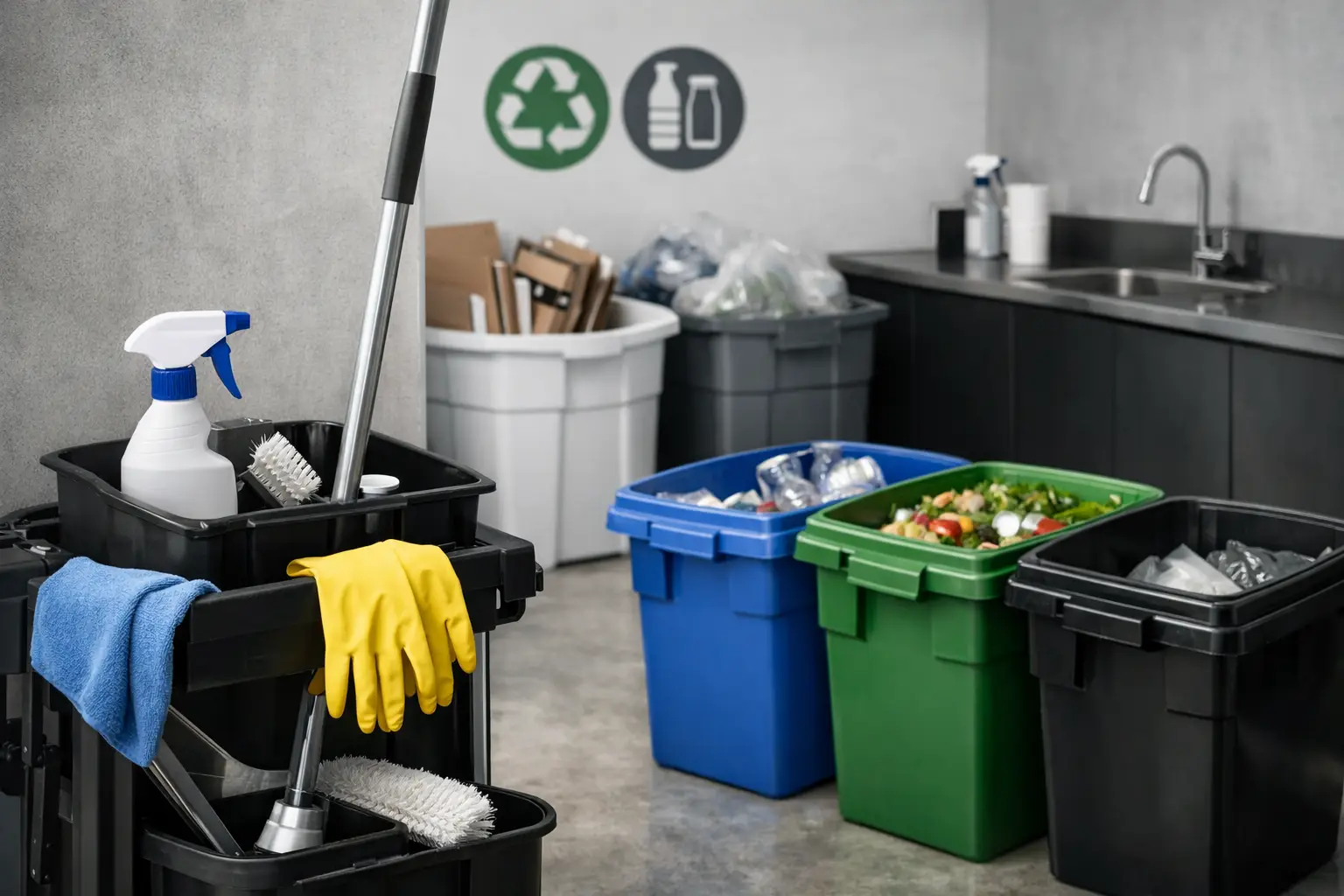
A poorly maintained recycling room quickly becomes a source of friction in a building. Overflowing bins, a sticky liquid on the floor, persistent odours or cardboard left in front of the door give residents the impression that general maintenance is out of control. Best practices for recycling room maintenance therefore go beyond appearance: they protect common areas, reduce complaints and facilitate the work of the property manager.
In a condo, a multi-unit building, a school or a commercial building, this area is used every day by people who do not sort their materials in the same way. It must be maintained as a fully operational area, with an appropriate frequency, precise methods and visible follow-up.
Why a recycling room requires special maintenance
Unlike a corridor or a lobby, a recycling room quickly accumulates moisture, food residues, wet cardboard, improperly emptied containers and waste placed in the wrong location. These conditions promote odours, floor stains and, depending on the season, the appearance of insects. In buildings with high occupancy, a few days without intervention can be enough to create a difficult situation to recover from.
The problem does not always come from the volume of materials. It can also be linked to poor organization of traffic, insufficient bins, unclear signage or a collection schedule that no longer matches the building's needs. The maintenance team does not control the actions of the occupants, but it can limit the consequences of poor use and report recurring problems to the property manager.
A clean room also improves the perception of shared spaces. When a resident passes a stained door or smells an odour all the way down the corridor, they associate this lack of maintenance with the entire condominium or rental building. It is often there that avoidable complaints begin.
Best practices for recycling room maintenance
Establish a frequency based on actual occupancy
A weekly frequency may be suitable for a small, lightly occupied building where materials are well contained. In a condo tower, a dense multi-unit building or a commercial building, several visits per week, or even daily for targeted checks, may be necessary. The right frequency depends on the number of units, the capacity of the bins, the time between collections and the habits observed on site.
It is necessary to distinguish between quick control and full maintenance. A quick check allows for picking up materials on the floor, repositioning lids, treating a recent spill and checking that access remains safe. Full maintenance includes cleaning the floors, cleaning the bins and handles, wiping surfaces, treating corners and checking for odours. This distinction avoids the belief that a simple sweep is enough.
Clean surfaces that transmit dirt
The floor is the priority, but it is not the only element to treat. Handles, switches, walls near the bins, edges, baseboards and lids accumulate marks and residues. An effective intervention starts with removing visible materials, then continues with cleaning adapted to the surfaces and the nature of the dirt.
Liquids from improperly rinsed containers must be treated quickly. They leave traces, attract pests and can make the floor slippery. In a building with an underground garage or adjacent corridor, the staff must also check that the wheels of the bins or shoes do not carry these residues into common areas.
High-pressure washing is not always the right solution. If drainage is limited or the floor is fragile, excess water can worsen odours and damage joints. Maintenance must take into account the floor, ventilation and available drainage.
Treat odours at the source
Masking an odour with a scented product does not solve the problem. Odours usually come from organic materials, spilled liquids, dirty bins or inadequate ventilation. The most reliable method is to remove the source, clean the affected areas and let the space dry properly.
The bins themselves require regular attention. Their exterior is often neglected, while it receives splashes, fingerprints and spill trails from bags. Their cleaning must be planned according to their actual condition and not only after a complaint. If odours recur systematically, it is necessary to check the capacity of the containers, the condition of the lids and the collection frequency before multiplying deodorizing products.
Keep access free and safe
Cardboard left in front of the bins is one of the most frequent problems. It hinders sorting, complicates collection and can block a passage. In a building, a recycling room should never become a temporary storage area for furniture, appliances, bags of renovation debris or bulky items.
The building janitorial team can tidy the area, but a recurring problem must be documented and communicated. Clear signage helps, but it does not replace coherent management of clutter and moving periods. In some cases, adding a temporary collection point or a special procedure is more useful than increased cleaning.
Organize follow-up between the maintenance team and the property manager
Quality does not depend solely on a cleaning team's visit. It also depends on communication around anomalies observed on site. A good building janitorial team informs the property manager quickly when a bin is broken, when a major spill requires intervention, when a door does not close or when a ventilation problem compromises maintenance.
A simple log can make a big difference: date of visit, bin condition, presence of non-compliant materials, spill addressed and recommended action. This follow-up allows identifying difficult periods, for example after the end of the month, moves, renovations or days before collection.
For property managers, this type of communication reduces constant supervision. Instead of receiving a vague complaint from an occupant, they have concrete observations to adjust the service, notify the condominium board or contact a waste collector.
When to call a specialized team
Regular cleaning is sufficient when the room is regularly followed up and problems remain occasional. However, a restorative cleaning is recommended after a major spill, a long period without maintenance, renovations, a problematic tenant departure or a buildup of dirt in corners, walls and bins.
A specialized team is also appropriate when odours spread through corridors, when the floor is permanently stained or when complaints recur despite regular visits. Commercial cleaning in a building requires professional equipment, appropriate products and a method that respects other occupants. It is not just about cleaning quickly, but about returning the area to a stable and easy-to-maintain state.
In Montreal, Laval and on the North Shore, Nickel & Krome supports property managers, condominiums and building owners with building maintenance services focused on areas that generate the most complaints: waste rooms, recycling rooms, lobbies, corridors, elevators, stairwells and underground parking garages. The team works with a practical, on-site approach and clear follow-up. The business is registered under NEQ 3381837957.
Frequently Asked Questions About Recycling Rooms
Who maintains a recycling room in a building?
The responsibility varies depending on the building, but maintenance is generally entrusted to a building janitorial team, maintenance staff or a commercial cleaning company. For condominiums, the condominium board or property manager determines the frequency and tasks included in the contract. The key is to designate a clear responsible person to avoid problems remaining without follow-up.
What does recycling room maintenance include?
It usually includes picking up materials on the floor, sweeping and cleaning the floor, cleaning the bins and their lids, wiping contact surfaces, treating stains and odours, as well as checking access. Depending on the inspection, a restorative cleaning of walls, baseboards and difficult-to-reach areas may be added to the service.
How to reduce resident complaints?
The solution lies in three elements: a realistic frequency, bins adapted to the volume and quick communication when a problem goes beyond normal maintenance. A clean, dry, accessible and odour-free room reduces daily irritants. When equipment or user behaviour is at fault, it is necessary to correct the source rather than asking the cleaning team to compensate indefinitely.
A well-maintained recycling room is almost invisible, and that is precisely the desired result. By integrating this area into the maintenance schedule for common areas and maintaining direct communication with your supplier, you protect the experience of occupants before small oversights become recurring complaints.