
Building common-area maintenance: why it matters and how to do it right
Proper maintenance of building common areas protects image, reduces complaints, and keeps spaces clean, safe, and long-lasting.
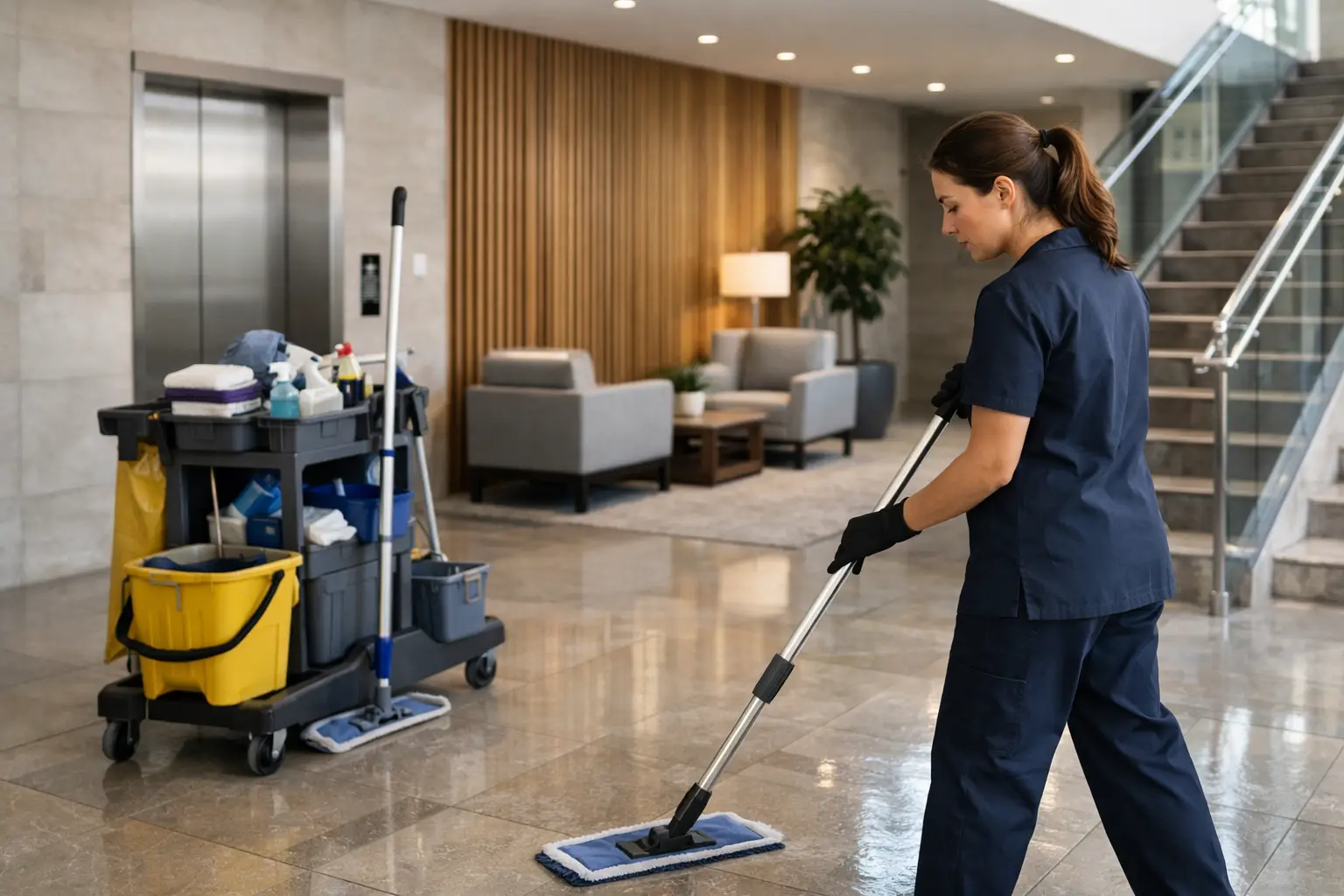
A dull lobby, elevator scuffs, or a stairwell that smells of dampness—these small details can quickly tarnish the perception of a building. Maintaining common areas in a building isn’t just an afterthought. It’s a direct way to influence the image of the space, the comfort of occupants, daily safety, and the lifespan of surfaces.
For property managers, condo boards, or owners of multi-unit buildings, this goes far beyond simply mopping floors. Common areas see the most foot traffic, dirt, wear, seasonal residue, and sometimes even the aftermath of renovations or moves. When maintenance is poorly calibrated, complaints pile up, materials wear out faster, and corrective work becomes far more expensive.
Why common-area maintenance requires a real method
Not all common spaces get dirty in the same way. A vestibule takes the brunt of water, calcium, salt, and grit in winter. A stairwell collects mostly dust, handprints, and occasional litter. Elevators need more delicate care because their surfaces are closely inspected and sensitive to the wrong cleaning products.
This is where method makes all the difference. Good maintenance relies on the right frequency, products compatible with the materials, a logical execution order, and constant quality control. Cleaning too little gives an impression of neglect. Cleaning too often—or with the wrong methods—can damage coatings, dull finishes, or simply move the problem around without solving it.
In commercial or residential buildings, foot traffic patterns also matter. Well-planned interventions minimize disruptions and keep key areas accessible. This is especially true in mixed-use buildings, continuously occupied condos, or properties with multiple entrances.
Which zones to include in building common-area maintenance
We often think first of floors, but common areas include much more. Entrance halls, hallways, staircases, handrails, vestibules, elevators, interior windows, mailboxes, doors, baseboards, and high-touch surfaces must all be part of the maintenance plan. In many buildings, common rooms, waste rooms, loading docks, and service entrances also require regular attention.
Each zone has its own logic. High-touch surfaces need close monitoring for hygiene and presentation. Floors demand more technical care because they bear the brunt of visible wear. Corners, moldings, and edges often reveal the true quality of the work. A space may look clean from a distance but appear neglected up close.
The common mistake is applying the same level of care everywhere. In reality, priorities must be set. A main entrance doesn’t have the same requirements as a secondary hallway. An elevator used all day isn’t treated the same as a rarely used stairwell. This nuance allows for better time allocation and keeps cleanliness consistent where it matters most.
Ideal frequency depends on use, not a fixed rule
There’s no one-size-fits-all schedule. The right frequency depends on the number of occupants, building type, season, flooring materials, and occasional events. An office building with light traffic won’t have the same needs as a high-density multi-unit property or a condo with glass entrances exposed to the elements.
Winter often calls for increased frequency. Salt, slush, sand, and moisture accumulate quickly and can damage floors within days. Conversely, certain times of year may allow for slightly lighter cleaning, provided visual checks remain rigorous.
Buildings that have recently undergone renovations also require adjustments. Even after construction officially ends, fine dust often lingers in corridors, door frames, and ventilation systems. In these cases, standard maintenance may not be enough. A reset is sometimes needed before returning to a regular routine.
What poorly executed maintenance ultimately costs
When common areas are maintained at the bare minimum, consequences appear quickly. Occupants notice the details before even filing a complaint. Visitors, potential tenants, or clients pick up on a lack of rigour. For commercial buildings, this affects image. For condos or rental properties, it fuels dissatisfaction that’s hard to recover from.
There’s also a material cost. Floors left damp too long, finishes damaged by unsuitable products, or dirt buildup in grout eventually require heavy-duty work. Corrective cleaning, premature stripping, or material replacement costs far more than well-managed maintenance.
Operationally, poor maintenance creates friction. It leads to follow-ups, checks, missed spots, and managing occupant feedback. For a property manager, this lost time adds up just as much as the bill itself.
How to spot a service truly suited to your building
A reputable provider doesn’t just offer a fixed frequency. They take the time to understand the building. They observe entry points, traffic flow, flooring, time constraints, and specific risks. This on-site assessment allows them to create a realistic plan—without vague promises or unnecessary tasks.
Consistency is also key. A good service isn’t built on a single successful pass. It relies on stable execution, week after week. This requires clear procedures, well-trained teams, and the ability to work cleanly in occupied spaces.
Versatility matters too. Often, routine maintenance goes hand-in-hand with related needs: post-construction cleaning, post-renovation touch-ups, exterior surface washing, or spot interventions in heavily soiled areas. Working with a partner who can handle these needs avoids juggling multiple vendors and simplifies management.
Common-area maintenance for buildings in Montreal and the surrounding area
In Greater Montreal, the challenges are very real. Winter quickly wears down entryways and ground-floor corridors. Spring brings up accumulated residue. Autumn brings leaves, moisture, and fine dirt. In many areas of Montreal, Laval, and the North Shore, occupancy rates and weather conditions mean maintenance schedules often need more frequent adjustments than expected.
This local reality changes how interventions are planned. A building with heavy foot traffic or located in a dense area typically requires closer monitoring of halls, vestibules, and elevators. Conversely, quieter buildings may only need precise work on presentation and finish maintenance.
It’s precisely in this context that a specialist like Nickel & Krome adds value: an execution approach designed for buildings, demanding environments, and real maintenance needs—without confusing technical cleaning with generic housekeeping.
Setting up a maintenance plan that lasts
The right reflex isn’t to aim for an overloaded checklist. It’s better to define a clear plan with clear priorities, consistent frequencies, and simple checkpoints. The goal is to achieve visible, consistent results—not to accumulate theoretical tasks.
A sustainable plan typically distinguishes between routine maintenance, periodic interventions, and reset work. Routine maintenance keeps spaces clean day-to-day. Periodic interventions address what builds up slowly, like interior windows, finishing details, or deeper cleans. Reset work corrects the effects of a season, heavy foot traffic, or recent renovations.
This structure avoids two common pitfalls: paying for poorly targeted passes or waiting until the situation deteriorates to act. In both cases, the building’s perceived quality suffers, and the budget isn’t used as effectively.
A well-maintained building doesn’t stand out by accident. It inspires confidence because every common area consistently conveys care, control, and reliability. It’s often subtle, but for occupants and visitors alike, the difference is immediately noticeable.
Apply this guide to your property
Review the scope, access requirements and service details for Recurring common-area cleaning for condos and managed buildings.