
How to Clean a Waste Room Effectively
Plan waste-room cleaning around bins, floors, walls, drainage and collection schedules, with practical steps to address residues and recurring odours.
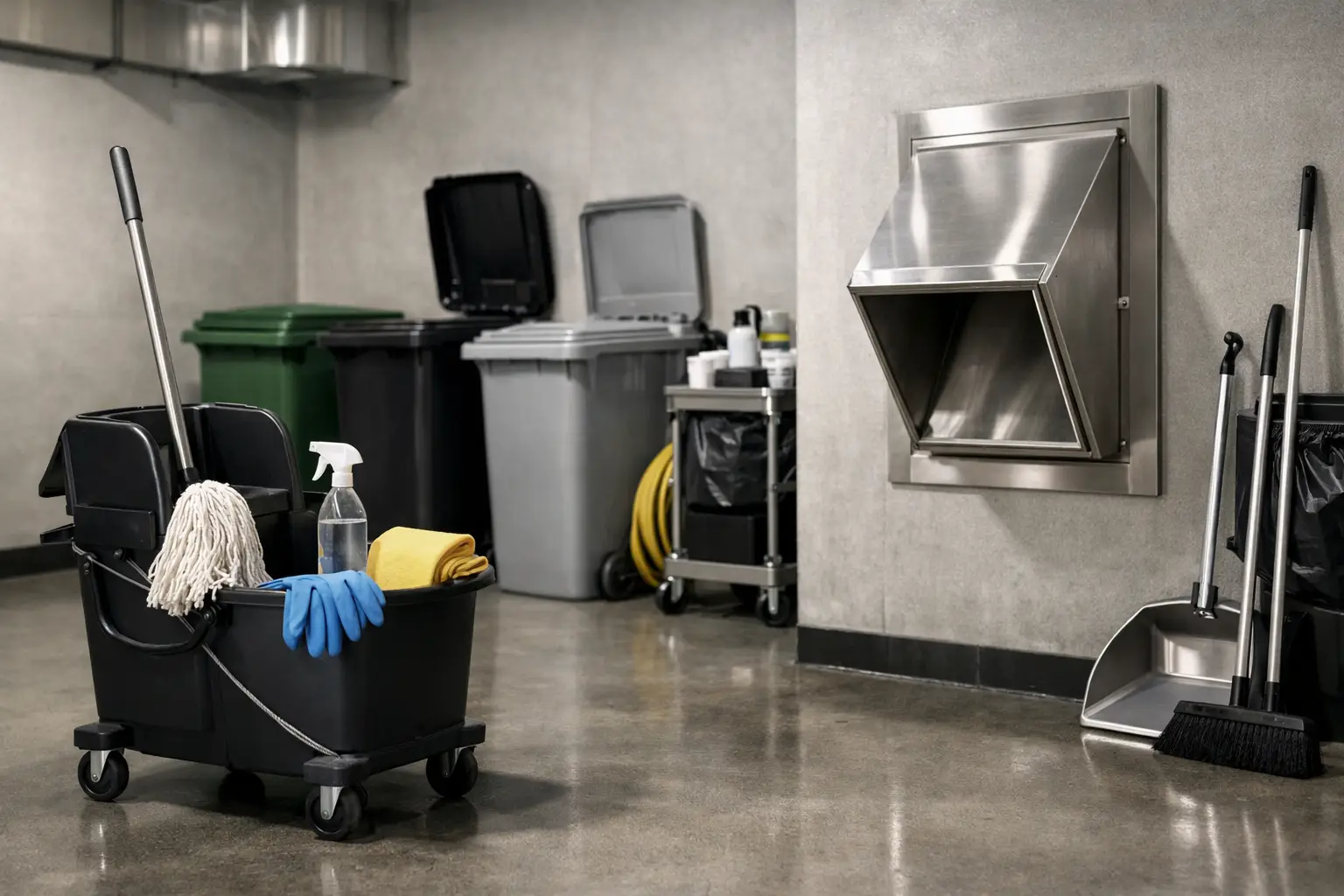
A poorly maintained waste room quickly becomes a source of friction in a building. Persistent odours, liquid leaking from bags on the floor, sticky doors, flies, stains on the walls and complaints from residents can accumulate in just a few days. Knowing how to clean a waste room is therefore not just about sweeping: it involves treating an operational area exposed to organic waste, recycling, frequent traffic and occasional spills.
For a property manager or condo board, the objective is clear: keep this space clean, safe and acceptable for occupants, without moving the problem to the corridors, elevators or common areas. A structured method reduces odours, preserves finishes and facilitates the work of the waste collection staff.
Start by securing and clearing the area
Cleaning should ideally be done after the collection or at a time when the bins are least full. Cleaning around overflowing containers rarely gives lasting results. Before any intervention, it is necessary to clear out the torn bags, soaked cardboard, fallen waste on the floor and materials blocking access.
The team must wear appropriate gloves, non-slip shoes and, depending on the condition of the room, eye protection and a mask. Liquids from the bags can make the floor slippery and contain difficult-to-identify residues. Sharp objects should never be picked up by hand, even with light gloves.
You must also check the ventilation, lighting and condition of the drains. An odour that returns quickly after cleaning may come from a dry, clogged or poorly maintained drain. In a residential building, this detail is often more decisive than the amount of odour eliminator used.
How to clean a waste room step by step
A waste room requires cleaning from top to bottom, then from the least soiled to the most soiled. This logic prevents redepositing dirt on already cleaned surfaces and limits splashes on the walls or doors.
Start by removing dust, paper, packaging and dry debris with the appropriate equipment. The walls, handles, switches, protective plates, door frames and edges of the bins must then be wiped with a product compatible with their surface. These areas are often neglected as they concentrate fingerprints, greasy residues and odours.
The floor requires particular attention. It must first be treated with a degreaser or a cleaner appropriate for the stains present, following the contact time indicated. A mechanical action is generally necessary: scrub brush, compact automatic floor scrubber or pressure-washing equipment when the room's configuration and drainage allow. A simple mop can maintain a clean floor, but it is not sufficient to remove the sticky deposits near the bins.
Rinse or recover the contaminated water according to the available installations, without sending solid waste into the drain. The floor must be left as dry as possible before the full reopening of the area. A temporary sign is recommended if the floor remains wet or if access is inevitable during drying.
The bins, containers and their lids must be cleaned according to their actual condition. When they have spill trails, organic residues or strong odours, an external and internal wash becomes necessary. However, it is necessary to respect the rules of the waste collection manager and avoid moving heavy containers without appropriate equipment or training.
Disinfect without masking the problem
A strong fragrance does not correct organic matter, liquid deposits or a problematic drain. The odour eliminator can temporarily improve the experience of residents, but it must come after the removal of the odour source.
Disinfection is useful on frequently touched surfaces and in areas soiled by waste liquids. It must be performed on a previously cleaned surface. Otherwise, dirt reduces the effectiveness of the product. Follow the dilution and contact time prescribed by the manufacturer, especially in a poorly ventilated room.
Never mix chemical products, especially a chlorine-based disinfectant with a scale remover or acidic cleaner. This error can produce dangerous vapours. In waste rooms of buildings, the safety of the staff and occupants comes before the speed of execution.
Areas often overlooked that maintain odours
Complaints do not always come from the floor. An odour can remain trapped in the joints, at the bottom of the walls, behind the containers, under the wheels or on the door thresholds. The air vents, grilles, baseboards and door rails are also areas that need regular inspection.
Doors deserve particular attention. They are used by residents, janitors and waste collection teams, sometimes with their hands full or bags that rub against the surfaces. Cleaning the handle without washing the lower panel leaves behind marks, streaks and an impression of incomplete cleaning.
In a recycling room, liquids from poorly emptied containers can create the same problem as regular waste. Recycling should therefore not be considered an automatically clean area. The blue bins, sorting areas and the floor under the bags or carts must be part of the routine.
What frequency to plan in a building?
The right frequency depends on the volume of waste, the number of units, the season, the ventilation and the type of collection. A small building with outdoor bins does not have the same needs as a condo tower with a waste chute and a closed basement room.
In high-traffic buildings, a daily visual check allows for the early detection of a torn bag, a spill or a liquid on the floor before an odour spreads. Light maintenance can be done several times a week, while a more thorough cleaning of the floors, lower walls, doors and containers is often scheduled weekly or monthly depending on the situation.
After a move-out, a period of construction, a long absence or a missed collection, an additional intervention is generally preferable. Waiting for the next regular visit may turn a localized nuisance into widespread complaints in the corridors and elevators.
Establish a routine that limits complaints
A clean room remains easier to maintain when it is well organized. The bins must be identified, accessible and placed in a way that leaves space for cleaning around them. The cardboard must be flattened, the waste deposited in the appropriate containers and large items removed according to the building's instructions.
For property managers, a simple intervention log is useful: date of cleaning, bin condition, observed problem, drain checked, spill or need for repair. This follow-up helps distinguish a sporadic incident from a recurring collection, occupant behaviour or insufficient capacity issue.
A building janitorial service includes exactly this type of on-site follow-up. It does not only cover the cleaning of the halls and corridors: it can include the maintenance of common areas, elevators, stairwells, waste rooms, recycling rooms and, according to the mandate, other sensitive areas such as the underground parking garage.
When to entrust the cleaning to a specialized team?
A specialized team is indicated when odours persist despite regular maintenance, when the floors are caked, when the bins leak frequently or when the room's condition generates repeated complaints. It is also relevant after construction, an infestation, a major incident or a period when regular maintenance has been interrupted.
Property managers, condominiums, multi-unit buildings, commercial properties, clinics and schools often need a provider capable of intervening on a stable schedule, with professional equipment and clear communication. The commercial cleaning of a waste room must fit into the building's reality without unnecessarily disturbing residents or collection operations.
In Montreal, Laval and on the North Shore, the Nickel & Krome S.E.N.C. team, NEQ 3381837957, carries out property maintenance and specialized cleaning tasks suitable for common areas. To evaluate a problematic waste room or plan a maintenance routine, the team is reachable at +1 514-974-3311.
A well-maintained waste room remains discreet: it does not attract the attention of residents, does not contaminate the image of common areas and does not create a new emergency every week. It is this level of consistency that truly protects the experience in a building.
From the guide to your project
To check the scope, access and conditions for intervention, consult our service: Cleaning of common areas of condos and managed buildings.