
Pressure Washing or Mechanical Scrubbing: Which to Choose?
Compare pressure washing and mechanical scrubbing for building floors and shared spaces, with practical guidance on surfaces, access and water recovery.
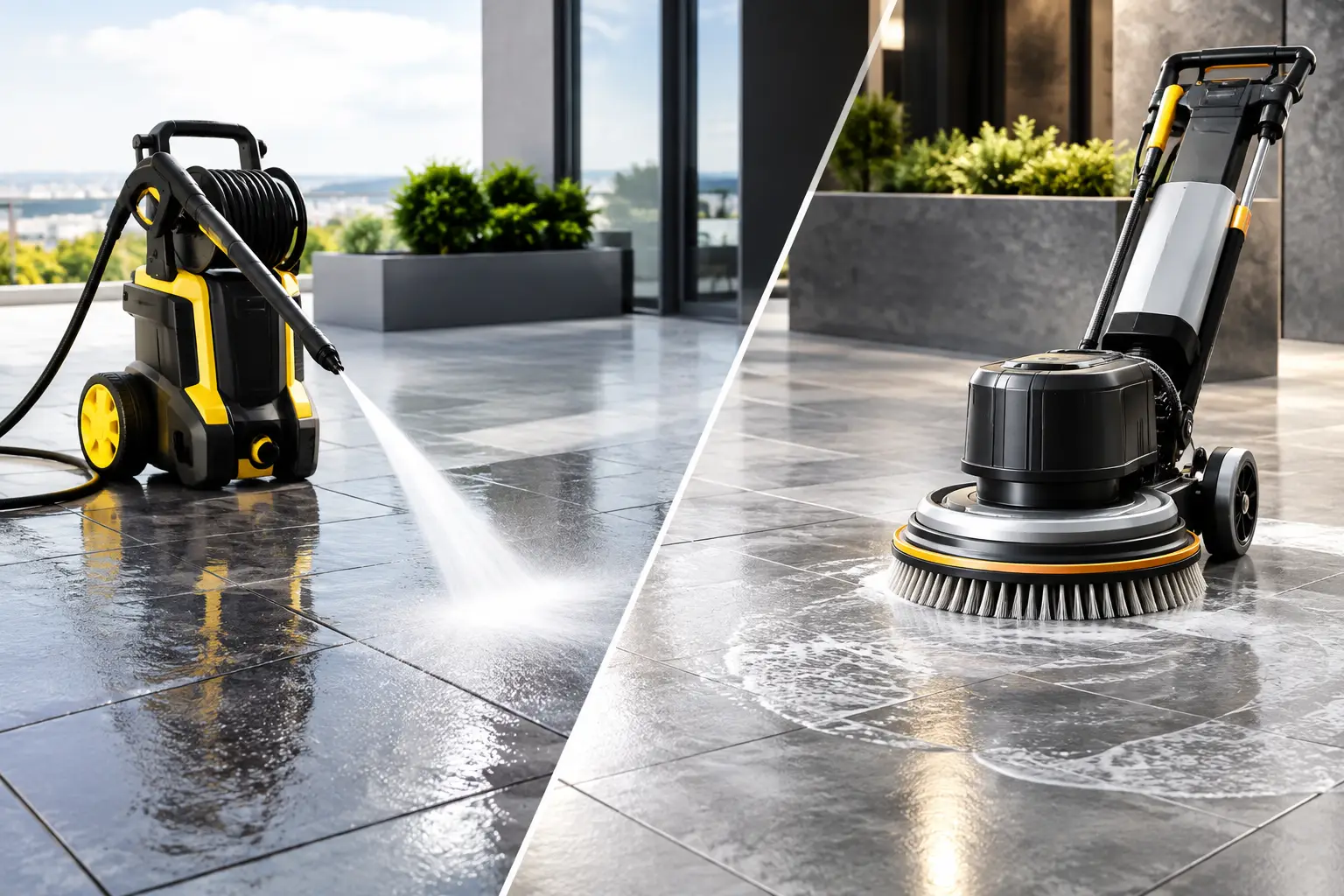
Pressure washing and mechanical scrubbing do not solve the same problems, even though both methods aim to restore a surface to a clean and presentable state. In a building, the right choice depends mostly on the type of floor, access to drains, level of dirt, traffic, and the presence of residents or businesses. A poor method can move the dirt, damage a floor finish, or create stagnant water where it shouldn't be.
For a property manager, the question is not simply which method cleans the most effectively. It is necessary to determine which one solves the problem without disturbing building operations, without increasing complaints, and without compromising the condition of the surfaces.
Pressure wash or mechanical scrubbing: the real difference
Pressure washing projects water with controlled force to remove accumulated deposits. It is particularly useful on hard, textured, and highly exposed surfaces: garage entrances, sidewalks, docks, loading areas, exterior walls, and certain concrete floors. This method effectively removes mud, salt, black stains, construction residue, and accumulations in joints or ridges.
Mechanical scrubbing uses an automatic floor scrubber or a machine equipped with brushes or pads. It applies a cleaning solution, works on the surface, and recovers the dirty water in the same pass. This is generally the most suitable method for interior floors or underground garages when water control is essential.
The distinction is important: pressure washing removes and evacuates dirt, while mechanical scrubbing cleans in a more controlled manner by limiting residual water. In corridors, halls, elevators, waste rooms, or commercial spaces, this difference becomes quickly operational.
When pressure washing is the right choice
Pressure washing is often justified when the dirt is embedded, the surface is rough, and water can be directed to an appropriate drain. After winter, for example, garage entrances and door thresholds can accumulate a mix of calcium, sand, mud, and tire particles. A manual wash is not always sufficient to remove this layer.
It is also effective in the context of post-construction cleaning. On a balcony, a ramp, a sidewalk, or a service area, concrete dust, material traces, and construction residue can accumulate in difficult-to-reach areas with an automatic floor scrubber.
This method, however, requires careful preparation. It is necessary to check the condition of the joints, the proximity of doors, slopes, drains, and areas where water could infiltrate. In an interior garage, poorly planned pressure washing can push dirty water into elevators, storage areas, or pedestrian access points. The equipment does not replace on-site evaluation.
The most suitable surfaces
Pressure washing is generally suitable for unfinished concrete, asphalt, pavers, exterior slip-resistant surfaces, and certain very dirty garage areas. Greater caution is needed on fragile finishes, membranes, painted surfaces, damaged joints, and floors that already show signs of wear.
The pressure must also be adapted to the surface. More powerful does not always mean cleaner. Excessive pressure can mark concrete, pull out a sealant, or damage an existing finish.
When to prioritize mechanical scrubbing
Mechanical scrubbing is designed for spaces where regular, uniform, and controlled cleaning is desired. In condo halls, corridors, common areas, recycling rooms, commercial entrances, and underground garages, the automatic floor scrubber removes traffic marks while recovering the dirty water. The floor dries more quickly, reducing the risk of slipping and facilitating the maintenance of activities.
This is often the best solution for regular maintenance. In a residential building, footprints, cardboard marks, fine dust, and dirt brought by residents return every week. A planned mechanical intervention helps maintain a consistent appearance rather than waiting for the floor to look neglected.
Scrubbing is also relevant in underground garages. Tire marks, light oil stains, black dust, and calcium can be treated with appropriate products and brushes. For heavy deposits, a targeted pressure wash may be necessary before or after the automatic floor scrubber. The two methods can therefore complement each other.
Limitations to know
An automatic floor scrubber does not solve everything. It is less effective at reaching corners, edges, gutters, and very textured surfaces. It can also be less effective on a significant accumulation of dried mud or construction debris. A complete job sometimes includes a preliminary sweeping, localized treatment of stains, and manual finishing in difficult-to-reach areas.
The choice of brush, pad, and product is as important as the machine. A poor product can leave a film, make the floor slippery, or alter the finish. In common areas, the goal is to leave a clean, safe, and residue-free floor, not just to get a machine through.
How to decide for your building
To choose between the two methods, start by observing the type of dirt. An exterior surface loaded with sand, mud, and embedded deposits often requires pressure washing. A condo corridor marked by daily traffic is usually better maintained with mechanical scrubbing.
Access to water and drains is the second factor. In an underground parking garage, water management must be planned before the intervention. It is also necessary to consider traffic hours, vehicles, residents, deliveries, and areas that must remain accessible. A team that knows the buildings plans the intervention to reduce disruptions rather than discovering them on-site.
The frequency also changes the response. A seasonal restoration may require intensive cleaning. On the contrary, an effective building janitorial service relies on regular passes in high-traffic areas to avoid dirt becoming more costly to remove.
What well-planned maintenance includes
The person maintaining a building must adapt methods to the spaces, not apply the same recipe everywhere. A building janitorial service typically includes the maintenance of halls, corridors, stairs, elevators, waste rooms, recycling rooms, and other common areas according to a defined frequency. Cleaning of garages, entrances, and exterior surfaces can be added according to the season and the actual condition of the building.
For a condominium, common areas are usually cleaned by a building janitorial service or a commercial cleaning company hired by the condo board or property manager. The supplier must be able to report problems observed on-site: persistent odours, unusual accumulation, lack of drainage, recurring stains, or surface deterioration. This follow-up helps the property manager intervene before complaints accumulate.
A suitable method also protects the building's image
A clean garage, a clear entrance, and floors without marks immediately give a better impression to residents, visitors, and commercial tenants. But the stakes are also practical: less dust carried into the halls, less dirt in the elevators, and more predictable maintenance for the entire building.
In Montreal, Laval, and on the North Shore, the cycles of freezing, salt, and traffic make cleaning choices particularly important. The Nickel & Krome team intervenes in building maintenance, building janitorial services, and specialized cleaning with an approach adapted to the actual conditions of the buildings. NEQ 3381837957, phone: +1 514-974-3311.
Before choosing a method, have the surface, access, and level of dirt evaluated. The right maintenance is not about using the most powerful machine: it is about using the right method at the right time to keep the building clean and easy to manage.