
Multi-Unit Building Maintenance Guide
Organize cleaning for a multi-unit building around common areas, resident traffic, waste rooms and seasonal needs, with clear priorities and follow-up.
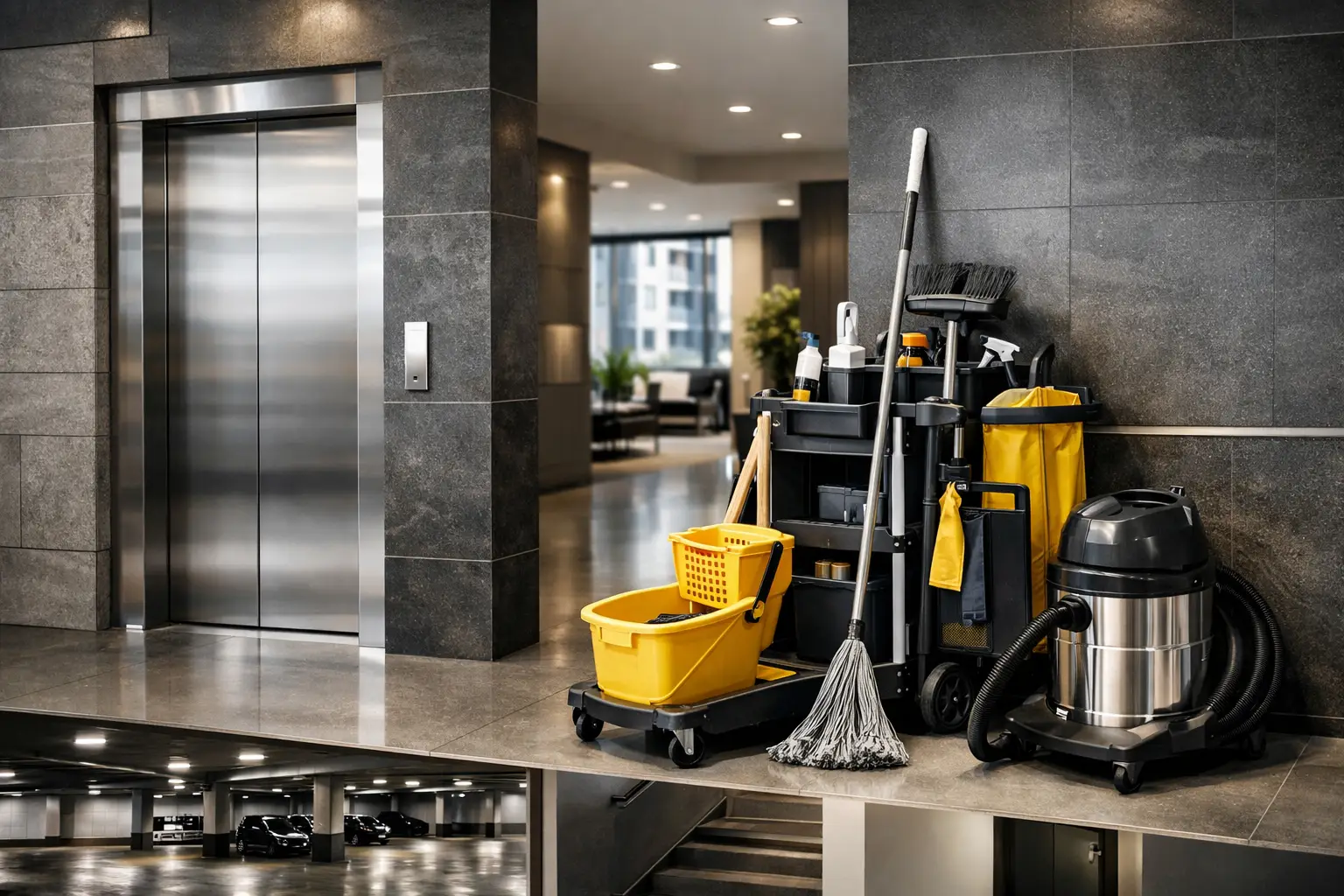
A corridor already marked on Monday, an odour that settles in the waste room or an elevator with doors covered in fingerprints: these are often the details that trigger complaints. A good building maintenance guide for multi-unit buildings helps avoid these problems becoming recurring. It gives the property manager, the condo board or the owner a clear method to keep common areas clean, functional and consistent with the building's image.
Maintenance of a multi-unit building is not just about sweeping the lobby. You have to take into account the movement of residents, deliveries, seasons, waste, occasional work and the actual condition of surfaces. The correct frequency therefore depends on the building, its traffic and its sensitive areas.
Start with a real profile of the building
Before setting a schedule, you need to observe the places as residents use them. A building with 12 units and a small lobby does not have the same needs as a condo tower with two elevators, a basement garage and very busy waste rooms. The common mistake is to apply the same schedule everywhere without adjusting the work to the site.
The initial profile should cover the entrance, the lobby, the corridors, the stairwells, the elevators, the waste rooms and recycling rooms, the common laundries, the glass doors, the garages and the exterior access points. You also need to identify irritants: salt traces near the entrances, dust that comes back after renovations, persistent odours, poorly lit corners, wall marks or accumulation in less visible areas.
This visit helps distinguish regular maintenance from restorative cleaning. A poorly maintained floor over several months may require more thorough cleaning before entering a regular routine. On the contrary, a surface already well maintained only needs consistency and appropriate products.
Building maintenance guide for multi-unit buildings: define frequencies
The frequency should follow usage, not just the calendar. Areas with high traffic deserve more attention because they immediately affect the perception of the building. A clean lobby can lose its effect if the doors, baseboards or adjacent elevator are neglected.
In most multi-unit buildings, entrances, lobbies, main corridors and elevators require several cleanings per week, and sometimes every day depending on the number of residents. Waste, fresh stains and traces on contact surfaces must be treated quickly. Visits that are too far apart give dirt time to settle and increase the number of complaints.
Stairwells, secondary corridors and common rooms can often be maintained once or twice a week. This depends particularly on the number of floors, the presence of animals, move-ins and the general behaviour of the occupants. For quiet, small condominiums, a well-executed weekly frequency may be sufficient. In a heavily occupied rental building, it will rarely be sufficient.
Interior garages and underground parking garages require a separate plan. Gravel, calcium, dirty water and tire residues accumulate especially at the end of winter. Regular preventive maintenance limits deposits, but full washing is generally scheduled at specific times, depending on vehicle access and drain conditions.
What does a building janitorial service include?
A building janitorial service is an organized maintenance service around shared spaces and the operational needs of the building. It normally includes floor and surface cleaning, door, lobby, corridor, elevator and stairwell cleaning, as well as waste room and recycling room cleanliness management.
According to the agreement, it may also include baseboard dusting, interior window cleaning, wiping switches and handles, changing bags, reporting anomalies and following up on more difficult areas such as garages or laundries. It is not a simple residential cleaning: it is a structured presence that protects the quality of shared spaces.
On-site reporting is particularly useful for property managers. A leak, a damaged door, poor lighting or an unusual accumulation of waste does not always relate to cleaning, but a regularly present team can spot these early. This communication prevents small problems from affecting residents' experience or becoming more costly.
Who maintains the common areas of a condominium?
The common areas of a condominium are usually maintained by a building janitorial company or by a team hired by the condominium board and its property manager. The board of directors defines expectations, budget and frequency, while the provider executes the planned tasks and reports relevant observations.
To choose this provider, price should not be the only criterion. A cheap schedule that is too light for real traffic often leads to rework, urgent interventions and dissatisfaction. It is better to specify the covered areas, service days, included tasks and the way to communicate when a problem arises.
A clear contract should also distinguish regular work from specialized interventions. Post-construction cleaning, high-pressure washing, floor restorative cleaning or seasonal garage cleaning are not managed like weekly corridor maintenance. This distinction protects the budget and avoids vague expectations.
Reduce complaints with a simple follow-up
The majority of complaints do not come from isolated incidents. They appear when a problem is visible for several days or when no one seems responsible for correcting it. The solution is often less complex than it appears: define priorities, check results and adjust when conditions change.
A follow-up register helps maintain control, especially in large buildings. It can note the cleanings performed, problematic areas, waste-related incidents, move-in periods and ongoing work. It then becomes easier to demonstrate what has been done and to identify why a particular area deteriorates faster than another.
Peak periods must also be anticipated. In Montreal, Laval and on the North Shore, winter increases the needs around entrances and floors. Move-ins create more marks in elevators and corridors. After renovations, fine dust can settle for several days, even if a first cleaning has been done. In these cases, a temporary addition to the schedule is often more effective than repeated complaints.
When to call a specialized team
A regular maintenance team is essential, but certain situations require specialized equipment, products and methods. This is especially the case after construction, during a restorative cleaning before handover, for garage cleaning or when residues have accumulated to the point of harming the appearance of the space.
Post-construction cleaning requires, for example, removing fine dust, material traces, stickers, residue on windows and marks on floors without damaging finishes. An inappropriate intervention may leave scratches, move dust rather than eliminate it or delay the occupation of spaces.
For property managers, condominiums and multi-unit buildings, the challenge is to have a partner capable of moving from regular maintenance to a targeted intervention while maintaining continuity in the building’s care. The Nickel & Krome team, registered under NEQ 3381837957, provides building maintenance, janitorial and specialized cleaning services in Montreal, Laval and on the North Shore. To discuss a on-site need or a maintenance schedule, they are reachable at +1 514-974-3311.
A well-maintained building not only gives a better first impression. It reduces daily irritants, makes management work easier and helps residents respect the spaces they share more. A good plan starts with the areas that matter most, then adjusts to what the building actually shows week after week.
From the guide to your project
To check the scope, access and conditions of intervention, consult our service: Cleaning of common areas of condos and managed buildings.