
How to Clean an Indoor Parking Garage Floor
Learn how to plan indoor garage floor cleaning around dust, salt, oil marks, drainage and vehicle access, using a method suited to the actual surface.
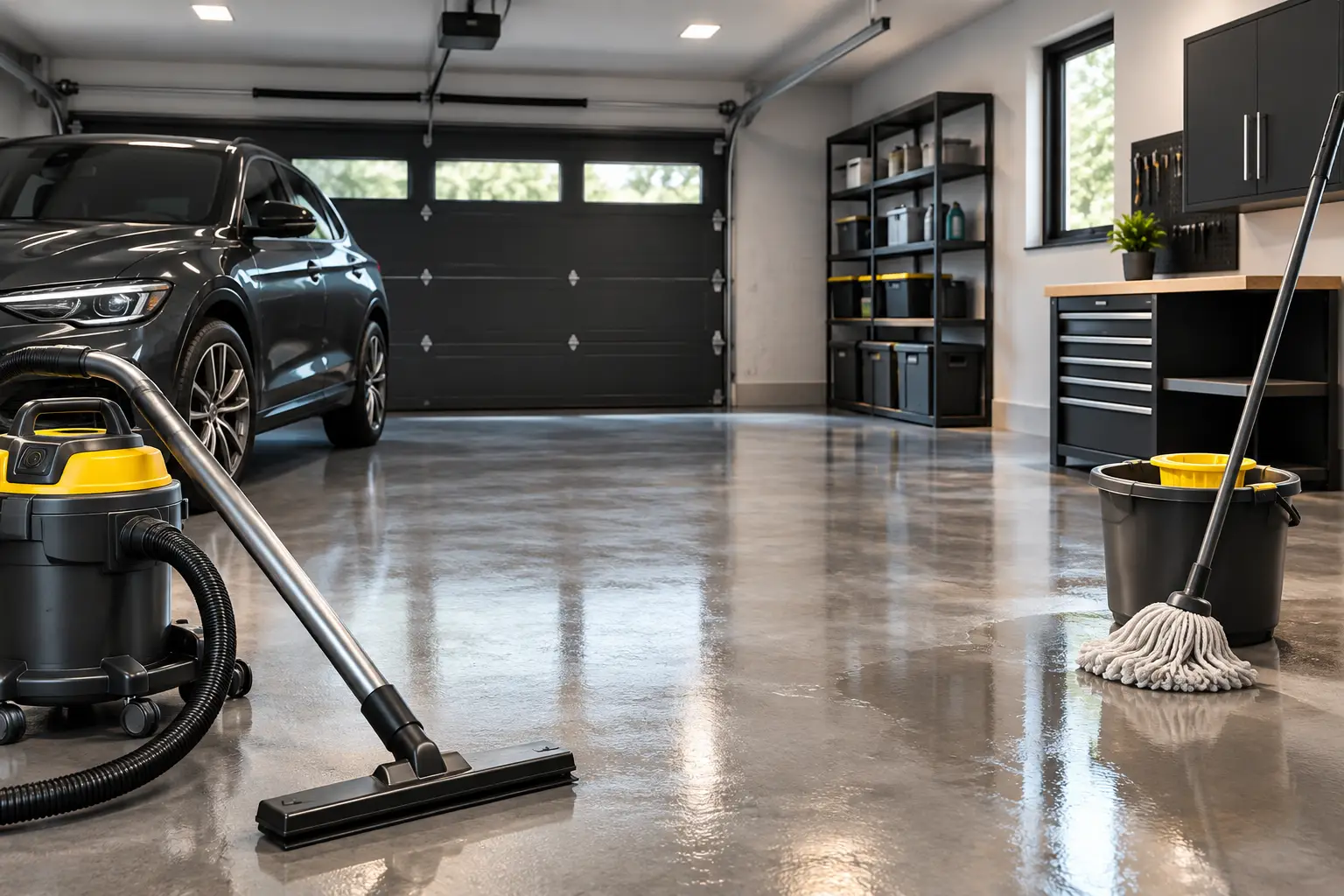
An interior garage floor is not cleaned like a corridor or an entrance hall. To know how to clean an interior garage floor, you have to deal with calcium, de-icing salt, oil, tire marks, fine dust and moisture that accumulate in an often poorly ventilated space. In a basement garage of a condominium or a multi-unit building, an inappropriate method can leave a slippery film, move dirt towards drains or damage an already fragile concrete surface.
A good result depends less on the product chosen than on the sequence of work, the condition of the floor and the ability to manage dirty water. Here is an approach used for building maintenance, particularly useful for property managers, condo boards and maintenance supervisors.
Assess the type of dirt before cleaning
An interior garage rarely accumulates a single type of dirt. In spring, the main problem is often a mix of calcium, de-icing salt and dried mud. In winter, the melting water and marks left by vehicles increase the risk of a slippery surface. The rest of the year, you find more dust, sand, oil residues and black stains on walkways.
This assessment determines the method. A light cleaning does not require the same intervention as a restorative cleaning after winter or as a cleaning after construction. Before starting, check also the condition of the concrete, the presence of a protective coating, cracks, joints, gutters and drains. Grey water loaded with residues must never be pushed without control towards the drainage.
In garages with a lot of traffic, it is preferable to plan the work in sections. This allows maintaining a safe passage for residents while avoiding moving dirt back onto an already treated area.
How to clean an interior garage floor step by step
1. Clear and secure the area
Remove debris, cardboard, leaves, gravel and objects that block equipment movement. Place clear signage at entrances and near wet areas. In an occupied building, the schedule counts as much as the cleaning itself: an intervention during a low-traffic period reduces risks, complaints and interruptions.
You also need to protect sensitive areas. Elevator doors, baseboards, painted walls, mechanical equipment and electrical outlets should not receive unnecessary spray. In some garages, the water pressure must be limited to avoid pushing water into joints or into technical spaces.
2. Pick up dry particles
Sweeping or industrial vacuuming comes before applying water. This step may seem simple, but it prevents sand, calcium and dust from turning into abrasive mud. A automatic floor scrubber or a mechanical sweeper may be appropriate for large areas, depending on the configuration of ramps, parking spaces and obstacles.
Pay particular attention to edges, corners behind columns, entrances, ramps and near drains. These are the places where gravel and heavy residues concentrate. A visually clean floor may still contain enough particles to mark the concrete during cleaning.
3. Treat stains before general cleaning
Oil, grease or car liquid stains require a degreaser compatible with concrete and the building's drainage system. Apply the product locally, let it act according to the manufacturer's instructions, then work the surface with an appropriate brush. Avoid overly corrosive products: they can damage concrete, alter a sealer or create discolored areas.
Calcium and white deposits also require caution. An acidic product may seem effective in the short term, but it is not automatically the right answer. On porous concrete, a specialized coating or a fragile surface, it can cause more damage than benefit. A discreet test on a small area is recommended before any extended intervention.
4. Clean with the right amount of water
For regular cleaning, use a cleaning solution with the appropriate pH for the floor and observed dirt. Work in controlled zones rather than flooding the entire garage. The goal is to remove residues without saturating joints, cracks or drains.
A professional automatic floor scrubber is often the most effective solution for main pathways and large driveways. It applies the solution, scrubs the floor and recovers the contaminated water in the same pass. It reduces puddles and drying time. However, it does not replace detailed work in corners, near walls or around equipment.
High-pressure washing may be useful for a more thorough restorative cleaning, especially after winter. It must, however, be mastered. Excessive pressure can degrade flaking concrete, project contaminants onto walls and create water management issues. In an interior garage, water recovery equipment is as important as the cleaning equipment.
5. Recover dirty water and let dry
Do not let dirty water dry on the concrete. It can leave a white film, stains, sand or residues that make the floor less safe. Vacuum the water as you go, check drains and go over areas where a film is still visible.
Drying must be sufficient before reopening the space to traffic. In a poorly ventilated garage, the time needed varies according to temperature, humidity level and the amount of water used. Temporary ventilation may help, but it does not replace effective water recovery from cleaning.
Which products to avoid on a garage floor?
Scented household cleaners, very soapy cleaners and aggressive solutions used without testing are rarely good choices. Too much soap leaves a film that traps dust and can become slippery when the floor is wet. Products containing strong acids or solvents must be carefully evaluated, especially in garages with drains connected to sensitive systems.
You also need to avoid masking odours with fragrances. A persistent odour in a garage may come from stagnant water, a poorly maintained drain, trash, a car leak or organic residues. The problem must be cleaned at the source, then followed up in the building's operational maintenance.
What frequency to plan for a basement garage?
The frequency depends on the season, the number of vehicles, the type of building and the expected presentation level. For a condominium or a rental building, regular cleaning of passage areas may be planned to limit sand, trash and visible stains. A more complete restorative cleaning is often necessary after the thawing period, when calcium and winter abrasives are most present.
Entrances, ramps, doors, elevator access points and areas near waste rooms generally require more attention than less used parking rows. Documenting problematic areas also helps adjust the work plan and respond more quickly to recurring complaints.
When to delegate cleaning to a specialized team?
A specialized team becomes relevant when the garage has significant calcium deposits, extensive oil stains, accumulation after winter, persistent odours or complex access constraints. This is also the case after construction, when cement dust, material residues and equipment marks must be removed without damaging surfaces.
Who maintains a building? In reality, this can be a building janitorial team or a commercial cleaning company hired by the property manager, condo board or owner. Building janitorial services typically include the maintenance of common areas, such as halls, corridors, elevators, stairwells, waste rooms, recycling rooms and interior garages. For a condominium, these teams clean common areas according to a frequency and method adapted to the building.
In Montreal, Laval and on the North Shore, the Nickel & Krome team performs this type of specialized cleaning for basement garages and residential or commercial buildings. Their on-site approach takes into account safety, water recovery, surface condition and occupancy constraints. The company is registered under NEQ 3381837957 and can be contacted at +1 514-974-3311.
A clean garage not only improves the building's appearance. It reduces the transport of dirt to halls and elevators, limits slippery surfaces and helps preserve the concrete. A planned, seasonal method executed with the right equipment avoids the maintenance becoming a costly emergency.