
Evolving Cleanliness Standards in Clinics
Review changing cleanliness expectations in clinics and what they mean for cleaning routines, sensitive areas, product choices and service follow-up.
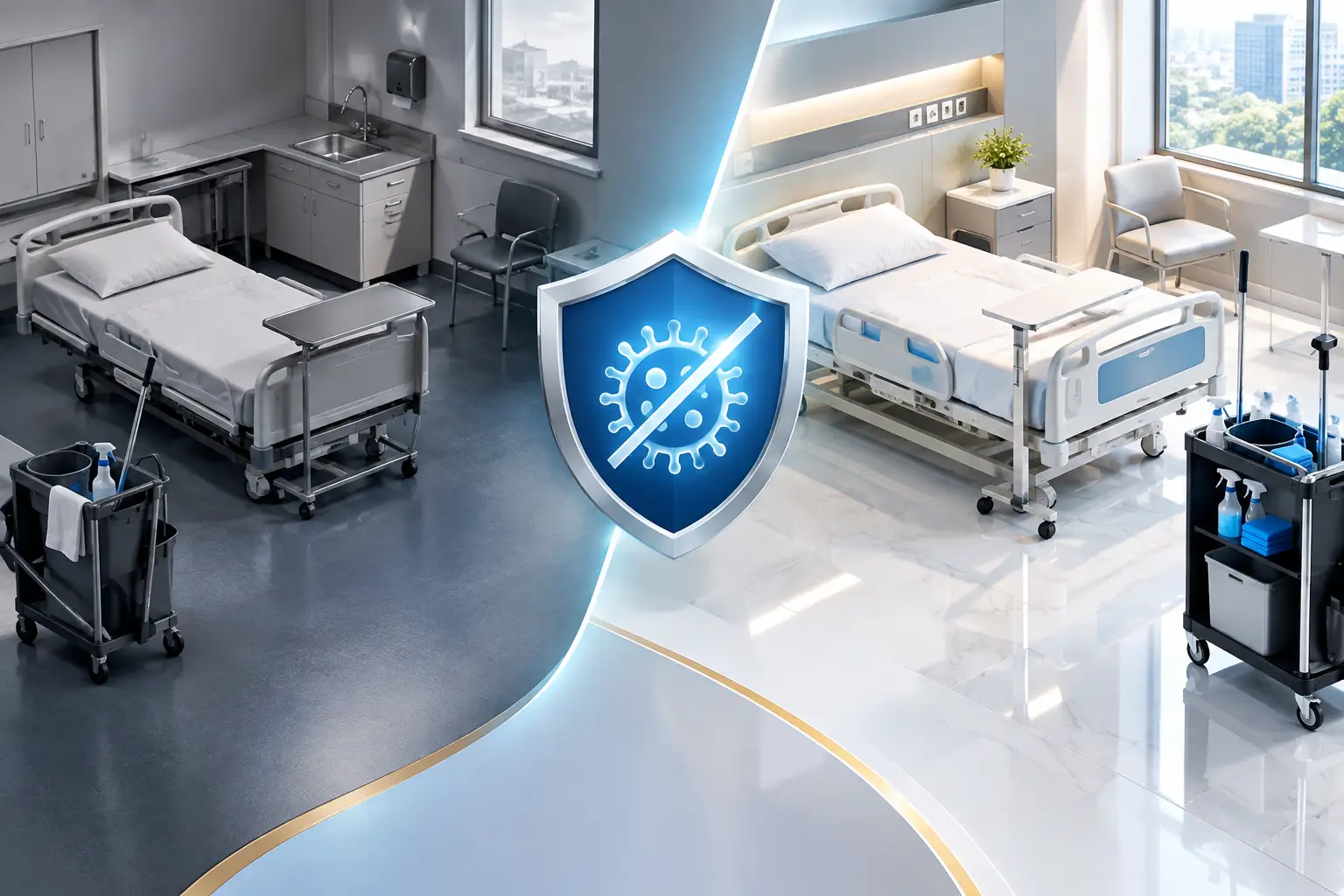
A bright counter does not prove that a waiting room, a treatment room, or a clinic restroom is truly clean. In an environment where patients may sometimes be infected, have limited mobility, or have a vulnerable condition, the evolution of clinical cleanliness standards has changed the way maintenance is planned. Visual cleanliness remains essential for the patient experience, but it must now be based on a documented method, adapted to risks, and applied consistently.
For clinic, professional centre, and medical building managers in Montreal, Laval, and on the North Shore, the challenge is not simply to find an available team in the evening. It is to define what must be cleaned, how often, with what products, and according to what level of control. It is this precision that reduces complaints, limits forgetfulness, and protects the establishment's image.
What the evolution of clinical cleanliness standards covers
Clinical cleanliness standards are not limited to a single universal rule. They include the obligations applicable to the environment, infection prevention and control recommendations, internal policies of the establishment, manufacturer instructions, and operational expectations of the property manager. A small physiotherapy clinic does not have the same risks or program as a specimen collection centre or a high-traffic medical clinic.
The major change in recent years is the shift from maintenance focused mainly on appearance to the management of high-risk surfaces. Areas frequently touched, rooms used between appointments, restrooms, and spaces where lines form require structured attention. Cleaning removes dirt and organic matter. Disinfection, when required, aims to reduce microorganisms on a surface already cleaned. Confusing these two steps can compromise the result.
This evolution also requires more traceability. A manager must be able to know which areas have been maintained, when the intervention took place, and if an unusual situation was reported. It is not about adding unnecessary paperwork to the routine. It is about making the service verifiable, especially in shared spaces used by multiple professionals and multiple teams.
Critical areas do not all follow the same frequency
A uniform plan for the entire building seems simple on paper, but it is rarely effective. The frequency of maintenance must be determined according to the level of traffic, the nature of the care, the type of surface, operating hours, and observed incidents on site.
Reception areas, corridors and waiting rooms
These spaces are the first impression for patients and the area where marks accumulate quickly. Door handles, reception counters, chairs, elevator buttons, switches, and payment screens are points of contact that require a consistent routine. Floors must also be closely monitored, especially during rainy, snowy, or de-icing conditions. A stained or slippery floor damages the clinic's image and can become a slip risk.
In a high-volume clinic, a control check during operating hours may be more relevant than a single full cleaning after closing. Conversely, a clinic by appointment with few patients may prefer a detailed end-of-day intervention. The correct frequency depends on actual use, not just on the rented space.
Treatment rooms and administrative spaces
Treatment rooms require a clear division of responsibilities. Some equipment and surfaces directly related to clinical procedures must be managed by the clinical staff according to the establishment's protocols. The maintenance team may, however, handle floors, non-clinical surfaces defined in the scope of work, bins, handles, and general tidying.
This distinction must be written. Without it, two teams may believe that the other has done the work. A precise scope of work indicates the included surfaces, the times of intervention, the procedure in case of spillage, and the people to notify when a room cannot be treated normally.
Administrative offices usually have a different risk level, but they should not be neglected. Handles, break rooms, restrooms, and mail reception areas often have daily contact. The level of disinfection must, however, remain proportional to the risk. Using a disinfectant everywhere without a method or contact time is not a guarantee of better cleanliness.
Restrooms, waste rooms and service areas
Restrooms directly influence the perception of the clinic. Odours, empty dispensers, stains on walls and floors, and wet floors quickly trigger negative comments. Regular inspections are often as important as the initial cleaning.
Waste rooms and service areas must be maintained to avoid persistent odours, floor residue, and cross-contamination by equipment. Special or biomedical waste follow distinct circuits and responsibilities. A cleaning company should never improvise their handling. The clinic's protocol and applicable requirements dictate the procedure.
Practices that have changed the most on-site
The evolution is not solely based on the choice of a disinfectant. It concerns the quality of execution. A cluttered area must first be cleared, then cleaned with the appropriate equipment. The product must be compatible with the finish, applied according to the manufacturer's instructions, and left in place for the required contact time when disinfection is planned. Wiping immediately after a product designed to act for several minutes often nullifies the desired outcome.
Material management has become just as important. Using the same cleaning cloth for a restroom and a reception counter creates an avoidable risk. Colour coding, enough clean cloths, regular replacement of mop heads, and separate transportation of clean and soiled equipment are simple but decisive practices.
Training also deserves a central place. Employees must understand the difference between a visibly dirty surface, a high-contact surface, and an area requiring a specific procedure. They must also know when to report a spill, a break, an unusual odour, a leak, or a shortage of supplies. In a clinic, quick communication is part of the service quality.
How to build a useful clinic cleaning scope of work
A good scope of work should not be limited to a general frequency like "cleaning three times a week." It should describe the areas, tasks, limits of the mandate, and the follow-up method. This base avoids vague expectations that lead to forgetfulness and discussions afterward.
Before choosing a frequency, the manager gains by observing the building during a normal week. How many patients pass through the waiting room? Are the restrooms accessible to the public? Are there children, wheelchairs, external workers, or deliveries? Are peak hours during opening, lunchtime, or the end of the day? These answers allow adjusting the program to the clinic's actual operation.
The scope of work should also include non-routine interventions. After construction, fine dust may settle in corridors, door frames, and grilles. After water damage or a spill, a quick restoration may be necessary. After a period of seasonal viruses, the clinic may want to temporarily increase the frequency in common areas. A serious provider distinguishes regular service from specialized work to ensure costs and timelines are understood in advance.
Why consistency matters more than a large occasional cleaning
A clinic may appear impeccable on Monday morning and lose this quality by the next day if high-traffic areas are not followed. Patients notice fingerprints on glass doors, marks in the elevator, accumulated trash, and odours before noticing the invisible efforts. Consistency protects both the clinic's image and hygiene.
Who maintains a building or a clinic? A structured housekeeping or commercial cleaning team can handle common areas, corridors, lobbies, elevators, restrooms, and service areas according to an appropriate scope of work. In a medical condominium or a professional building, this same team can also coordinate the needs of tenants without interfering with clinical staff protocols.
Nickel & Krome supports building, clinic, office, and commercial space managers with a field-focused approach on operational maintenance, sensitive area follow-up, and service consistency. To evaluate a maintenance program in Montreal, Laval, or on the North Shore, the team is reachable at +1 514-974-3311. NEQ 3381837957.
The best cleanliness standard is the one that lasts: a clear routine, defined responsibilities, and a team capable of seeing problems before they become a complaint.