
How to Choose a Cleaning Service for a Clinic
Choose a clinic cleaning provider by checking the scope, sensitive areas, scheduling, product compatibility and follow-up required for your facility.
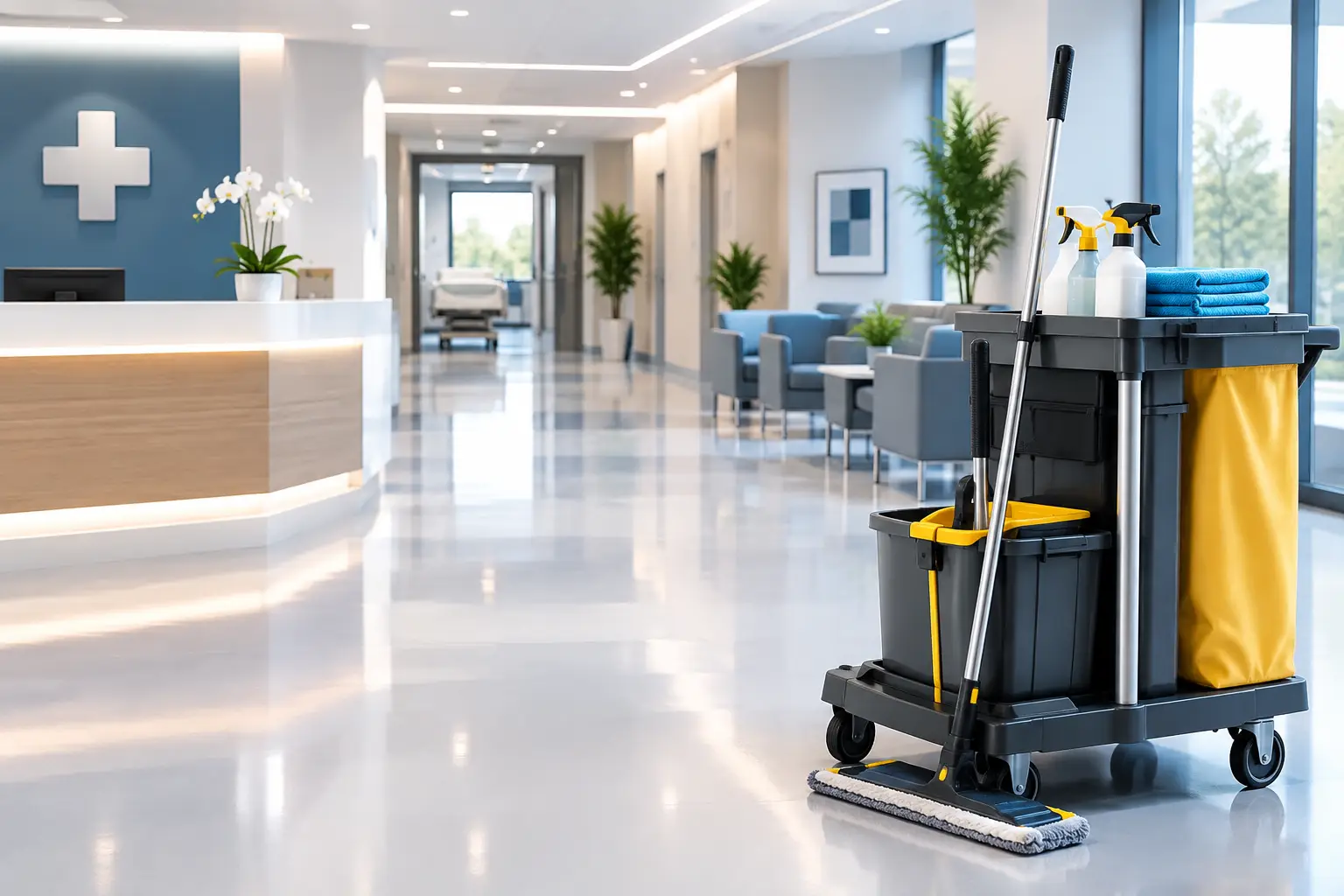
A clinic may seem clean at opening and yet create discomfort before noon. A smudge on a glass door, a waiting room with overflowing bins, a sticky floor near the reception or a neglected restroom immediately changes the perception of patients. Knowing how to choose a clinic cleaning service is therefore not just about comparing a price or a list of tasks. You must choose a team capable of maintaining consistent, reassuring and functional spaces throughout the week.
For a property manager, owner or maintenance supervisor, the right supplier must understand the reality of a healthcare or consultation space: fluctuating foot traffic, sensitive areas, scheduled appointments and very little margin for mistakes. The expected result is simple: patients enter a clean clinic, the staff work in a well-maintained environment and complaints do not become a routine of management.
Start by evaluating the actual areas of the clinic
Before requesting a quote, it is necessary to define what must be maintained, how often and to what level of detail. A small medical clinic with two consultation rooms does not have the same needs as a multidisciplinary centre including a laboratory, a busy waiting room, several restrooms and a staff area.
A visit to the premises is essential. A serious supplier observes the paths used by patients, the condition of the floors, the most touched surfaces and the points that degrade quickly. The reception, door handles, switches, waiting room chairs, counters, restrooms and break rooms generally require sustained attention. Corridors and entrances can also accumulate water, calcium, salt and shoe prints in cold weather.
You must also distinguish between regular maintenance and restorative cleaning. Regular maintenance keeps the spaces clean on a daily basis. Restorative cleaning aims at accumulations, stains, floor joints, marked walls or residual dust after construction work. Confusing the two often leads to an under-evaluated contract and unrealistic expectations.
Choose a clinic cleaning service adapted to the foot traffic
The frequency should never be chosen solely based on operating hours. A clinic open five days a week may require cleaning every night, but also a visit during the day in the restrooms or waiting room. On the contrary, a specialized clinic with few visitors may be maintained less frequently, provided that the contact areas are properly followed.
The right question is: when do the spaces start to give an impression of neglect? In a very busy clinic, the bins, restrooms and floors may require daily intervention, or even several times a day. In a clinic where patients move with boots or mobility aids, the entrance and corridors deserve a more intensive maintenance plan.
A good quote clearly indicates the tasks planned per visit, the weekly tasks and the periodic works. For example, dusting the baseboards, detailed washing of the walls, maintenance of the interior windows or cleaning of the ventilation grilles are not always necessary every day. They must, however, appear in a clear plan rather than being left to chance.
The products and methods must match the surfaces
In a clinic, using a too aggressive product can dull a floor, damage a surface or leave an unpleasant odour. Using an inappropriate product can also leave traces and harm the perceived quality. The supplier must be able to explain simply which products and equipment are used for the floors, washable surfaces, glass and sanitary rooms.
It is reasonable to ask how the cloths, mops and equipment are separated between the restrooms, common areas and work zones. This basic organization reduces the risk of cross-contamination and shows that the team applies a constant method. In clinics with particular requirements, the client's internal protocols must be integrated into the work plan, without claiming to replace the clinical or sanitary measures proper to the establishment.
Check reliability before the price
The lowest price may seem advantageous, especially when a budget is tight. However, an insufficient service often costs more in management time: rework, urgent calls, patient comments, staff complaints and quick search for another supplier. The value of a contract is measured by the consistency of the result, not just by the monthly amount.
Ask who does the work, who supervises the quality and how absences are covered. A reliable team should not leave a clinic without maintenance because an employee is sick or unavailable. It must also be reachable when an unexpected event occurs, such as a leak in the waiting room, an emergency before an inspection or a need for cleaning after minor work.
The following items should be confirmed before signing:
- the scheduled times and access;
- the precise list of included and excluded areas;
- the frequency of each task;
- the quality control procedure and problem reporting process;
- coverage in case of absence or emergency;
- the responsibilities related to products, equipment and waste.
A detailed contract protects both the clinic and the cleaning company. It avoids misunderstandings such as "it was not included" when the condition of a floor, a restroom or a staff room requires more attention.
Observe the quality in the details that count
A perfect clinic does not depend on a single major cleaning. It depends on repeated correct details. The traces around the door handles, the dust on the window sills, the marks on the walls near the chairs and the odours in the restrooms are often the first signs of irregular cleaning.
When a supplier makes an evaluation visit, their inspection should go beyond the visible surfaces. Are the corners of the corridors clean? Are the bins clean inside and out? Are the dispensers wiped? Are the floors clean without being sticky or streaked? These observations show concrete experience in commercial cleaning.
Communication is also part of the quality. A clinic manager should not have to repeat the same requests every week. A follow-up sheet, a designated contact person or simple communications after a specific service can make a real difference. The goal is to correct a problem quickly before it becomes visible to patients.
Plan for occasional work and demanding periods
Even with a well-executed regular cleaning, some periods require more attention. Winter brings salt, sand and water into the entrances. After a renovation, a repair or the installation of furniture, fine dust can settle in consultation rooms and common areas. A newly renovated clinic may also need a post-construction cleaning before its opening.
It is useful to choose a company capable of ensuring regular cleaning and responding to these occasional needs. This continuity avoids having to explain access, fragile surfaces and expectations to a new supplier every time a special job is required.
In Montreal, Laval and on the North Shore, Nickel & Krome S.E.N.C. supports property managers and building supervisors with a practical, on-site approach in commercial cleaning, building maintenance and specialized interventions. The team knows the constraints of high-traffic areas, the presentation expectations and the importance of reliable follow-up. To evaluate a clinic cleaning need, the company is reachable at +1 514-974-3311 and holds the NEQ 3381837957.
Questions to ask before choosing
What level of service is actually included?
Do not settle for a general formula like "complete cleaning". Ask for the exact tasks, the covered areas, the frequencies and the separately charged works. A precise answer is more useful than a vague promise.
Who is responsible if the quality drops?
The supplier should designate a person responsible for follow-up. This person must be able to receive your comments, check the situation and adjust the work when necessary. The speed of response is particularly important in a clinic where the image of the space influences visitor confidence.
How often should the contract be reviewed?
A review after the first few weeks, then periodically, helps adjust the service. Foot traffic may increase, hours may change and certain areas may require more time than expected. A good partner does not consider the initial quote as immutable when real conditions demonstrate the contrary.
The best choice is the one that allows you to no longer constantly monitor the cleanliness of your clinic. When common areas remain clean, restrooms are consistently maintained, floors maintain a good appearance and requests are treated seriously, cleaning becomes an operational support rather than a management issue.