
Managing Building Janitorial Services on the North Shore
Plan building janitorial services on the North Shore with clear tasks, access arrangements, visit frequency and consistent communication with managers.
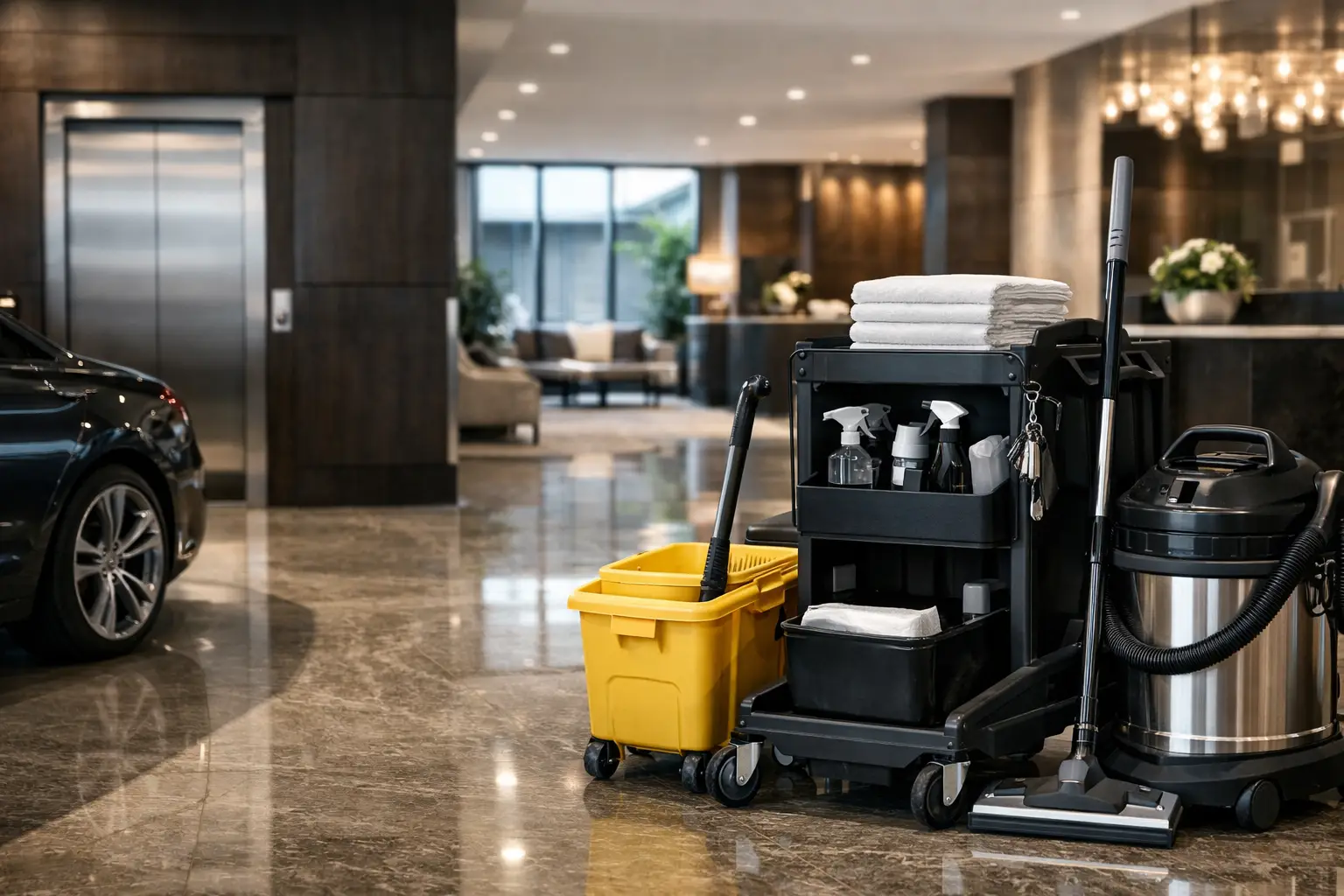
A corridor already marked in the morning, a persistent odour in the waste room or an elevator with fingerprints on its doors: these are often the details that fuel resident complaints. A well-organized building janitorial service on the North Shore is not just about sweeping. It ensures the operational cleanliness of shared spaces, protects the building's image and allows the property manager to avoid monitoring every visit.
For a condo board, a multi-unit property manager or a rental property owner, the real challenge is consistency. Shared spaces must remain clean between visits, even when traffic increases, a move takes place or construction creates dust. This requires a realistic plan, professional equipment and a team that knows the real conditions of a building.
What does a building janitorial service include?
A building janitorial service includes the regular maintenance of spaces used by all occupants. It aims to maintain a stable level of cleanliness, limit odours and prevent small visual problems from becoming permanent irritants.
In a condo or a multi-unit building, the interventions generally include the entrance hall, corridors, stairwells, elevators, glass doors and circulation areas. Depending on the building, the maintenance also includes the waste rooms and recycling rooms, common rooms, laundries, interior garages and underground parking garages.
The work does not limit itself to floors. Door handles, elevator buttons, baseboards, glass surfaces and less visible corners directly influence the perception of residents and visitors. A clean entrance gives confidence. On the contrary, a slippery floor, an overflowing bin or a dirty mirror quickly gives the impression that the building is neglected.
A good agreement clearly defines the areas, tasks, frequency and follow-up expectations. This avoids misunderstandings between the supplier, the property manager and the board of directors. In some buildings, floor washing three times a week is necessary. In others, a weekly frequency is sufficient, provided that a targeted intervention is added after a move, a storm or construction.
Who maintains a building on the North Shore?
A building is maintained by a building janitorial company that has teams trained for common areas, high-traffic zones and occasional needs. The choice of a supplier should not be based solely on a list of tasks or a monthly rate. It is essential to check their ability to respond according to the building's schedule, to communicate clearly and to maintain quality over time.
On the North Shore, realities vary greatly between a small building with six units, a condominium with elevators and a rental complex with an underground garage. The maintenance plan must therefore be adapted to the volume of traffic, the number of floors, entrances, presence of animals, waste management and peak periods.
A serious provider starts by observing the site. Where does the dirt accumulate? Which corridors are most used? Are the recycling bins well managed? Does the garage have de-icing residue, salt or tire marks? These answers allow efforts to be distributed in the right place rather than applying the same fixed fee to all buildings.
Nickel & Krome S.E.N.C., NEQ 3381837957, supports property managers, boards and owners for building maintenance in Montreal, Laval and on the North Shore. The team intervenes in common areas, garages, waste rooms and commercial spaces with an approach focused on on-site follow-up and lasting cleanliness.
The areas that cause the most complaints
Complaints do not always come from the largest areas. They often start in places where residents pass every day and where no one can avoid looking.
Entrance, corridors and elevators
The entrance establishes the first contact with the building. The windows, entrance carpets, floors and reception surfaces must be maintained according to the weather and traffic. In winter, water, sand and calcium spread quickly in the corridors. Too infrequent maintenance damages the appearance of the floors and increases the risk of slipping.
Elevators also require regular attention. The traces on the doors, the marked buttons and the dusty corners are immediately visible. The cleaning must be careful without using products that leave a film on stainless steel or panels.
Waste rooms and recycling areas
A poorly maintained waste room quickly becomes a source of odours, floor residue and dissatisfaction. It is necessary to clean the surfaces around the bins, treat the splashes, empty the small bins when scheduled and monitor the areas where the bags tear.
The frequency depends on the number of units and collection habits. A building with many units or commercial waste may need several visits per week. In this type of space, waiting for an odour to be reported is rarely a good strategy: prevention costs less time than restorative cleaning.
Underground garage and exterior access
The underground garage accumulates dust, abrasives, water, salt and tire marks. These residues then move to the entrances and stairs. Depending on the season and usage, sweeping, mechanical scrubbing or more in-depth restorative cleaning may be required.
Exterior accesses, vestibules and secondary doors require the same vigilance. These are transition points where dirt enters the building. A team that understands the path of the occupants can adjust the maintenance to reduce this spread.
How to choose the right maintenance frequency
There is no single valid frequency for all buildings. A calm condominium with a single entrance can function with scheduled visits once or twice a week. A heavily occupied rental building, a complex with several elevators or a building with frequent moves often requires more continuous presence.
The right question is not simply "how many times a week?" It is necessary to ask which areas must remain impeccable every day, which can be treated at regular intervals and which events justify an additional intervention. Storms, large deliveries, construction, damage in a waste room and peak rental periods are concrete examples.
An effective plan combines regular maintenance and specialized services as needed. After renovations in common areas, for example, the post-construction cleaning allows the removal of fine dust, window traces and residues that do not leave with normal routine. Similarly, a garage may require a seasonal intervention distinct from the usual janitorial service.
Who cleans the common areas of a condominium?
The common areas of a condominium are generally cleaned by a company hired by the condominium board or by its property manager. The mandate may include the entrance hall, corridors, stairwells, elevators, waste rooms, shared spaces and garage, depending on the responsibilities outlined in the contract.
The board of directors must be able to know what is done, how often and how to report a particular situation. This visibility is particularly useful when a resident raises a complaint or when an incident requires a quick intervention. Simple communication and clear follow-up reduce unnecessary exchanges and prevent cleanliness from becoming a recurring topic at meetings.
Before delegating the mandate, check particularly the understanding of sensitive areas, the methods used for different floor coverings, the flexibility for emergencies and the reliability of schedules. Also ask how absences and seasonal adjustments are managed. A precise contract protects both the client and the maintenance team.
A janitorial service that supports property management
The best janitorial service is the one that removes a burden from the property manager rather than creating a new one. When a team knows the building, respects access requirements, works properly and informs the responsible person quickly when it observes a problem, it contributes to more stable management.
This may mean reporting an unusual spill in a corridor, noticing that a waste room door doesn't close properly or recommending a restorative cleaning after renovations. The goal is not to go outside the mandate, but to help the client see what may affect the quality of shared spaces.
For a North Shore building janitorial service, value is measured in consistency: fewer cleanliness-related complaints, pleasant common areas and a building whose maintenance inspires confidence. If your management team constantly has to follow up with the supplier or respond to the same irritants, it is probably time to review the maintenance plan and follow-up expectations.
A well-maintained building is not noticed by a spectacular promise. It is recognized every day, in a clean entrance, a well-maintained elevator and common areas that remain pleasant to use.
From the guide to your project
To check the scope, access and conditions of intervention, consult our service: Building janitorial services for condos, cooperatives and property managers.