Why Choose an Experienced Team
An experienced team reduces rework, protects surfaces and keeps deadlines on construction sites, buildings and commercial spaces.
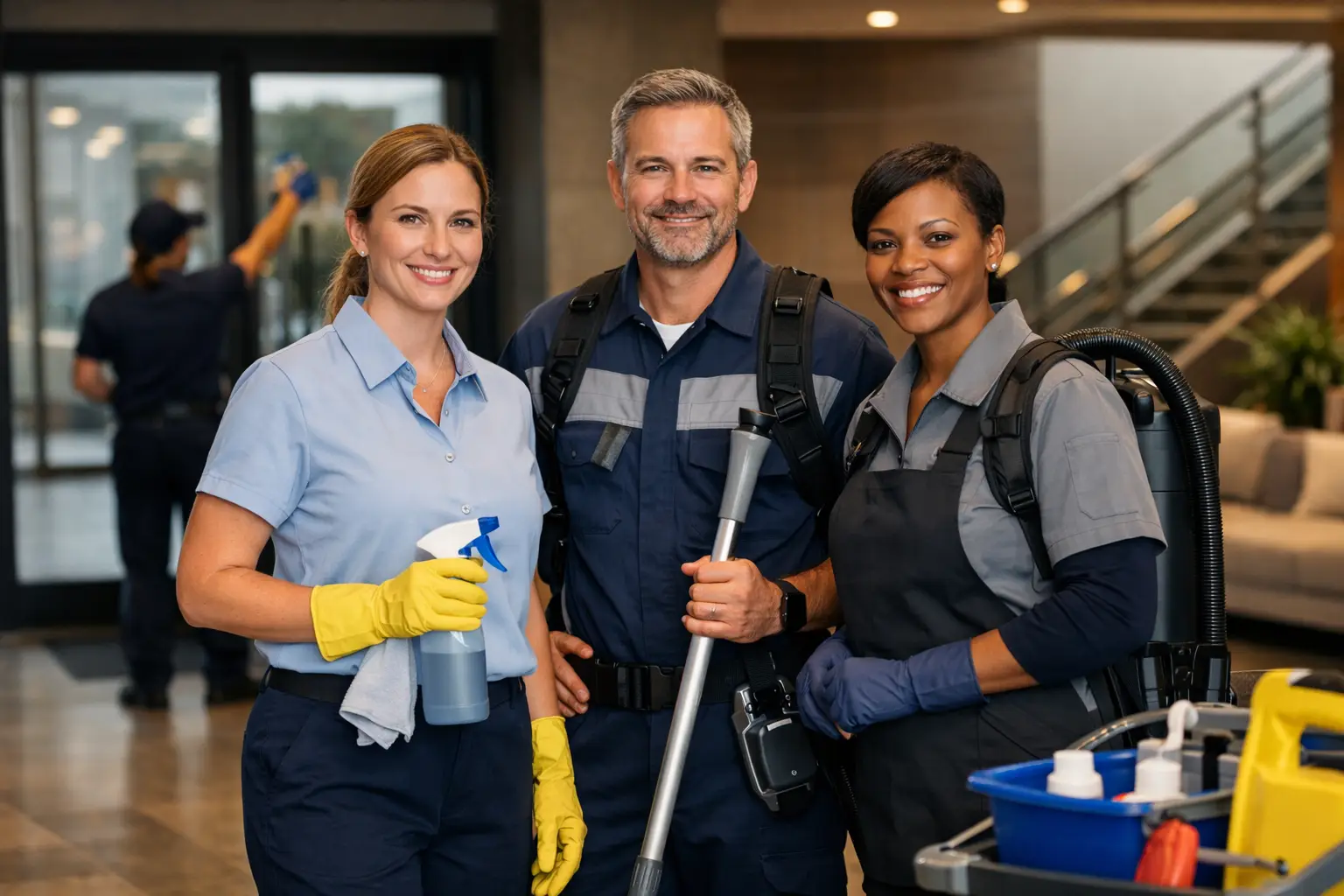
A spotless entrance hall at 8 a.m., a corridor free of fine dust after work, clean interlocking pavers without damage: in the field, the difference between an ordinary intervention and an experienced team is visible quickly. For a property manager, general contractor or maintenance lead, this is not only a question of image. It is a question of deadlines, consistency and avoided risk.
In specialized cleaning, experience is not only measured in years. It is measured by the ability to assess a site, choose the right method, adapt execution to building constraints and deliver a clean result without disrupting occupants or the project. That is exactly what matters when common areas must be maintained, a building restored after work or exterior surfaces treated without room for approximation.
What an experienced team truly changes
On a commercial or property-management mandate, cleaning is almost never a simple maintenance pass. It requires dealing with restricted access, tight schedules, different materials, sensitive zones and often very high expectations from occupants, clients or the project owner.
An experienced team reads these parameters before starting. It identifies friction points, plans intervention sequences and avoids mistakes that cost time. On a project closeout, for example, poorly managing fine dust or using an unsuitable product can extend the work, soil certain zones again or leave marks on new finishes. Experience reduces this type of gap.
It also changes result quality over time. A space can seem clean immediately after a team has passed. The real question is different: does the cleanliness level hold until the next maintenance cycle, despite traffic, weather conditions or construction residue still present? That is where method makes the difference.
Experience matters even more in demanding contexts
Standard environments sometimes leave room for error. Demanding contexts leave almost none. In a multi-unit building, poorly maintained common areas quickly generate complaints. In a commercial building, neglected presentation affects perception of the premises. At the end of a project, every cleaning delay can slow delivery or occupancy.
Post-construction and project closeout
Post-construction cleaning requires more than good housekeeping. It means removing material residue, controlling dust, treating glass, frames, baseboards, floors and finishing details without damaging what has just been installed. A team not used to this type of environment can waste time with the wrong sequence or return several times to the same zones.
A seasoned team knows the difference between detail cleaning, rough cleaning and final restoration. It works with a construction-site logic, not a generic residential approach. This is a decisive point for contractors and managers who must keep several providers moving in parallel.
Common areas and regular maintenance
In condominiums, rental buildings and commercial buildings, common-area maintenance requires regularity. The problem is not only cleaning, but maintaining a stable standard. Glass entrances, elevators, stairwells, corridors, common rooms and loading areas do not all have the same wear level or the same needs.
Experience makes it possible to adjust frequency, products and intervention intensity according to real use of the premises. A heavily used space may require more frequent targeted maintenance than uniform cleaning everywhere. This operational reading avoids paying for poorly calibrated tasks.
Exterior surfaces and pressure washing
Outside, improvisation becomes expensive quickly. Poorly adjusted pressure washing can mark a surface, displace interlocking-paver joints or project dirt onto areas that are already clean. Conversely, pressure that is too weak solves nothing and forces a second pass.
An experienced team chooses the right pressure level, working angle and execution rhythm according to the surface, the level of soiling and site conditions. This know-how is especially useful on access points, sidewalks, parking areas, interior courtyards or facades where appearance and durability matter equally.
Concrete signs of an experienced team
Experience is visible even before the mandate starts. It shows in how the right questions are asked, how the perimeter is defined, how constraints are anticipated and how a realistic intervention is presented. A serious team does not promise everything to everyone. It specifies what is included, what depends on the site condition and what will require a particular approach.
On site, it works with consistency. Tasks are executed in the right order, sensitive zones are protected, finishes are checked and rework remains limited. The project or building does not become a testing ground.
There is also an indicator that is often underestimated: the ability to remain effective without creating extra mental load for the client. When the provider has to be chased for schedules, access, corrections or follow-up, the advertised experience is not worth much. A good partner simplifies management instead of making it heavier.
Why the cheapest option often costs more
In technical cleaning services, price alone rarely tells the full story. A low quote can seem attractive at the start, especially on a large volume or tight project. But if execution creates rework, delays, oversights or damage, the savings disappear quickly.
The real cost includes coordination time, additional inspections, occupant dissatisfaction and sometimes mobilizing a second team to correct what should have been done properly the first time. For a property manager, that means more calls, more follow-up and less predictability. For a contractor, it can mean a more complicated delivery.
Choosing an experienced team is not choosing luxury. It is seeking a reliability level that protects the schedule, the building and the relationship with users. The right trade-off is not price versus quality. It is evaluating the value of an intervention executed properly the first time.
How to evaluate an experienced team before committing
The right approach is to look at the fit between the provider and the type of mandate. Not every team is built for the same realities. A company competent in light maintenance is not necessarily the best placed for project closeout or technical exterior cleaning.
Verify fit with the mandate
Ask whether the team regularly works in commercial buildings, multi-unit properties or post-work contexts. This point is more useful than a general promise of quality. A provider used to your constraints will understand faster what must be done and what must be avoided.
Observe method clarity
An experienced team explains its approach without useless jargon. It details treated zones, the intervention logic, possible limits and conditions for success. This clarity is a good signal, especially for recurring mandates where stability matters as much as the immediate result.
Measure operational reliability
Respect for schedules, coherent follow-up and the ability to intervene without disrupting the premises are essential. In Greater Montreal, where traffic, access and coordination realities can complicate operations, this rigor makes a real difference in the field.
An experienced team also protects your asset
A well-maintained building preserves its presentation better, inspires more trust and generates fewer visible problems. This applies to interior surfaces as much as exterior areas. Cleanliness is not only an operating expense. It contributes to the building’s overall perception and daily condition.
This is especially true when materials are new, technical or exposed to heavy traffic. A poor method can accelerate wear, dull certain surfaces or make future maintenance harder. Conversely, a well-executed intervention supports durability and limits heavy resets.
For this reason, the most effective decision-makers are not only looking for an executor. They are looking for a partner able to maintain a standard, understand the context and intervene with judgment. This is the logic that guides specialized companies like Nickel & Krome when supporting commercial and property-management clients on concrete needs, from daily maintenance to more technical restoration.
When choosing a provider, ask yourself one simple question: do you need a cleaning pass, or reliable execution that holds up when the stakes are real? The answer often points toward the same choice.
Apply this guide to your property
Review the scope, access requirements and service details for Commercial cleaning services for offices and managed buildings.