Who cleans common areas in a building?
Who cleans common areas in a building? Roles, obligations, frequency, quality control, and choosing the right provider for reliable maintenance.
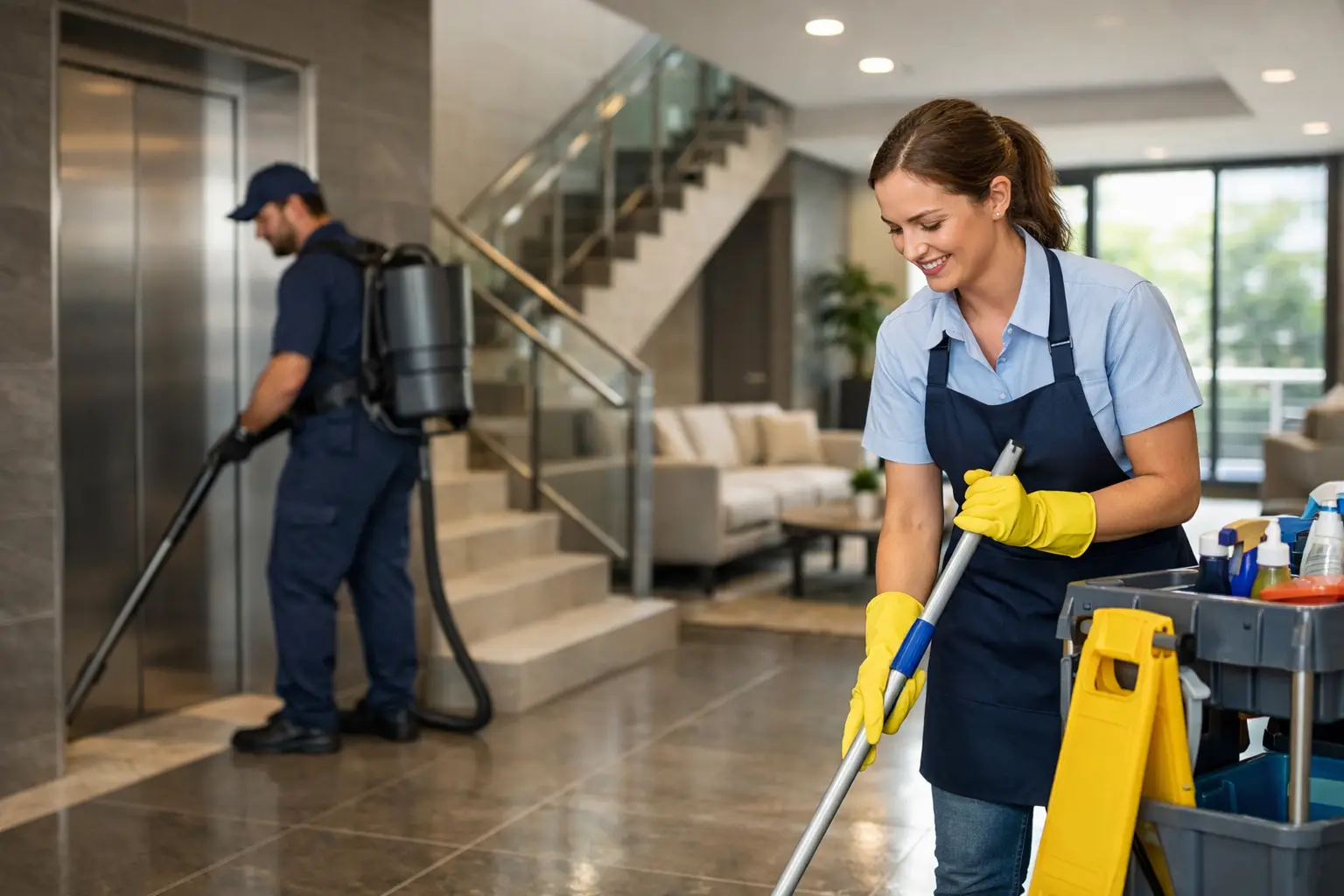
A lobby with visible boot marks, a stairwell that quickly loses its shine, overflowing bins, or an elevator already marked by Monday morning — these are the moments when the question comes up: who cleans common areas in a building, and who is truly responsible for day-to-day upkeep? For property managers, condo boards, or building owners, the answer isn’t just administrative. It affects the building’s image, occupant safety, and consistent execution.
In practice, common area cleaning can fall to several parties depending on the building type, management model, and expected standards. The key isn’t the general principle, but the concrete setup: who does what, how often, with what oversight, and with the ability to intervene when conditions deteriorate faster than expected.
Who cleans common areas in a building, by case
In a condo, common area maintenance is typically the responsibility of the condo board or the entity managing the building. This doesn’t mean owners clean the spaces themselves. In practice, the board or property manager hires either an on-site janitor, an internal team, or a specialized company.
In a multi-unit rental building, responsibility usually falls to the owner or their property manager. Tenants are required to maintain their units, but they do not handle regular cleaning of lobbies, hallways, stairwells, or main entrances unless the lease specifies otherwise. In commercial buildings, the approach is similar: the owner or asset manager organizes the service, sometimes with partial cost recovery through common charges.
In short, the real question isn’t just who is responsible on paper, but who actually performs the cleaning consistently. This is often where the difference lies between a well-maintained building and one that only appears clean on cleaning day.
Common areas that require maintenance
Common areas in a building aren’t limited to the lobby. Depending on the layout, they can also include vestibules, corridors, stairwells, elevators, mail rooms, shared laundry rooms, waste rooms, garages, pedestrian access points, interior entrance windows, and sometimes immediate outdoor areas.
Each zone has its own challenges. A condo corridor mainly requires visual upkeep and maintenance. A waste room demands a more technical approach, with odor control, residue management, and surfaces that are often more exposed. An elevator, meanwhile, accumulates contact marks and requires more frequent attention than one might expect.
When these spaces see heavy use, a quick pass isn’t enough. A plan must account for real foot traffic, seasonal changes, and sensitive periods like move-ins, renovations, bad weather, or busy weekends.
On-site janitor, internal team, or specialized company
A building can be maintained by an on-site janitor. This works in some buildings where daily presence adds real value. The janitor can handle small repairs, report issues quickly, and keep a visually acceptable standard. However, this option depends heavily on the person’s availability, methods, and the full scope of their duties. In many cases, cleaning is only part of their responsibilities.
An internal team is another option, especially in larger buildings. It offers direct control but requires managing schedules, absences, products, equipment, supervision, and quality standards. For a property manager, this can become cumbersome if cleaning isn’t their core operation.
A specialized company is often the most stable choice when expectations are high. It allows for a clear intervention plan, tailored frequency, consistent methods, and scheduled replacements in case of absence. This is especially relevant for mixed-use buildings, high-traffic multi-unit properties, commercial spaces, and post-renovation contexts where standard cleaning quickly shows its limits.
What cleanliness obligations really mean
On the ground, cleanliness in common areas is about maintaining spaces in a safe, presentable, and decent condition. It’s not just about avoiding the worst. A well-managed building must offer clean, functional common areas that match the standards promised to occupants or visitors.
There’s also a preventive aspect. Dirty floors become more slippery. Dust buildup in stairwells or corners reduces the overall perception of cleanliness. Poorly managed bins quickly create nuisances. Even without major incidents, inconsistency ends up costing more because it requires bringing things back to standard rather than maintaining them.
This is why regular maintenance is almost always more cost-effective than a series of corrective interventions. A building where service is delayed between cleanings ends up requiring more time, more products, and sometimes heavier treatments for floors, windows, or high-traffic areas.
How often should common areas be cleaned?
There’s no one-size-fits-all frequency for all buildings. It depends on the number of occupants, usage type, flooring material, elevator presence, weather, and the expected image level. A small, quiet building has different needs than one with multiple entrances, high traffic, or commercial use on the ground floor.
Generally, high-contact points and entry areas require the most frequent cleaning. Stairwells and corridors can follow a regular schedule, with extra attention during winter or rainy periods. Garages, technical basements, and waste rooms may follow a different, more targeted calendar but with stricter requirements on certain points.
The right frequency is the one that prevents visible dirt from accumulating between cleanings. If occupants notice dirt before the next scheduled visit, the frequency is likely insufficient. If cleaning seems adequate but dirt always reappears in the same spots, the issue may lie more in the method than in the number of visits.
How to spot a reliable provider
For a decision-maker, choosing the right provider isn’t just about comparing prices. It’s about verifying the ability to execute without delays. A good provider can clearly describe what they clean, how they do it, how often, and what their quality control measures are.
Clear scope definition is essential. If the mandate covers "common area cleaning" without detailing stairwells, entrance windows, baseboards, carpets, elevators, or waste rooms, some areas will inevitably be overlooked. Conversely, a well-defined service reduces misunderstandings and makes tracking easier.
It’s also important to assess adaptability. In the Montreal, Laval, and North Shore regions, needs change dramatically with the seasons. Winter increases the workload for entrances and floors. Spring reveals buildup. After renovations or moves, some areas require a deeper refresh than standard cleaning. A specialized company knows the difference and doesn’t treat all buildings as standardized sites.
Why common areas degrade despite an existing service
This is a common situation. The building already has a provider, but complaints persist. Most often, the issue stems from a mismatch between the mandate and the site’s reality. The contract specifies a certain number of visits, but not the right priorities. Or visible tasks are completed while less obvious areas gradually accumulate dirt.
Quality can also vary between teams due to insufficient supervision. In this case, the issue isn’t just cleaning, but service management. A well-maintained building relies on repeatable execution. Without clear methods, standards gradually slip, even if no one feels they’re neglecting the site.
When a building emerges from renovations, the problem is even more pronounced. Fine dust, residue, material traces, and construction dirt require specific expertise. Standard building maintenance doesn’t replace proper post-construction cleaning. It’s in these contexts that a specialized provider like Nickel & Krome adds stronger operational value.
What a property manager should define from the start
To avoid grey areas, it’s essential to define the included spaces, actual frequency, periodic tasks, and expected standards per zone. It’s also important to outline how emergencies, refreshes, and high-traffic periods are handled.
Monitoring shouldn’t be cumbersome, but it must be possible. A good service is visible, of course, but it must also be manageable. If the provider can’t explain their visits, methods, or intervention limits, the relationship will eventually become reactive rather than controlled.
Finally, it’s important to accept that a building doesn’t have the same needs year-round. An effective mandate leaves room for adjustments. This is often what sets a decent provider apart from a true maintenance partner.
At its core, the answer to who cleans common areas in a building is simple in principle: the building’s responsible party organizes it. But the real difference lies in execution. When service is well thought out, occupants don’t notice the cleaning — they just notice that the building consistently meets its standards, day after day.