
Rental Unit Cleaning Between Tenancies
Rental unit cleaning helps speed up turnover, preserve units, and reduce disputes between tenants in Montreal, Laval, and the North Shore.
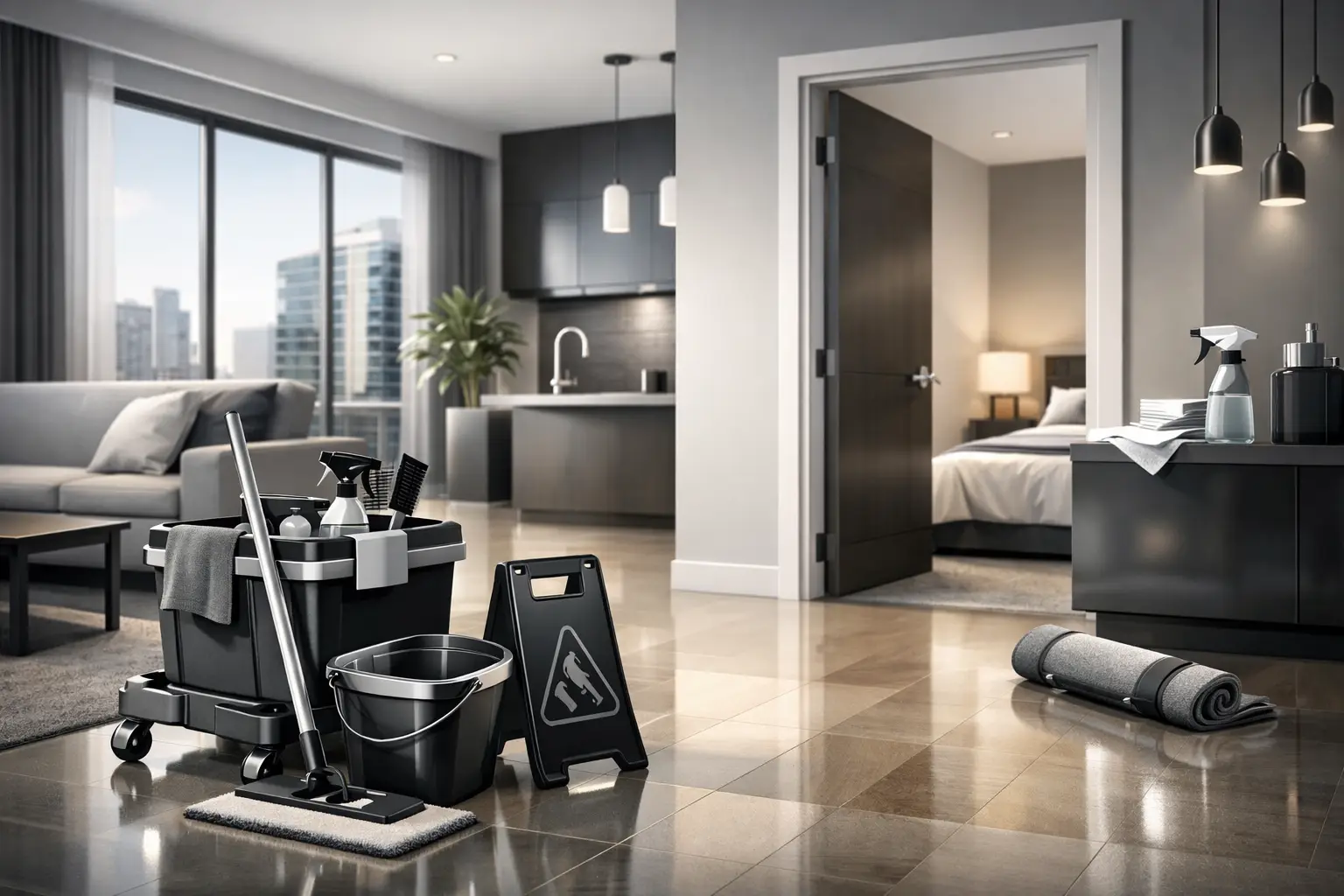
A unit left in uncertain condition between tenants rarely costs only a few hours of work. It can delay a new lease, trigger a complaint at move-in, hide damage that needs correction, and affect the overall perception of the building. Rental unit cleaning is therefore a reset that requires a clear method, especially in a multi-unit property where move-outs and move-ins follow one another.
For a property manager, the real objective is not simply to obtain a clean apartment. The unit must be presentable, sanitary, and ready for an inspection or showing without having to coordinate several providers or correct omissions at the last minute.
What rental unit cleaning includes
Cleaning between tenancies begins with a realistic assessment of the unit. A kitchen with accumulated grease, a bathroom marked by mineral deposits, or a sticky floor cannot be treated like routine maintenance. Surfaces must be cleaned well enough to reveal their actual condition, not merely improve their appearance for a few hours.
In a rental unit, the work generally covers the kitchen, bathroom, bedrooms, storage spaces, floors, baseboards, doors, switches, and frequently touched surfaces. Appliances, when included in the scope, require particular attention: the oven interior, cooktop, range hood, refrigerator, seals, and spill marks.
Details often make the difference during a showing. Fine dust on window ledges, marks on walls near handles, or hair in bathroom corners immediately suggest that the unit was not properly addressed. By contrast, a clean unit makes it easier for the manager to distinguish cleaning issues from normal wear or a repair that needs to be planned.
Cleaning does not replace repair work. A stain embedded in a damaged countertop, blackened silicone, or a door swollen by moisture may require repair or replacement. A serious team reports these conditions instead of temporarily concealing them.
Why a structured reset reduces delays
In a rental building, every day a unit remains unusable can complicate leasing, maintenance, and work schedules. Cleaning must therefore fit into the actual turnover sequence: tenant departure, inspection, repairs, cleaning, showing, or arrival of the next occupant.
The order of operations matters. Cleaning before paint touch-ups or plumbing changes are complete often creates unnecessary rework. Conversely, waiting too long after the work allows gypsum dust, adhesive residue, and construction debris to settle throughout the unit. When renovations have taken place, targeted post-construction cleaning is more appropriate than routine housekeeping.
Good planning also makes it possible to prioritize units by deadline. A unit needed for an urgent showing does not always require the same intervention as an apartment scheduled for complete renovations. The manager benefits from defining the scope of work from the start: complete turnover cleaning, reset after work, one-time intervention, or cleaning of specific zones.
Areas that cause the most rework
Rental units present recurring problems. Addressing them promptly helps avoid return visits and unnecessary discussion during the final inspection.
The kitchen is often the most demanding area. Grease on the range hood, cabinets around the stove, older splashes, and food left in the refrigerator require suitable products and dwell time. A surface that looks shiny may still feel sticky or retain an odour if it was not degreased correctly.
The bathroom requires the same care. Mineral deposits on fixtures, soap residue, hair, buildup around the toilet, and marks on tile quickly create an impression of neglect. Fans, seals, and hard-to-reach corners should also be checked because moisture often leaves persistent marks there.
Floors, walls, and doors are sometimes underestimated. Shoe marks in the entrance, furniture marks, dusty baseboards, and stained handles are visible as soon as a prospective tenant enters. Depending on the finish, cleaning that is too aggressive can leave halos or damage the surface. The method must therefore be adapted to vinyl, wood, tile, or concrete.
Finally, odours should never be covered with a strong fragrance. The source of tobacco, waste, pet, or moisture odours must be identified. In some cases, deep cleaning is sufficient. In others, management will need to address inadequate ventilation, contaminated carpet, or water infiltration.
How often should units and the building be cleaned?
A complete unit cleaning is normally planned between occupants. Its frequency therefore depends on tenant turnover, lease duration, and the condition in which units are returned. In a building with high turnover, having a provider able to intervene promptly becomes a concrete operational advantage.
This work must still be distinguished from maintenance of the common areas. Corridors, lobbies, elevators, stairwells, waste rooms, and underground garages follow a recurring schedule. Their cleanliness directly affects the resident experience even when a private unit is spotless.
Who maintains a building? In condominiums and multi-unit properties, this role is generally assigned to a building janitorial or building-maintenance team under the coordination of the manager or condo board. What do building janitorial services include? They may include recurring cleaning of shared zones, handling certain on-site requests, monitoring high-traffic areas, and targeted work such as resets or garage washing.
Who cleans condominium common areas? A company specializing in building maintenance generally performs this work according to a frequency established with the board or property manager. A suitable program accounts for the number of residents, peak traffic, elevators, season, and the areas that generate the most complaints.
How to choose a rental-cleaning provider
Price is one factor, but it should not be the only one. A poorly detailed scope may produce a low initial invoice and a long series of corrections afterward. For property managers, consistency, respect for access conditions, communication, and the ability to report irregularities matter as much as the visual result.
Before assigning several units to a provider, clarify the expected condition at the end of the work. Is appliance cleaning included? Must waste left in the unit be removed? Are windows, balconies, lockers, or vacant units part of the scope? What happens if work is still underway? These answers prevent grey areas.
It is also preferable to work with a team familiar with building operations. Unit access, resident schedules, corridor traffic, and elevator use require organized coordination. A poorly coordinated intervention can disrupt building operations as much as it improves the unit.
In Montreal, Laval, and the North Shore, the Nickel & Krome team supports property managers, owners, and condo boards that need commercial cleaning and resets adapted to rental buildings. Its field approach considers both the quality of the unit and continuity of building maintenance. The company is registered under Quebec enterprise number 3381837957 and can be reached at +1 514-974-3311 to discuss cleaning, building janitorial services, or post-work needs.
A clean unit between tenancies should not become a race against time. With a clear scope of work, a careful inspection, and a team able to manage real site conditions, each returned unit becomes easier to lease, inspect, and maintain afterward.
Apply this guide to your property
Review the scope, access requirements and service details for Nettoyage de déménagement (French).