Private Clinic Cleaning Guide
A practical private clinic cleaning guide covering sensitive zones, service frequency, maintenance protocols, and criteria for choosing a reliable on-site team.
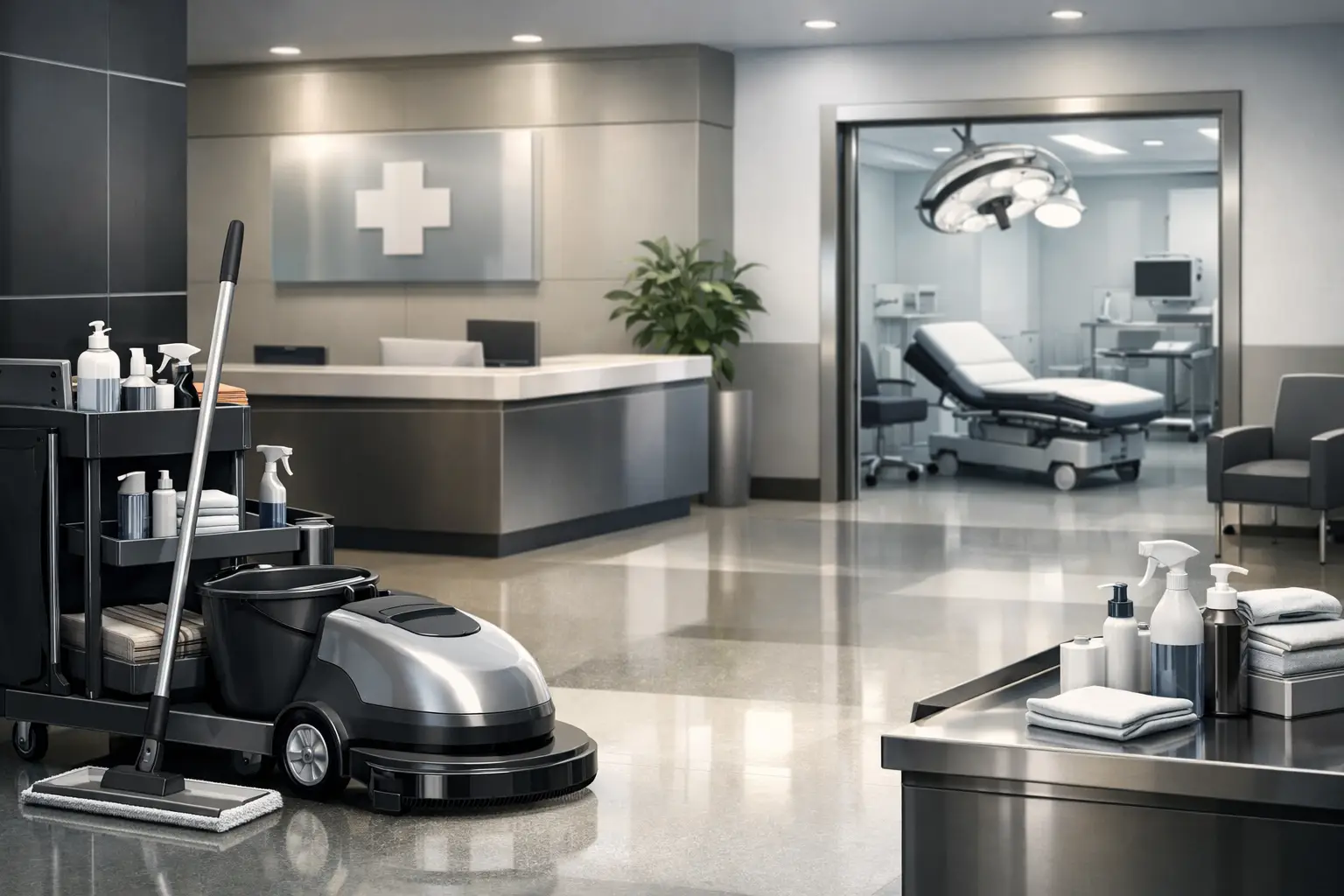
A marked waiting room, a persistent odour near the washrooms, or fingerprints on the reception counter can make a patient question the premises before an appointment even begins. This private clinic cleaning guide helps managers and owners organize maintenance around the actual pace of their facility without confusing visual cleanliness, daily hygiene, and specialized disinfection.
Not every surface in a clinic is exposed to the same pressure. Reception areas receive patients, offices collect dust and fingerprints, consultation rooms must be ready between uses, and washrooms require consistent follow-up. A sound maintenance plan accounts for these differences, opening hours, and the responsibilities of the on-site team.
Start by mapping the clinic's zones
Effective clinic cleaning does not start with a cart and cleaning products. It starts with a site review. The person responsible should identify patient routes, staff-only spaces, rooms where privacy must be protected, and areas where soil returns quickly.
Reception, the waiting room, corridors, door handles, switches, and washrooms are generally the most visible zones. Their condition directly influences how seriously patients perceive the clinic. In busier practices, chairs, side tables, counters, and doors also need daily attention.
Consultation rooms present a different issue. The cleaning team must understand what belongs to premises maintenance and what must be handled by clinical staff under internal protocols. For example, a provider can clean floors, non-medical surfaces, ordinary waste containers, and furniture included in the mandate. Medical equipment, instruments, care zones governed by specific clinical rules, and biomedical waste require procedures established by the clinic and, where applicable, specialized training or disposal channels.
This distinction prevents two common mistakes: leaving a zone without a clearly assigned owner or asking a cleaning team to handle equipment that is outside its mandate.
Define the right cleaning frequency
Frequency depends less on square footage than on patient volume, the type of care offered, the weather, and operating hours. A small clinic active from morning to evening may require more service than a large consulting space open three days a week.
For most private clinics, reception, washrooms, and high-traffic zones benefit from daily maintenance. Waiting-room and corridor floors should be vacuumed or washed according to the finish and level of soil. Ordinary waste should be removed before it affects the appearance of the premises or creates odours.
Weekly maintenance can go further: accessible baseboards, wall marks, areas beneath furniture, doors, interior glass, and less frequently touched surfaces. Monthly or quarterly work can include deeper tasks such as washing certain floor finishes, cleaning accessible ventilation grilles, non-technical light fixtures, or resetting neglected zones.
Difficult periods also require flexibility. Winter in Montreal, Laval, and on the North Shore brings water, calcium residue, sand, and boot marks into entrances. A street-level clinic may then need extra visits or a temporary protocol adjustment. A fixed schedule is useful, but it should not prevent practical adaptation to site conditions.
Organize a protocol that limits omissions
A useful protocol is clear, concise, and verifiable. It should identify the zones to maintain, frequency, approved products, order of work, and reporting method when a problem is observed. A vague instruction such as “clean the clinic” leaves too much room for interpretation.
The work sequence matters. The team should generally begin in the least soiled areas and finish with washrooms and waste zones. Cloths, mop heads, and tools used in washrooms should not move into reception or consultation rooms. Colour coding or clearly identified equipment reduces this risk and makes the routine easier to monitor.
Touchpoints require a consistent method: handles, elevator buttons when the clinic is in a multi-storey building, switches, armrests, the reception counter, payment terminals, flush handles, and faucets. The selected product must suit the surface and remain for the manufacturer's stated contact time when disinfection is requested. Spraying and wiping immediately does not always produce the intended result.
Waste management must follow the streams defined by the clinic. Ordinary waste, recycling, and materials requiring special collection should never be mixed simply to save time. A serious provider asks at the outset which materials are present and who is responsible for handling them.
Distinguish maintenance, disinfection, and restoration cleaning
The word “cleaning” often covers very different needs. Recurring maintenance keeps the premises clean, orderly, and pleasant between visits. Disinfection aims to reduce certain microorganisms on defined surfaces using appropriate products and contact times. Restoration cleaning applies when a space has been neglected, renovated, or unusually soiled.
After work is completed, fine dust can settle in joints, on grilles, behind furniture, and throughout corridors. Post-construction cleaning involves more than vacuuming. It often includes removing residue, detailed cleaning of surfaces, glass, and floors, followed by a review before operations resume. In a clinic, this work must be coordinated to protect equipment and avoid reopening dusty areas to patients.
Intensive floor washing or treatment of a recurring stain also requires care. A product that is too aggressive can dull a finish, leave a slippery film, or damage the material. The right method depends on the surface, the condition of the floor, and the time available before the clinic reopens.
Choose a maintenance team suited to a clinical environment
Price should not be the only criterion. A very low quote may hide insufficient frequency, unrealistic labour time, or tasks left to clinic staff. Before choosing a team, confirm the exact scope, proposed schedule, and contact responsible for resolving issues.
A company accustomed to building maintenance and commercial cleaning understands access constraints, shared zones, and management expectations. When a clinic is located in a medical tower or office building, the provider must also understand where its mandate ends. Who maintains the lobby, elevators, and shared washrooms? Who cleans the common areas of a commercial condominium? These zones generally belong to the building janitorial service retained by the owner or property manager, while the clinic is responsible for its private space.
Ask how absences are covered, how observations are reported, and how an urgent request is handled. Reliability shows in practical details: a door secured properly, products stored correctly, waste removed at the agreed time, and a mark reported before it becomes a complaint.
For clinics in Montreal, Laval, and on the North Shore, Nickel & Krome supports managers with an approach centred on commercial cleaning, recurring maintenance, and the operational cleanliness of buildings. The company, Quebec enterprise number 3381837957, can be reached at +1 514-974-3311 to discuss maintenance, restoration cleaning, or cleaning after work.
A well-maintained clinic is not defined by an overpowering fragrance or dramatic gestures. It is recognized by calm, clean, consistent spaces where patients and staff can focus on care instead of what has been missed.
Apply this guide to your property
Review the scope, access requirements and service details for Expert Institutional Cleaning in Montreal.