Pressure washing in Montreal: how to plan it properly
Pressure washing in Montreal for buildings, businesses and construction sites. Methods, surfaces, risks and the best time to schedule the service.
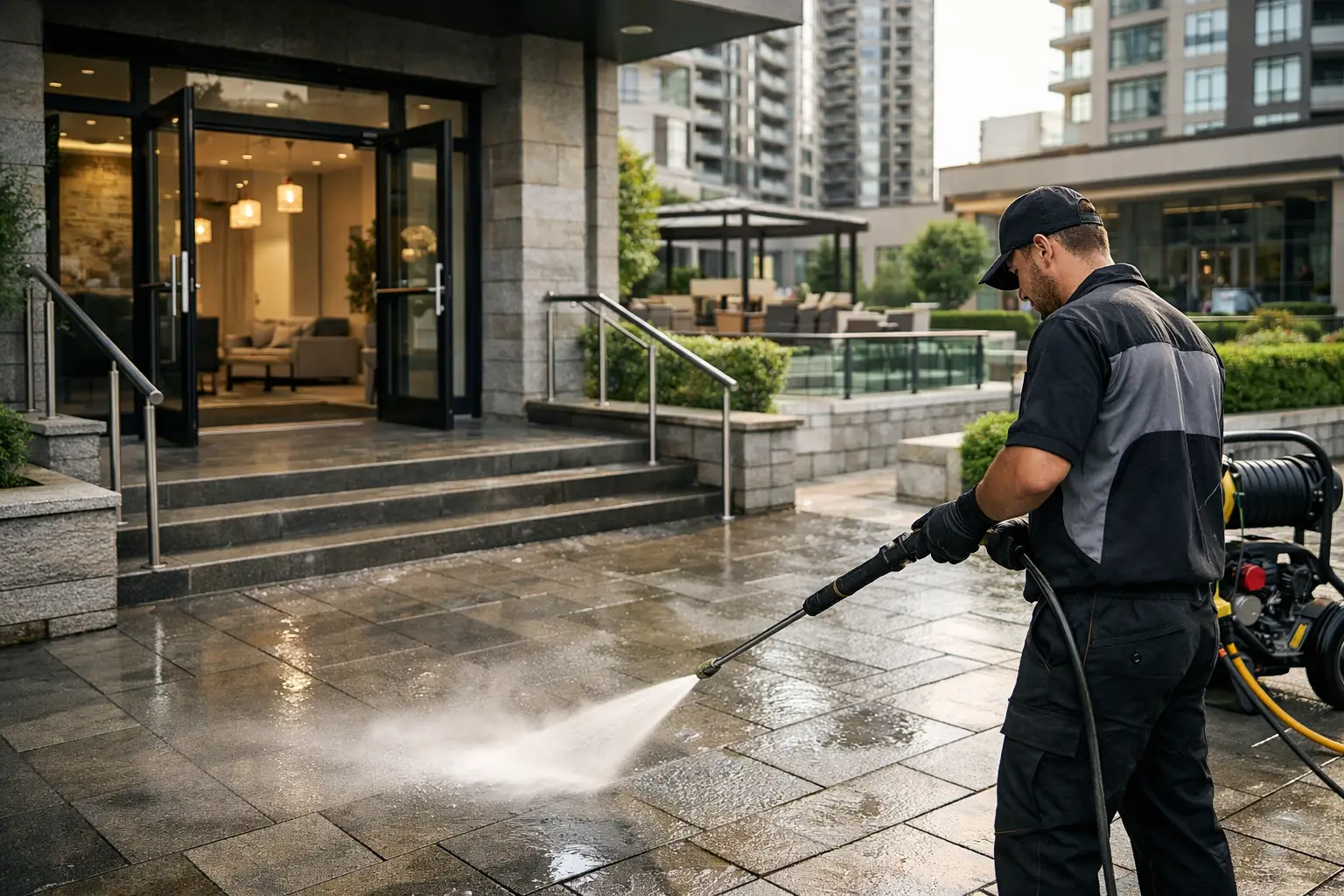
A driveway stained with oil, a sidewalk blackened by grime, construction residue stuck to concrete, or dull interlocking pavers can quickly give a property an unkempt appearance. In a commercial or real estate context, pressure washing in Montreal isn’t just another aesthetic expense—it’s a maintenance intervention that protects a building’s image, extends the lifespan of surfaces, and prevents dirt from taking hold permanently.
For property managers, condo boards, or contractors wrapping up a project, the real question isn’t whether to clean, but what to wash, at what pressure, using which method, and when to schedule the work. This is where the difference between a quick rinse and professional cleaning becomes clear.
Pressure washing in Montreal isn’t just about power
The term often conjures images of a stronger, faster, more aggressive machine. In practice, this mindset leads to many mistakes. Too much pressure can damage interlocking pavers, erode polymer sand joints, strip painted surfaces, or even drive dirt into already clean areas.
A proper pressure wash starts with surface analysis. Concrete isn’t treated the same as brick. A greasy loading dock requires a different approach than a condo driveway. Post-construction areas with fine dust, grout residue, or material stains also demand a specialized method compared to routine seasonal maintenance.
In an urban environment like Montreal, climate factors also play a role. Winter leaves behind salt stains, abrasive sand, and embedded grime. Thawing, humidity, and temperature swings weaken certain surfaces. As a result, poorly calibrated cleaning can do more harm than good.
Which surfaces truly benefit from pressure washing in Montreal
The most common needs involve exterior access points, parking lots, sidewalks, ground-floor facades, service yards, loading docks, and interlocking pavers. These are high-traffic zones exposed to grease, dust, debris, and weather-related stains or construction residue.
For multi-unit residential buildings, pressure washing is especially valuable for outdoor common areas. A clean entrance, well-maintained walkways, and paver surfaces free of visible buildup immediately enhance the property’s curb appeal. In a commercial setting, this directly impacts the site’s brand image. A clean exterior inspires more confidence than a building with neglected surfaces.
After a construction project, the benefits are even more tangible. Traffic stains, fine dust stuck by rain, material residue, and equipment marks accumulate quickly. Restoring the exterior ensures the site meets the expected level of finish.
That said, not all surfaces should be cleaned the same way. Some require pre-treatment, others controlled rinsing, and some need gentler methods. The right result depends less on the machine used and more on the method applied.
When to schedule pressure washing to avoid poor results
The best timing depends on the goal. If the aim is to address winter damage, spring is often the most logical season. This is when accumulated residue is removed, access points are refreshed, and the property is prepared for intensive summer use. For offices, retail spaces, or condos, this annual refresh is often the most visible cleaning of the year.
Summer works well for routine maintenance, provided it’s not done on days when surfaces heat up too quickly. Extremely hot pavement can cause cleaning products to dry before they act, leave streaks, or complicate rinsing.
At the end of a construction project, timing is even more critical. Cleaning too early can make the work pointless if other trades return to soil the site. Cleaning too late can delay handover or harm the first impression for the end client. In these cases, coordinating with the project schedule is as important as execution quality.
Common mistakes that end up costing more
The first mistake is treating a dirty surface as if it’s only dusty. Grease stains, efflorescence, rust deposits, or construction residue don’t react the same way. Forcing pressure instead of choosing the right method often ends up damaging the substrate.
The second mistake is underestimating water and debris management. In a commercial setting, you can’t just spray water everywhere. Splash control, protecting entrances, avoiding the spread of dirt into pedestrian zones, and working without disrupting occupants are all critical.
The third mistake involves unrealistic expectations. Some very old stains, porous surfaces, or already degraded materials won’t return to a like-new appearance. A reputable provider will explain what can be improved, what requires additional steps, and what falls under repair rather than cleaning.
How to recognize a well-executed pressure washing job
A good result isn’t measured only by immediate visual appeal. Yes, the surface should look clean and uniform. But it’s also important to check for absence of traffic marks, cleaning lines, damaged joints, displaced residue along edges, or leftover dirty water.
On an occupied site, execution quality includes operational management. Access must remain controlled, risks to users minimized, and the cleaning site organized clearly. This is especially true for multi-residential buildings, active retail spaces, and properties with multiple stakeholders moving around.
In technical projects, the final cleanliness must also fit into the bigger picture. If the pavers are clean but adjacent areas remain dusty or littered, the result feels incomplete. Exterior washing adds the most value when it’s part of a consistent restoration plan.
Why property managers prefer a specialized approach
For a building manager, the main challenge is rarely cleaning alone. It’s about simplifying operations, reducing callbacks, and achieving consistent results. When pressure washing is handled by a team experienced in commercial and para-real estate environments, the work integrates better with site realities.
This makes a big difference. Access is scheduled around occupants. Priorities are set based on actual site usage. Sensitive areas like main entrances, common spaces, facade edges, or recently completed surfaces receive the right attention.
This is also what sets a specialized service apart from a one-off provider. A professional company can handle a specific need but also understands how the cleaning fits into the building’s overall maintenance. For multiple properties in Montreal, Laval, or the North Shore, this continuity prevents improvisation and improves the site’s overall appearance year-round.
What to plan before requesting pressure washing in Montreal
A project runs more smoothly when a few key details are clarified upfront. The type of surfaces, scope of areas to treat, history of stains, site traffic, and time constraints directly impact the method and time required.
It’s also useful to distinguish routine maintenance from a full refresh. If a surface hasn’t been cleaned in a long time, has just come out of a construction project, or has stubborn stains, the work will be more technical. Treating this kind of situation as a quick rinse often leads to disappointing results.
At Nickel & Krome, this on-site logic is part of the process. The right service isn’t about blasting water at everything that’s dirty. It’s about restoring surfaces cleanly, efficiently, and in a way that suits the building’s context.
A clean exterior doesn’t solve everything, but it immediately changes how a property is perceived. When surfaces are properly treated, you notice the care in management—not the cleaning itself.
Apply this guide to your property
Review the scope, access requirements and service details for Commercial pressure washing in Montreal, Laval, and the North Shore.