
Paver restoration: what you really need to know
Paver restoration brings back colour, stability and curb appeal to exterior surfaces. Learn the right methods, signs of wear and best practices for long-lasting results.
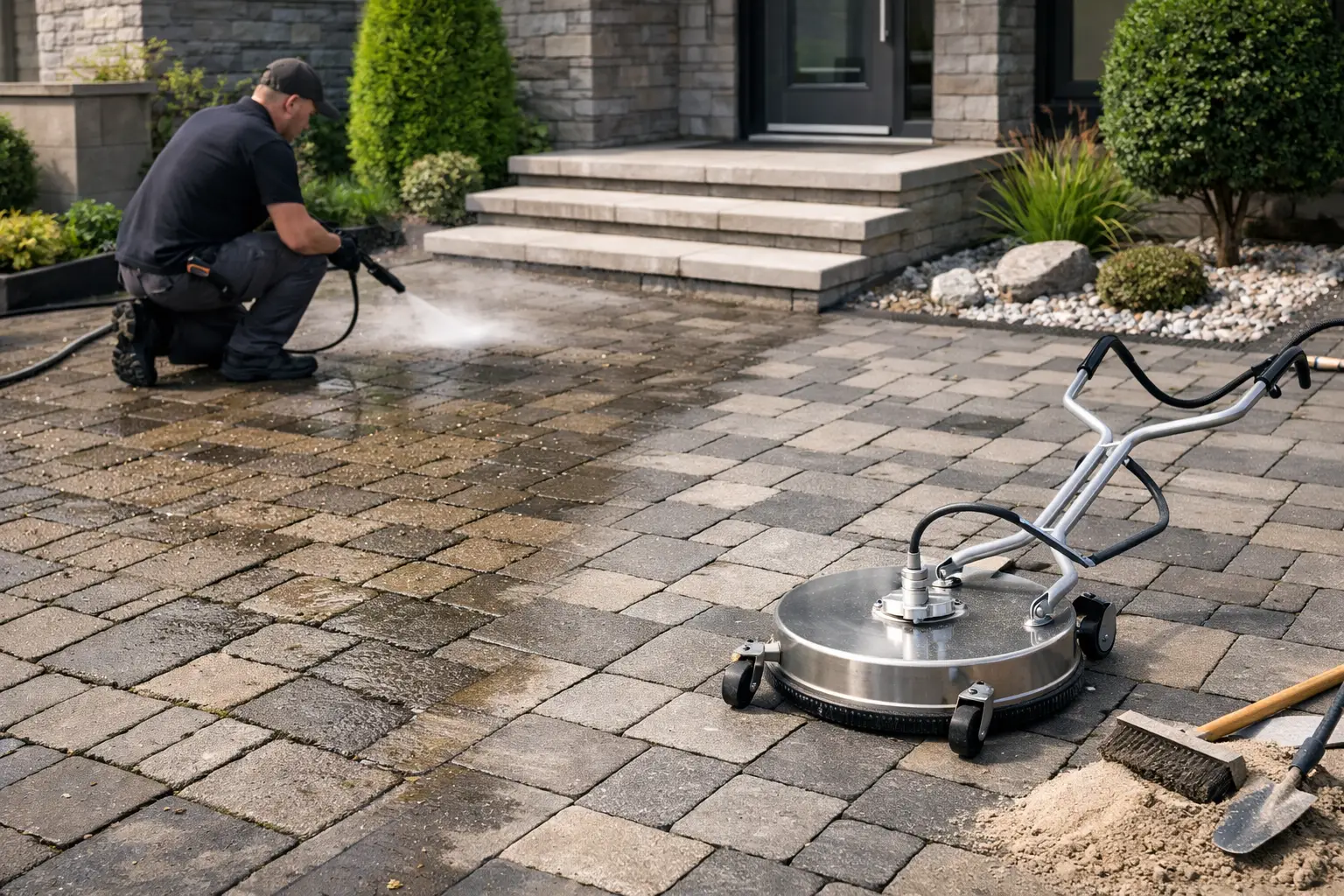
A dull, green-tinged, uneven or weed-infested interlocking paver surface sends a poor first impression before a visitor even steps inside. Paver restoration isn’t just about “scrubbing harder.” It’s a systematic upgrade to restore appearance, cleanliness and, in many cases, part of the surface’s original performance.
For property managers, condo boards or commercial owners, the stakes are real. A neglected driveway, walkway or outdoor terrace undermines curb appeal, accelerates wear and ultimately costs more than a well-planned maintenance program. The right approach always depends on the paver’s actual condition, the type of grime and how the surface is used daily.
What paver restoration really involves on site
In practice, restoring interlocking pavers means correcting issues that routine maintenance can no longer address. It often includes deep cleaning, removal of organic buildup, weed eradication, joint cleaning, polymer sand replenishment and, when needed, the application of a paver sealer.
Not all pavers need the same treatment. A surface simply coated in dust, urban residue and foot traffic doesn’t call for the same process as one stained by oil, marked by efflorescence or overrun by moss. That’s where technical expertise makes the difference. An overly aggressive approach can displace joint sand, weaken the surface or leave an uneven finish.
The right diagnosis hinges on three simple questions. Is the paver dirty, discoloured or structurally unstable? Are the joints still functional? And does the surface need only a fresh look, or also enhanced durability for heavy commercial or multi-unit use?
Signs that paver restoration is needed
Certain clues don’t lie. When paver colour looks dull even after rain, joints are eroding, weeds return quickly or water pools in spots, the surface has moved beyond routine maintenance.
Moss growth or dark staining is also common, especially in shaded areas, near buildings or where moisture lingers. On high-traffic access points, you’ll often see a mix of compacted dirt, tire marks and greasy deposits that drastically change the look of the surface.
Stability matters too. If pavers shift, sink or create small uneven spots, pressure washing alone won’t fix it. There’s a clear line between restoration and repair. The first improves overall condition. The second becomes necessary when the base or original installation no longer performs as intended.
What professional cleaning actually delivers
Professional cleaning isn’t just blasting a surface with a pressure washer. Pressure, flow rate, working distance and nozzle type must be tailored to the paver’s condition and material. Too low, and the result stays superficial. Too high, and you strip out joint sand, weakening the entire surface.
The difference is most visible on commercial sites and common areas. Here, grime is varied and often deeply embedded. The goal is to clean thoroughly without causing visible damage or unnecessarily extending downtime. This is especially true when restoring outdoor spaces before occupancy, after construction or at the start of the warm season.
In Greater Montreal, freeze-thaw cycles add another layer of complexity. They encourage joint movement, water infiltration and the rapid return of defects if the work is incomplete. A well-executed restoration accounts for this climate reality, especially in Montreal, Laval and across the North Shore where exterior surfaces face heavy use.
Cleaning, polymer sand and sealer: the right order and when to use each
Cleaning comes first. It removes contaminants, reveals the surface’s true condition and prepares for the next steps. Without this stage, any correction remains partial—and applying a sealer over dirty or damp pavers yields disappointing results.
Polymer sand steps in when joints are thin or ineffective. It stabilizes pavers, limits weed regrowth and reduces the migration of fine materials. But it must be installed on a clean, dry and properly prepared surface. Otherwise, it won’t bond well, washes out prematurely or leaves a hazy residue on the pavers.
A sealer isn’t always necessary. It can revive appearance, simplify future maintenance and offer some protection against water and stains. However, it’s not a miracle solution. On pavers that are dirty, poorly jointed or already unstable, a sealer only masks problems temporarily. The decision to seal depends on usage, budget, exposure and the desired finish level.
Common mistakes that shorten results
The first mistake is rushing. Overly aggressive washing may give an instant impression of cleanliness, but it empties joints and makes the surface more vulnerable in the short term. Weeds reappear within weeks, and some pavers start to shift.
The second mistake is applying polymer sand when moisture isn’t controlled. The product requires precise conditions to set properly. If preparation is rushed, the joint won’t perform its job.
The third mistake is treating all pavers the same way. A condo courtyard, a parking lot driveway, a commercial entrance and a terrace each have different constraints and wear levels. The right level of intervention depends on the surface’s function, not just its appearance.
Finally, avoid confusing annual maintenance with a full restoration. A well-maintained surface needs fewer heavy interventions. Conversely, a paver left untouched for several seasons will cost more to restore, often with a less satisfactory outcome.
When restoration is enough—and when repairs are needed
That’s often the real question for decision-makers. If the paver is mainly dull, stained or surface-worn, a properly executed restoration usually transforms the site’s look. You regain sharp lines, more uniform colour and a visually polished surface.
If you notice repeated sinking, loosening or drainage issues, it’s time to be realistic. Cleaning and re-grouting will improve appearance, but won’t fix the root cause. In these cases, the best approach may combine visual restoration with targeted repairs.
This distinction matters, especially for commercial and multi-unit properties. A reputable provider should tell you when a surface can be salvaged and when it needs structural correction. That clarity often prevents misdirected spending.
How to time the intervention for the best results
The best time isn’t always “as soon as possible.” Aim for a window that favours drying, stable temperatures and site access. In spring, many surfaces look badly degraded after winter, but it’s often wise to wait until the freeze-thaw cycle is truly over before applying polymer sand or sealer.
During the season, restoration is especially useful before a property goes on the market, after construction, ahead of an important inspection or when a building wants to quickly improve its curb appeal. In these contexts, execution quality matters as much as speed.
For sites open to the public, operational considerations matter too. Good planning accounts for access, parking, schedules and priority zones. That’s often where a specialized company like Nickel & Krome adds real operational value: cleaning thoroughly, in the right order, without disrupting occupants or daily activities.
What a good result should look like after the work
A restored interlocking paver surface shouldn’t just look cleaner on day one. The real test comes in the weeks that follow. Joints should hold, the surface should stay even, residue shouldn’t reappear immediately and upkeep should be simpler.
Visually, you should see a cohesive surface without uneven cleaning marks, excessive haze or jarring differences between treated zones. Functionally, water should drain better, weed growth should slow and users should perceive a better-maintained environment.
On a commercial or multi-residential property, this effect isn’t just aesthetic. It contributes to the building’s perceived quality, safe usage and consistent maintenance. When an exterior surface immediately conveys control and cleanliness, the rest of the site benefits too.