
Organize Condo Common-Area Cleaning
Organizing condo common-area cleaning requires method, adapted frequency and a reliable provider to preserve the image and value of the building.
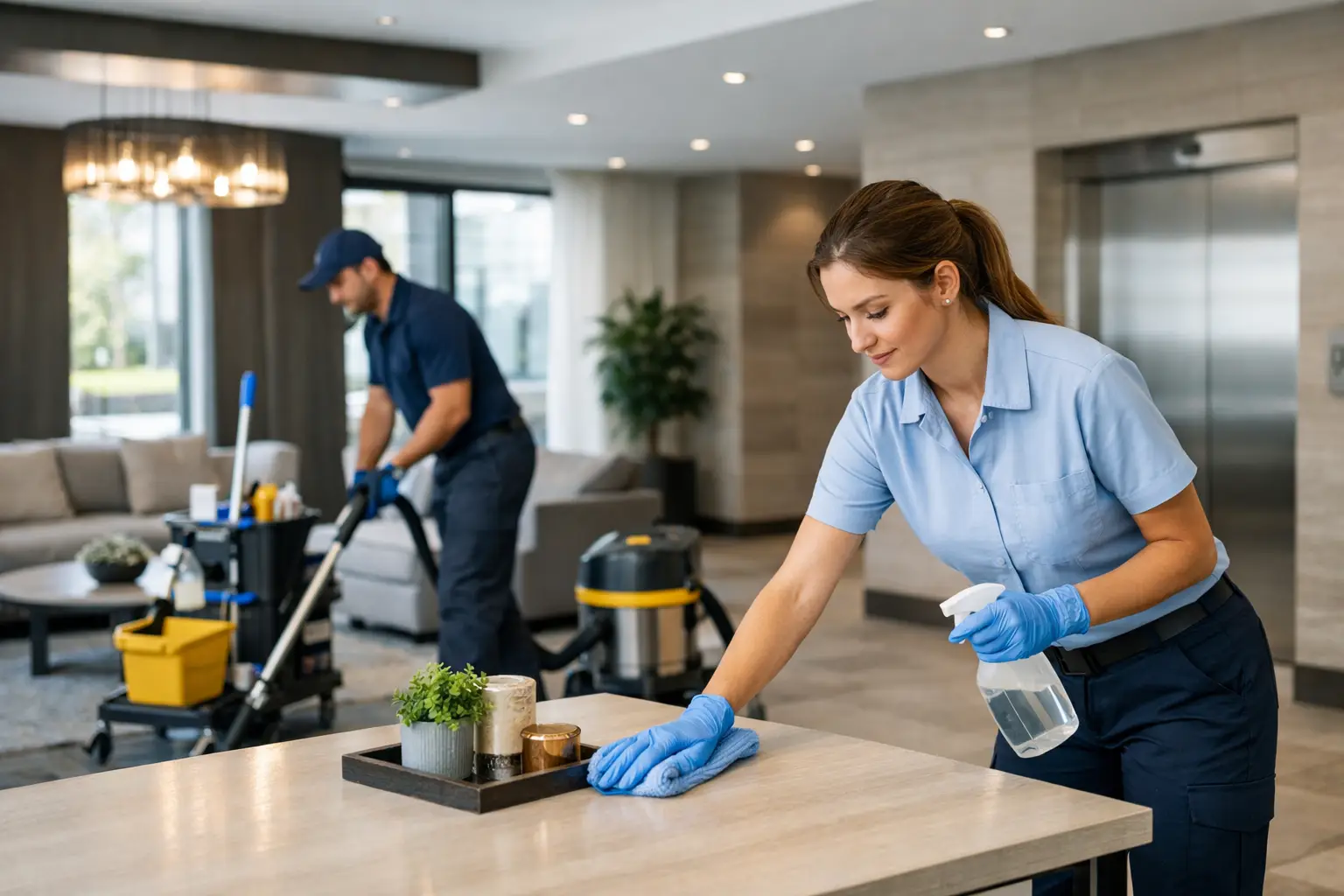
A marked lobby, spotless stairs, a clean elevator at all hours — this is often where the perception of a building is decided. Organizing condo common-area cleaning is not only about planning a few housekeeping visits. For a condominium syndicate or manager, it means maintaining a visible, constant and realistic standard based on traffic, season and occupancy type.
In a condo, common areas face daily pressure. Entrances collect water, calcium and salt in winter. Corridors hold dust, hair and fine debris. Stairwells age quickly when maintenance becomes irregular. The real issue is therefore not cleaning once in a while, but organizing maintenance that holds over time.
Why organizing common-area cleaning for a condo changes everything
When cleaning is poorly structured, problems appear quickly. Residents notice floor marks before they notice the rest. Then come complaints about odors, bins, entrance glass or carpets. At that point, the issue is no longer only aesthetic. It affects occupant satisfaction, the image of the condominium and, over time, the perceived value of the building.
A well-thought-out schedule avoids operating in reaction mode. It defines what must be done daily, weekly, monthly and at each seasonal change. This logic reduces omissions, limits premature surface wear and makes costs more predictable.
There is also a responsibility issue. In a multi-residential building, a wet entrance, dirty stairs or poorly maintained floor can increase slip risks. A clear cleaning organization helps secure circulation, especially during high-traffic periods.
Start with a simple and precise diagnosis
Before setting a frequency, look at the building as it actually operates. Two condos of similar size do not necessarily have the same needs. A building with many deliveries, strollers, pets or daily circulation gets dirty faster than a calmer condominium. The presence of a garage, fitness room, waste room or elevator also changes the maintenance load.
The diagnosis should focus on four elements. First, the most visible areas, such as the lobby, glass entrance and main corridors. Then, high-use or risk zones, such as stairs, elevators and handles. Then technical or neglected zones, such as baseboards, corners, ventilation grilles, utility rooms and spaces near containers.
Finally, the floor coverings themselves, because tile, carpet, vinyl or stone surfaces are not treated the same way.
This step avoids two common mistakes. The first is overpaying for unnecessary tasks. The second, more common, is underestimating the real needs and letting the building deteriorate between visits.
Organize condo common-area cleaning by frequency, not intuition
The best method is to divide interventions according to their logical rhythm. Daily tasks mainly concern what is immediately visible and what relates to direct hygiene. This includes the entrance, lobby, handles, contact glass surfaces, elevators and removal of visible waste.
Weekly tasks go further. They include fuller floor washing, stairwell treatment, accessible baseboard cleaning, mailboxes, ledges and less exposed areas that collect dust quickly. This frequency often stabilizes the building’s overall appearance.
Monthly or periodic interventions correct what routine maintenance cannot fully address. These may include higher interior glass, high dusting, mechanical washing of certain floors, deep carpet cleaning or treatment of exterior access zones.
Then there is seasonality. In Quebec, this point is decisive. Winter requires tighter follow-up at entrances and transition areas because of salt, slush and humidity. Spring often requires a reset. Fall brings leaves, sand and damp dirt. Good organization accounts for this reality instead of applying the same calendar all year.
What a task scope should really contain
Many mandates become vague because the need is expressed too generally. Saying that you want common-area maintenance is not enough. For a provider to execute properly, the zones, frequency and expected level must be described.
A useful task scope specifies included spaces, intervention hours or windows, consumables to manage if needed, regular tasks and periodic tasks. It should also indicate the building’s own vigilance points, for example a highly exposed entrance, a carpet that holds marks or a waste room requiring tighter control.
This document does not need to be heavy. Above all, it must be usable on site. The more concrete it is, the more it reduces gaps between what was sold, what is expected and what is actually done.
Internalize or assign to a specialized provider
Some condominiums wonder whether it is better to use an internal concierge or a specialized company. The answer depends on the building, budget, real workload and expected standard.
An internal resource can work for small buildings with few shared facilities and simple needs. But as soon as consistency must be guaranteed, absences managed, different surface types treated or overload periods absorbed, the limits appear quickly. Cleaning becomes irregular, certain technical tasks are postponed and the result depends too heavily on one person.
A specialized provider generally brings method, replacements in case of absence, supervision and adapted equipment. This is especially useful in buildings that require more than a simple visual pass. In markets such as Montreal, Laval and the North Shore, where buildings face strong seasonal pressure and high expectations around property image, this approach often improves operational stability.
The points often forgotten in condos
What damages the perception of a building is not always major dirt. It is often repeated details. Fingerprints on glass doors, dusty corridor corners, odors near waste rooms, debris in elevator tracks or buildup around baseboards quickly create an impression of loosened standards.
Another often neglected point is the occasional reset. Even with good routine maintenance, some surfaces need more intensive cleaning. After work in a unit, a frequent move, a minor incident or the end of winter, simple regular maintenance is no longer enough. Targeted interventions must then be planned to bring the building back to the expected standard.
This is where a specialized partner makes a real difference. A company like Nickel & Krome intervenes precisely on these more demanding needs, when routine maintenance, common-area cleaning and restoration must be combined according to the building context.
How to monitor quality without making management heavier
The goal is not to turn cleaning into an administrative file. However, minimal follow-up avoids misunderstandings. Good oversight relies on a few indicators, but concrete ones. The condition of the entrance, cleanliness of elevators, absence of buildup in stairs and overall consistency from one week to the next are useful reference points.
It is helpful to do short walkthroughs at different times of day. A building can look clean early in the morning and much less so at the end of the afternoon. This gap helps adjust the frequency or timing of service. It must also be accepted that a perfect standard at all times costs more. The right level is the one that remains coherent with the building’s real use and occupant expectations.
Budget, expectations and field reality
Price should never be the only criterion. A cheaper but poorly calibrated mandate often ends up costing more in rework, complaints, management time and surface wear. Conversely, oversizing the service does not always make sense. It all depends on the type of condo, number of units, shared equipment and desired presentation level.
The most effective approach is to build an evolving cleaning plan. Start with a realistic frequency, observe which zones deteriorate fastest, then adjust. This approach is healthier than a fixed contract that follows neither the seasons nor the real life of the building.
A well-maintained condo does not rely on a vague promise of cleanliness. It relies on clear organization, defined tasks, coherent frequency and consistent execution. When that base is in place, the building stays presentable without apparent effort — and that is often the sign that good work has been done.
Apply this guide to your property
Review the scope, access requirements and service details for Recurring common-area cleaning for condos and managed buildings.