
Oil stains in underground parking garages
Oil stains in underground parking garages damage appearance and floors. Learn about causes, risks, and practical solutions for lasting restoration.
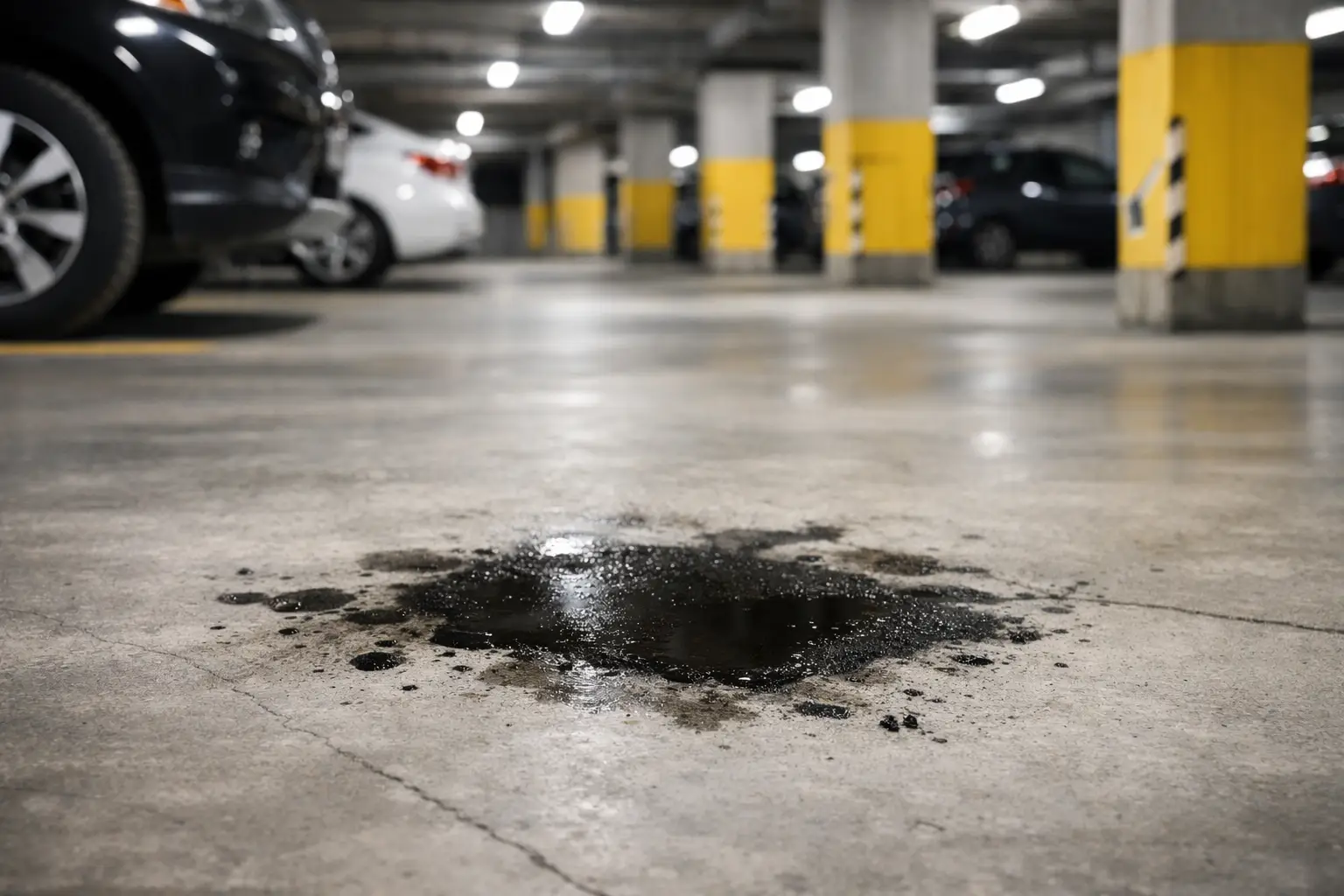
A clean underground parking garage rarely draws attention. But oil stains in underground parking garages are immediately noticeable—to occupants, visitors, co-owners, and maintenance teams. And once they set in, they become more than just an aesthetic issue.
In multi-unit buildings, condominiums, or commercial properties, these dark marks on the floor create an impression of neglect. They also make regular maintenance harder, increase slip hazards, and can speed up the deterioration of certain surfaces. For property managers, the real challenge isn’t just removing a visible mark—it’s properly addressing the contamination without damaging the flooring or triggering unnecessary repeat interventions.
Why oil stains in underground parking garages keep coming back
Underground parking garages combine several unfavourable factors. Vehicles park there for long periods, often in the same spots. A small engine leak or oil loss from the oil pan is enough to create repeated deposits. Over time, the stain doesn’t stay on the surface—it soaks in, sets, and attracts dirt.
The problem is often worsened by the type of flooring. On porous concrete or worn surfaces, oil quickly becomes embedded. If cleaning is delayed, the mark spreads under the effects of tire traffic, melted snow, abrasive dust, and traffic residue. What may have seemed minor at first turns into a heavily soiled area that’s difficult to restore.
Winter makes the situation even trickier. In the Montreal area, including Laval and the North Shore, underground garages are constantly exposed to water, calcium, sand, and mud. When mixed with oil, these contaminants form a greasy film that’s harder to remove than a fresh stain. This isn’t routine maintenance anymore—it’s a technical cleaning job that requires a tailored approach.
What these stains say about the garage’s condition
An oil stain isn’t always an isolated incident. In many buildings, it reveals a broader maintenance deficit or a lack of targeted intervention in critical zones. When multiple parking spots are affected or aisles show dark streaks, it’s usually time to reassess cleaning frequency and treatment strategies.
The visual impact is real, especially in buildings where the garage contributes to occupants’ experience. A stained basement gives the impression that the building is poorly maintained, even if other common areas are clean. For condominiums or commercial properties, this perception matters.
There’s also the safety aspect. A greasy surface can become slippery, particularly near pedestrian walkways, elevator doors, ramps, or areas where moisture lingers. The risk depends on the amount of oil, the type of flooring, and traffic levels. But in all cases, waiting only makes things worse.
Why a simple wash isn’t always enough
This is often where the problem repeats itself. Many oil stains in underground parking garages are treated like surface dirt. A machine is passed over, rinsed, the floor looks cleaner, and then the mark reappears within days or weeks.
The reason is simple: oil doesn’t behave like dust or mud. When it has soaked into the pores of concrete or the micro-cracks of a surface, standard washing only removes what’s on top. The contamination remains underneath. As soon as the floor dries, the stain resurfaces visually.
Product choice also plays a role. A weak degreaser won’t have a lasting effect. A product that’s too harsh—or not rinsed properly—can leave residue, dull the surface, or create uneven patches. The right treatment depends on the floor’s condition, the age of the stains, and the overall level of grime in the garage.
How to treat oil stains in underground parking garages effectively
An effective intervention starts with a simple but precise diagnosis. You need to determine whether you’re dealing with a fresh stain, old contamination, or widespread grime. The treatment isn’t the same in all three cases.
For a recent stain, quick action often yields good results. Absorbing residue first, followed by targeted degreasing, limits penetration into the surface. The sooner you act, the better you avoid persistent halos.
For old stains, a combination of steps is usually required. Degreasing needs real dwell time. Mechanical agitation is often necessary to loosen embedded grease. Depending on the surface, mechanized cleaning or controlled pressure washing can complete the job. The key word here is controlled—misadjusted pressure can spread contamination or damage certain finishes.
When multiple zones are affected, treating only the worst stains isn’t always the best option. You might end up with an unsatisfactory visual contrast between cleaned areas and the rest of the floor. In such cases, a broader cleaning of the garage or a complete sector provides a more uniform and longer-lasting result.
What to know before intervening
One thing is clear: not all stains disappear completely. In some garages—especially those with old, porous, or heavily contaminated concrete—the realistic goal is a significant visual and sanitary improvement, not a perfect like-new finish.
The type of flooring changes everything. Raw concrete doesn’t respond the same way as sealed concrete or a protective coating. A cracked surface holds more oil. A worn surface may reveal its flaws after cleaning—not because the intervention caused a problem, but because it removed the layer of dirt that was masking them.
You also need to consider building operations. In a high-traffic garage with constant entries and exits, intervention windows are limited. Cleaning must be planned realistically to avoid disrupting traffic or compromising the drying of treated areas.
Preventing stains rather than constantly re-treating
The best way to manage oil stains in underground parking garages is to reduce their recurrence. This starts with regular monitoring of problem spots. Some parking areas generate repeated leaks. Spotting them early prevents a simple stain from becoming a permanent black zone.
Periodic garage maintenance also helps limit embedding. When dust, salts, mud, and greasy residue are removed regularly, you prevent contaminant mixtures from setting deep down. The garage stays more presentable—and, more importantly, easier to maintain in the long run.
In some cases, it may be worth evaluating the condition of the flooring itself. If the surface is very porous or heavily worn, it will retain more contaminants even after a thorough cleaning. The question then shifts from just washing to protecting and improving the floor’s durability.
What property managers expect from a real intervention
For a property manager, the goal isn’t just to see a machine in action. They expect measurable results, clean execution, and an intervention compatible with site constraints. This requires a methodical approach, suitable products, and an accurate assessment of the garage’s actual condition.
This is especially true in condominiums, rental buildings, and commercial properties where the garage isn’t a secondary space—it influences the overall perception of building maintenance. A thorough treatment of stained areas helps maintain a consistent standard across the entire property.
In this type of mandate, a specialized provider makes all the difference when they know how to intervene without improvisation, manage technical surfaces, and adapt methods to the level of grime. That’s precisely why specialty cleaning and maintenance services outperform routine housekeeping.
If your underground parking garage has recurring stains, the right reflex isn’t to keep applying superficial cleanings. It’s better to address the visible issue rigorously, at the right time, using a method suited to the flooring and the garage’s actual use. That’s often what leads to a cleaner, safer garage that’s much easier to maintain season after season.
Apply this guide to your property
Review the scope, access requirements and service details for Sweeping, washing and restoring underground parking lots.
View the documented occupied-garage project in Montreal (French)