Office Cleaning in Terrebonne for Consistently Clean Workplaces
Office cleaning in Terrebonne for offices, clinics and businesses: recurring care, attention to sensitive areas and reliable follow-up.
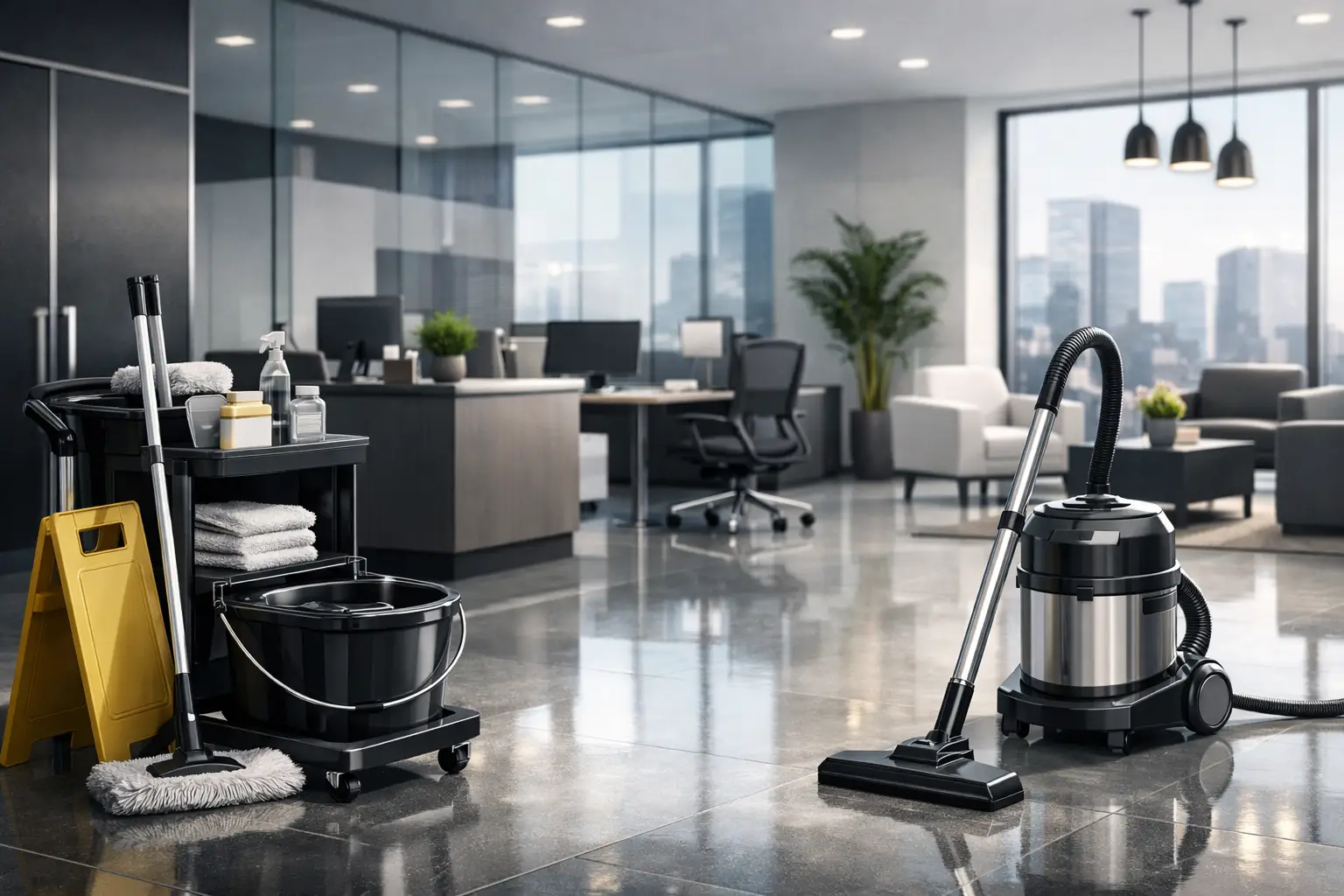
Salt marks in the entrance, fingerprints on a glass door and lingering lunch odours in the break room are often the details that make an office look neglected. Office cleaning in Terrebonne is not simply a matter of vacuuming at the end of the day. It should keep the workplace clean, presentable and functional without requiring the person responsible for the premises to chase the provider every week.
For a business, clinic, professional office or administrative workplace, cleanliness directly affects how visitors are welcomed, how comfortable employees feel and how the organization is perceived. The service must also reflect the building's actual conditions: changing traffic, secure access, operating hours, shared spaces and areas that become dirty faster than others.
What office cleaning in Terrebonne includes
Office cleaning in Terrebonne should be planned around how the premises are actually used, not around a generic checklist applied to every client. A professional practice that sees visitors by appointment does not have the same needs as a busy retail location or a clinic whose waiting room fills several times each day.
Recurring maintenance generally covers accessible workstations, floors, washrooms, break rooms, kitchens, meeting rooms and entrances. Frequently touched surfaces such as handles, switches, elevator buttons and reception counters need particular attention. Waste bins should be emptied without leaving residue, and waste or recycling rooms should not become a source of odours for occupants.
In an office building, maintenance does not stop at the leased premises. The lobby, corridors, stairwells, elevators and shared washrooms are part of the tenants' daily experience. When these areas are marked or poorly maintained, complaints can appear quickly even when the offices themselves are clean.
The right frequency depends on traffic
Service frequency is one of the first decisions to make. A small office with limited traffic may function well with one properly completed weekly visit. A clinic, retail business or workplace that welcomes clients every day will often require service several times a week, with daily attention for the busiest areas.
A useful approach is to observe what deteriorates between visits. Do entrance floors look dull after two rainy days? Do washroom supplies run out before the next service? Is the shared kitchen clean in the morning but cluttered by midweek? These indicators help calibrate the mandate accurately.
Tasks can also follow different schedules. Washrooms, entrances and break rooms may need more frequent care, while complete floor washing, detailed dusting or interior glass cleaning can follow another cadence. This avoids paying for an unnecessarily heavy program while protecting the areas that matter most.
Areas that require real field follow-up
Reliable commercial maintenance is often most visible in less obvious places. An office may look clean from reception but lose quality when corners, baseboards, areas under furniture or storage rooms accumulate dust and residue.
Entrances deserve sustained attention, especially during rain, snow and thaw periods. Water, sand and calcium affect the appearance of floors and can create a slip risk. Properly maintained mats, cleaning suited to the floor finish and additional service when needed make an immediate difference.
Break rooms are another sensitive area. They collect crumbs, splashes, forgotten containers and odours. Cleaning should cover surfaces, handles, accessible appliances, tables and floors. The team must still respect the limits agreed with the client, particularly around personal belongings, confidential documents and locked areas.
Consistency matters more than a quick pass in washrooms. Toilets, sinks, mirrors, dispensers, partitions and floors should be cleaned while consumable supplies are checked. An empty soap or paper dispenser immediately suggests that the space is not being managed.
How to reduce cleanliness complaints
Complaints do not always come from a lack of cleaning. They can result from poorly distributed tasks, unsuitable timing or weak communication. A provider may clean properly but arrive too early before a busy period or miss a newly problematic area.
A clear mandate should define the included areas and service frequency, access arrangements, approved products, waste handling and the person to contact when something unexpected occurs. In shared offices, it is useful to establish what belongs to the cleaning team and what remains the occupants' responsibility. That clarity prevents unrealistic expectations and repeated frustration.
Field follow-up is especially useful when a building changes: a new tenant arrives, a floor is renovated, staffing increases, layouts are modified or a recurring issue appears in the common areas. The maintenance plan should be able to evolve. A fixed formula rarely suits an occupied building for long.
When specialized cleaning should be planned
Recurring maintenance keeps the premises stable, but it does not replace a full reset. After construction work, a move, a furniture delivery or a period of intensive use, fine dust, adhesive marks, gypsum residue and floor scuffs require a different intervention.
Post-construction cleaning requires suitable equipment and methods to remove particles without damaging new surfaces. Glass, frames, baseboards, accessible light fixtures, exposed ducts and floors may require several steps. Treating this residue as ordinary housekeeping often produces an incomplete result.
Indoor garages and underground parking areas also need attention in some commercial or mixed-use buildings. Mud, salt, litter and floor marks affect the overall presentation and can build up quickly. Planned underground parking cleaning helps maintain these areas without disrupting building operations.
Who maintains a building or condominium common areas?
Building maintenance is usually assigned to a building concierge or commercial cleaning company that can work around the manager's schedules, access conditions and priorities. In a condominium, the provider maintains common areas such as the lobby, corridors, elevators, stairwells, waste rooms, recycling rooms and, depending on the mandate, the underground garage or exterior spaces.
Building concierge service therefore involves much more than washing floors. It helps maintain shared spaces, identify visible issues, reduce odours and improve the experience of residents, visitors and tenants. For a condo board or property manager, the main benefit is reliability: a clean building without constant supervision.
In Terrebonne, Nickel & Krome S.E.N.C. supports property managers, businesses, offices, clinics and rental buildings with building maintenance, office cleaning and reset services. The team focuses on the areas that generate the most day-to-day comments, using a structured approach and professional equipment. The company is registered under NEQ 3381837957 and can be reached at +1 514-974-3311 to discuss recurring or specialized maintenance needs.
Before choosing a service frequency or provider, walk through the premises when they are busiest. The marks, odours and irritants that appear at that time usually reveal the maintenance program the building actually needs.
Apply this guide to your property
Review the scope, access requirements and service details for Professional office cleaning.