Pressure washing in Montreal for interlocking pavers and exterior surfaces
Pressure washing in Montreal for interlocking pavers, façades, and outdoor areas. An efficient, precise method tailored for buildings and commercial properties.
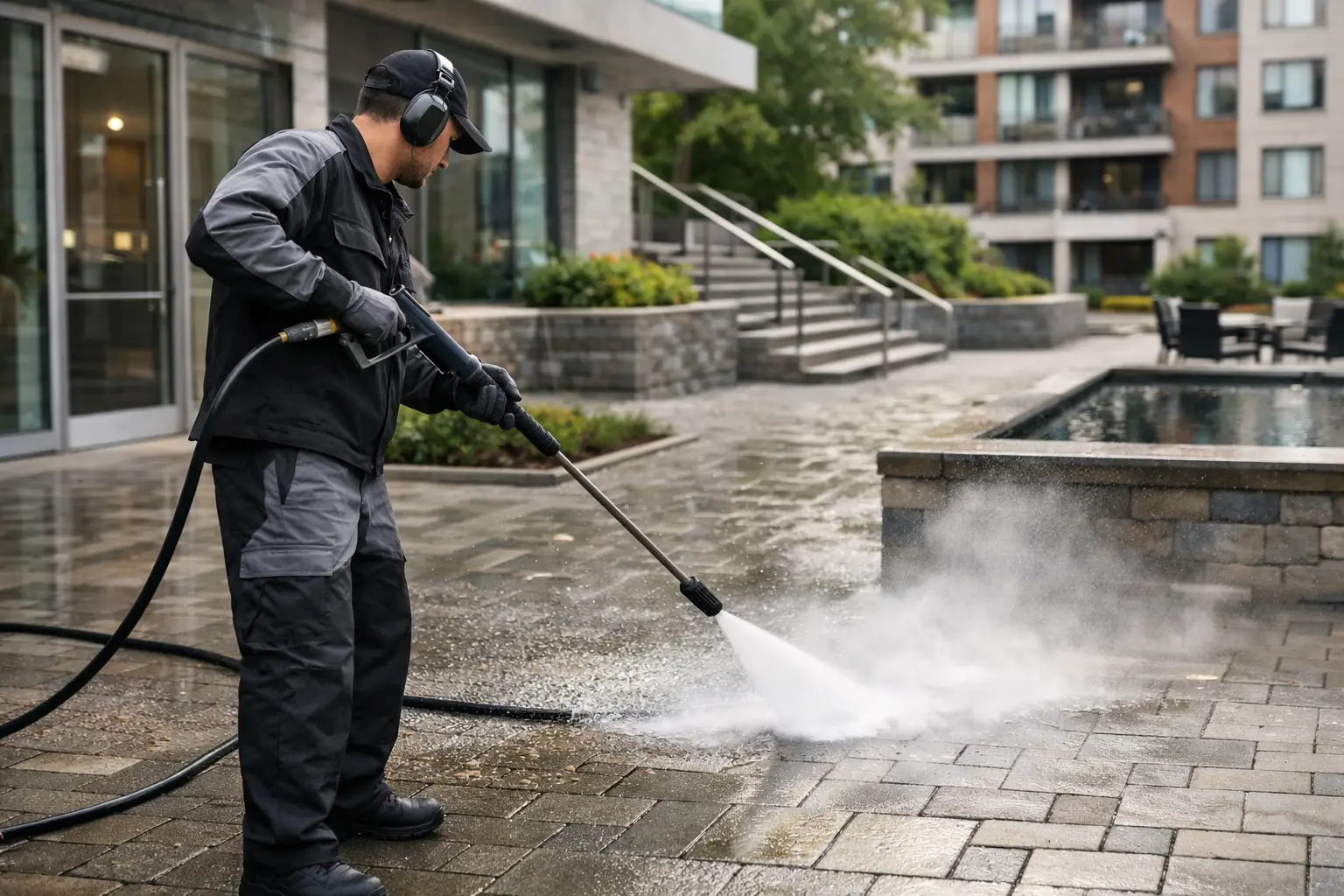
A darkened sidewalk, interlocking pavers marred by stains, or a commercial entrance that immediately gives an impression of neglect—these are often details that cost more than we think. Pressure washing in Montreal isn’t just about improving a site’s appearance; it’s also about restoring surfaces constantly exposed to the elements, traffic, construction, and residue buildup.
For property managers, commercial owners, or maintenance supervisors, the question isn’t whether cleaning is necessary—it’s about which surfaces can be pressure washed, when to do it, and what level of intervention will deliver a clean result without damaging the materials. That’s where a specialized service makes all the difference.
Why pressure washing matters in Montreal
In Montreal and surrounding areas, outdoor surfaces face an especially harsh cycle. Winter leaves behind salt, sand, and mud stains. Spring reveals deeply embedded grime. Summer accelerates the growth of moss, algae, and organic deposits, while autumn adds leaves, dirt, and lingering moisture.
On commercial buildings or multi-unit properties, these accumulations aren’t just unsightly—they can make certain areas slippery, accelerate joint deterioration, dull the building’s overall presentation, and complicate routine maintenance. A dirty surface quickly gives the impression that the entire site is neglected, even if the interior is well maintained.
Pressure washing allows targeted intervention on these issues. But contrary to popular belief, it’s not just about blasting surfaces with high-pressure water. The quality of the result depends on the right balance of pressure, flow, water temperature (when applicable), nozzle type, and method of application. On technical or high-visibility surfaces, execution matters as much as the equipment used.
Which surfaces are suitable for pressure washing in Montreal
Pressure washing in Montreal is particularly effective for outdoor spaces that quickly accumulate embedded dirt. Interlocking pavers are a prime example. In access zones, parking lots, pedestrian walkways, or terraces, they trap traffic residue, oil stains, organic deposits, and urban pollution. A well-executed wash restores uniformity to the surface and significantly improves its appearance.
Concrete curbs, sidewalks, garage aprons, and loading zones are also excellent candidates. These are often highly exposed surfaces where stains set in quickly and dirt becomes visible before anywhere else. In a commercial context, they’re also high-traffic areas noticed immediately by occupants, visitors, or clients.
Certain façades, low walls, outdoor stairs, and exterior common areas can also be treated, but with extra caution. Not all materials respond the same way to pressure. Porous surfaces, weakened joints, or already fragile coatings may require a gentler approach. This is precisely why an on-site assessment is essential before any work begins.
Surfaces that require extra care
Pressure washing isn’t a one-size-fits-all solution. Wood, deteriorating joints, certain painted surfaces, or older materials can be damaged by excessive pressure. The same caution applies to areas near windows, signage, outdoor electrical installations, or potential infiltration points.
A reputable provider doesn’t treat all surfaces with the same settings. They adapt their approach based on the material, level of grime, and desired outcome. In some cases, a gentle mechanical cleaning or complementary treatment may be more appropriate than high pressure.
What a quality pressure wash actually changes
The first benefit is visual—and it’s immediate. A clean entrance, restored pavers, or a debris-free circulation zone instantly changes the perception of a building. For a business, condo, or multi-unit property, this reinforces the site’s professional image.
The second benefit is operational. A well-maintained outdoor surface is easier to monitor over time. Visual inspections are simpler, defects become apparent sooner, and routine maintenance tasks are less labour-intensive. It also prevents layers of grime from building up, which would otherwise require more costly restoration later.
There’s also a safety aspect. Moss, algae, grease, and damp deposits increase the risk of slips on certain surfaces. In a frequently used building, this is a point worth careful attention. While pressure washing alone won’t eliminate all risks, it clearly reduces avoidable hazards.
How often should pressure washing be scheduled in Montreal
There’s no one-size-fits-all frequency for every site. It depends on exposure, foot traffic, surface type, and building usage. A high-traffic commercial entrance won’t have the same needs as a secondary courtyard in a multi-unit property.
In many cases, a seasonal or bi-annual intervention is enough to maintain a good level of cleanliness. Spring is often the most strategic time, as it removes winter residue. A second intervention in late summer or fall may be useful for highly exposed sites, especially when outdoor surfaces play a key role in the building’s image.
After construction, the approach is different. This isn’t about maintenance—it’s about restoration. Fine dust, material traces, construction residue, and dirt from foot traffic must be removed methodically without damaging freshly finished surfaces. In this context, exterior cleaning is often part of a broader post-construction cleanup.
How to recognize a well-executed pressure wash
A successful pressure wash isn’t measured only by the before-and-after contrast. It’s also evident in the uniformity of the finish, the absence of visible streaks, and the respect for materials. A surface that looks clean but is streaked, a joint that’s been stripped, or a zone splattered with displaced residue isn’t a job completed properly.
Preparation is as important as the washing itself. It involves assessing water flow, protecting sensitive areas, clearing access points, and organizing the work to minimize disruption to occupants or site activities. In a commercial or property management environment, this logistical aspect is a core part of the service.
Another indicator of quality is the provider’s ability to set realistic expectations. If a stain is too deeply embedded, if a surface is too fragile, or if a perfect result would require a different method, they should say so clearly. A serious approach is rarely absolute—it’s based on an honest assessment of the surface and realistic outcomes.
Pressure washing in Montreal as part of a comprehensive maintenance strategy
For commercial buildings, condos, and multi-unit properties, pressure washing is most effective when it’s part of a cohesive maintenance plan. A site that’s well maintained indoors but neglected outdoors sends mixed signals. Conversely, coordinated interventions on common areas, surroundings, exterior surfaces, and occasional restorations help maintain a consistently high standard of cleanliness.
This is especially true for managers looking to simplify supplier coordination. Working with a partner who understands building realities, access constraints, and presentation requirements saves time and reduces grey areas between multiple contractors. It’s in this context that specialized companies like Nickel & Krome deliver real on-site value, particularly when needs go beyond standard maintenance.
What to look for when hiring a provider
Beyond price, the first thing to check is whether the service matches the type of site to be treated. A commercial building, an exterior common area, or a post-construction environment requires a more structured approach than a simple one-off wash. Experience with comparable surfaces, the ability to handle demanding projects, and an understanding of property management constraints are more useful than vague promises.
It’s also important to validate the planned method. Which surfaces will be treated, at what pressure level, in what order, and with what precautions? A provider experienced in commercial environments will give concrete answers without vague assurances. This clarity from the start prevents many disappointments during execution.
A quality exterior cleaning isn’t about brute force—it’s about method, judgment, and consistency. When these three elements come together, the results are immediately visible and continue to pay off long after the team has left.
Apply this guide to your property
Review the scope, access requirements and service details for Commercial pressure washing in Montreal, Laval, and the North Shore.