Eco-Friendly Building Cleaning
Eco-friendly building cleaning means choosing better methods, right dosing and practical field execution without weakening cleanliness.
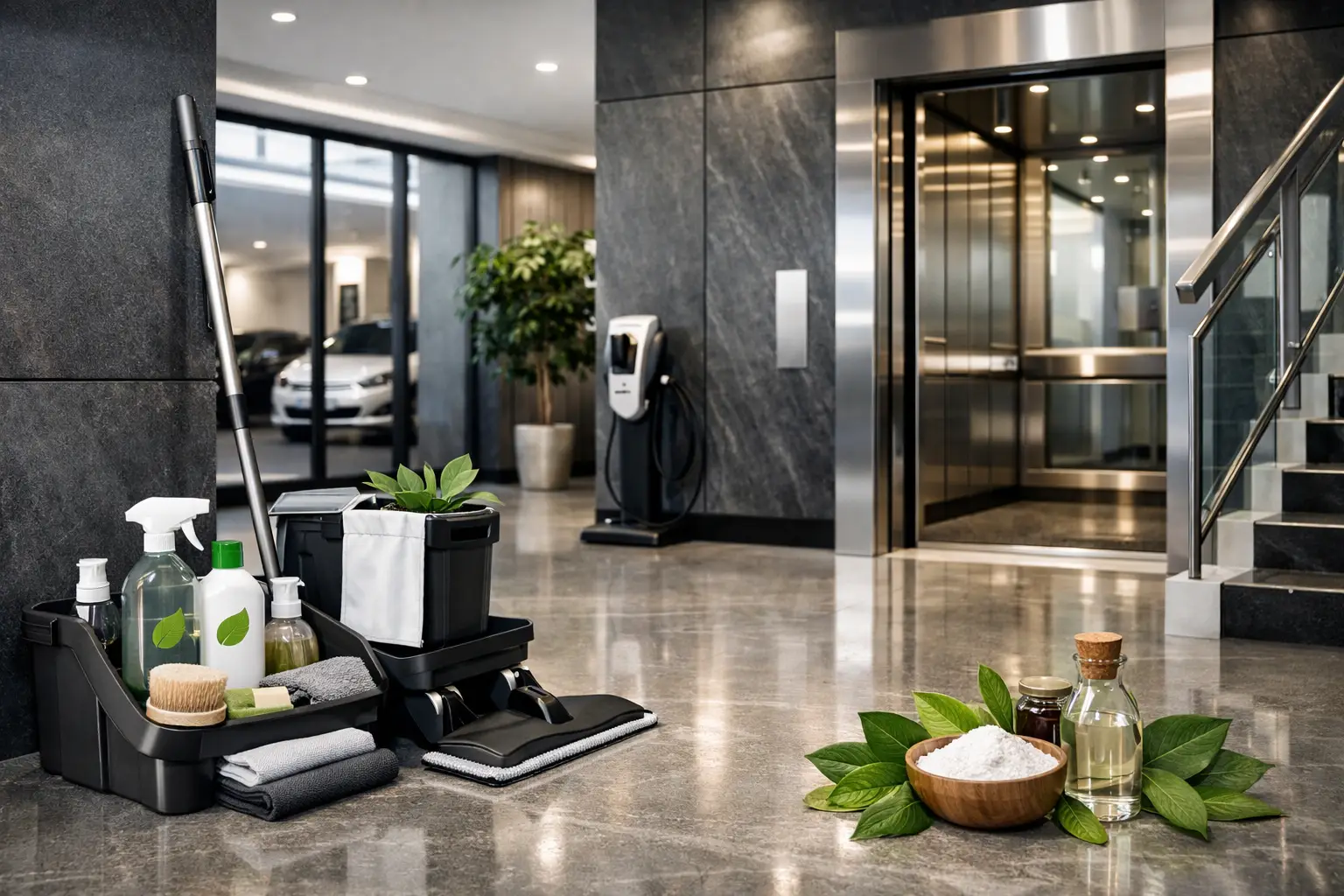
Eco-friendly building cleaning is not a label placed on a bottle. In a real building, it means choosing products, methods, frequencies and equipment that keep common areas clean while limiting unnecessary residue, odours and aggressive treatments.
For property managers, the point is practical. Residents and users want clean spaces, controlled odours and well-maintained surfaces. A greener approach only works if it also performs on the ground.
What eco-friendly cleaning means in a building
An eco-friendly approach starts with better selection and dosing. Using too much product can leave films on floors, strong smells in corridors and residue on surfaces. Using a product that is too weak can leave dirt, odours and complaints behind.
The right method adapts to each area. A lobby floor, stainless elevator panel, waste room and underground garage do not require the same intervention.
Why managers care about it
The environmental argument matters, but field benefits are often more concrete. Less aggressive odours, better surface protection, less residue and more stable maintenance can all improve the daily experience of occupants.
In condominiums and multi-unit buildings, this can reduce recurring complaints. It is especially useful where elevators, waste rooms and entrances are heavily used.
Building janitorial services in a greener logic
Building janitorial services include regular care of common areas, visual cleanliness, sensitive-zone management and field follow-up. In a greener approach, the work does not become weaker. It becomes more precise.
The team adjusts products to surfaces, avoids excessive fragrance, limits unnecessary rinsing and uses techniques that remove dirt instead of moving it around. This takes experience because every material reacts differently.
Where it works well and where nuance is needed
In halls, corridors, stairwells and administrative offices, a well-structured eco-friendly method usually works very well. Regular maintenance, proper dosing and adapted tools keep spaces presentable with less residue.
Elevators need extra care because shiny panels, buttons, mirrors and metal doors can streak or dull when the wrong products are used.
Waste rooms, recycling rooms and some underground garages are more technical. A responsible approach is possible, but sanitation, odour control and safety cannot be sacrificed. Liquids, organic residue, salt, calcium, heavy dust and embedded stains sometimes require specialized intervention.
What to verify with a provider
A provider can claim eco-friendly cleaning without improving the building. What matters is whether the team can explain how methods change by zone. Ask what is used in lobbies, what changes in waste rooms, how floor residue is limited and how quality is maintained despite traffic.
Frequency also matters. A better product does not compensate for too few visits. If corridors are marked the next day or elevators remain dirty, the issue may be cadence, follow-up or method.
After-construction cleaning and greener choices
After work, fine dust, material residue, silicone, adhesive, construction films and dirty stairwells often require specialized post-construction cleaning. Treating this as standard eco-friendly maintenance can waste time and leave incomplete results.
A responsible approach can still be used, but it must start from a real reset. The same applies to a very dirty underground garage or a problematic waste room.
What a field-based approach changes
When eco-friendly cleaning is well planned, the building does not smell artificially clean. It is clean. Floors keep a better appearance, surfaces feel less sticky, odours are controlled and materials often age better.
Nickel & Krome S.E.N.C. approaches this type of work as a building issue, not a marketing promise. The team works in building janitorial services, commercial cleaning and restoration with field logic, reliability and clear follow-up for managers. NEQ 3381837957. Phone: +1 514-974-3311.
Apply this guide to your property
Review the scope, access requirements and service details for Entretien commercial écologique (French).