
Operations guide
Deep commercial cleaning in Laval: when and how to plan it
Quick answer
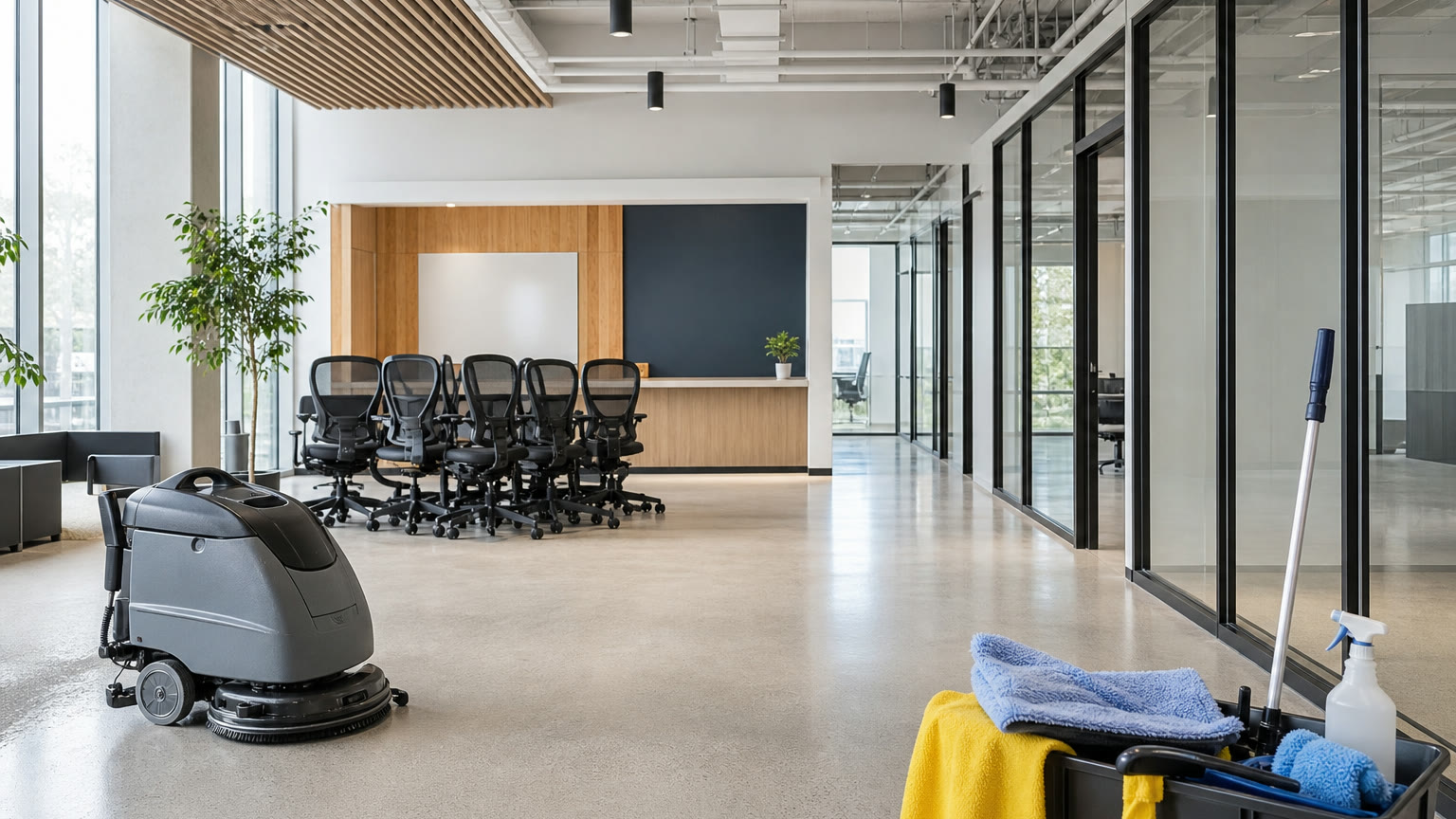
Plan deep commercial cleaning when routine service can no longer restore an even baseline: before an inspection, after heavy occupancy, during a tenant transition or to correct accumulated details. Define areas, exclusions, products, access, drying and acceptance criteria before work begins.
Deep cleaning is not routine maintenance performed for more hours. It is a reset with a defined start, scope and measurable result. It targets baseboards, ledges, tracks, accessible glass, washrooms, high and low details, floor edges and temporarily cleared areas that cannot be addressed during every recurring visit.
The primary page for this intent is commercial deep cleaning. In Laval, a broader recurring program belongs under commercial cleaning in Laval. The two services can work together, but the reset must remain visible so it does not blur the daily scope.
Recognize the right triggers
Detailed cleaning becomes relevant when visible defects repeat despite the routine: buildup at baseboards, corners and tracks, marks on doors, film on surfaces, difficult washroom joints or a floor that no longer returns to an even appearance with its normal maintenance. It can also precede an inspection, important visit, office return, difficult season or occupancy change.
The decision should not rely on an arbitrary date alone. A clinic, store, office and mixed-use building accumulate different soils. A site review separates what needs better recurring execution, a one-time reset or a specialized treatment requiring distinct equipment and method.
| Condition | Likely response | Decision |
|---|---|---|
| Daily soil | Recurring maintenance | Adjust task or frequency |
| Accumulated details | Deep cleaning | Define areas and target baseline |
| Damaged finish | Specialist evaluation | Do not promise an impossible cleaning result |
| Construction residue | Post-construction cleaning | Separate dust and trade residue |
Define inclusions and exclusions
The scope should name areas and detail levels. In an office it may include baseboards, ledges, doors, accessible glass partitions, cleared furniture undersides, kitchens, washrooms, floors and touchpoints. In retail it may add released display areas, stock support spaces and thresholds. Ceilings, ductwork, technical equipment and high-access work should not be assumed.
Exclusions protect both parties. Personal items, sensitive equipment, documents, merchandise and heavy furniture need clear responsibility. The provider should also state limitations: an old stain, deteriorated grout or worn finish may improve without becoming new. A small test helps choose a method without making an unverified promise.
- Named areas and surfaces
- Furniture moved by the client or provider
- Excluded heights, equipment and technical spaces
- Separately priced specialized treatments
- Realistic criteria for stains, wear and finish
Prepare the site and control products
Preparation starts by clearing agreed surfaces, protecting documents and identifying areas that remain occupied. Confirm water, power, ventilation, temporary storage, alarms and circulation. Wet floors need a detour route and realistic drying time; a team should not close occupants between two treated zones.
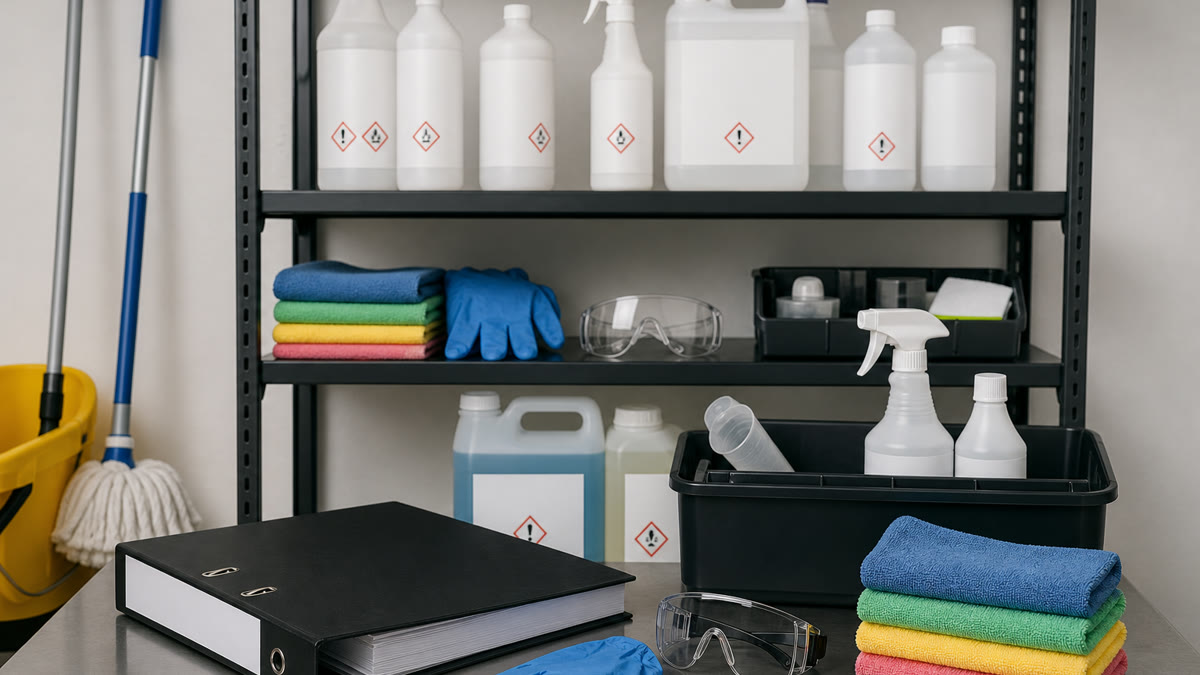
When a hazardous product is used at work, WHMIS assigns responsibilities to suppliers, employers and workers, including labels, safety data sheets and information. Product choice must fit the surface and site protocol. Mixing products, transferring them into an unidentified container or improvising dilution is not an acceptable method.
Sequence access and business continuity
An efficient reset follows an order that avoids re-soiling completed areas: accessible dusting, details, washrooms, glass, then floors according to method. The plan can divide the site into sectors so an entrance, washroom or corridor remains available. Tasks requiring contact or drying time belong in a window that respects occupant return.
Laval commercial properties range from business parks and road corridors to shops and mixed-use buildings. Parking can simplify arrival without solving interior access. Confirm the approved entrance, storage room, deliveries, representative hours and restrictions related to a tenant, clinic or public-facing zone.
Verify the result before closeout
Acceptance should follow the scope rather than a general impression. Review a sample of every area type under normal lighting: baseboards, ledges, doors, accessible undersides, washrooms, floor details and agreed checkpoints. A correction should correspond to an included item; a new request is evaluated separately.
The final record can note completed areas, observed limits, visible pre-existing damage and frequency recommendations. This information improves the recurring program. When the same details degrade quickly, the routine scope may need adjustment instead of repeated expensive resets.
Planning checklist before requesting a quote
Share a complete operating scenario so proposals reflect the same assumptions and important constraints do not appear only on service day.
- Address, area, use and occupied hours
- Priority zones, finishes and observed defects
- Permitted overview photos or a site visit
- Furniture, documents and merchandise to move
- Water, power, ventilation, storage and access
- Approved products, restrictions and site requirements
- Work window, noise, circulation and drying
- Acceptance criteria and authorized approver
Operational perspective: approve a test area
Before mobilizing the full site, a test area can confirm method, time and expected result. Select a representative space with the same finishes and soil as the larger assignment. Management reviews the outcome under normal lighting and confirms whether the scope needs adjustment before rollout. This is especially useful when prior finish treatments are unknown.
The real sequence should then be shown in a simple plan: released zones, occupied zones, circulation route, product contact time, drying and return to service. Each sector has one authorized person who can accept the result or request a correction tied to the scope. The team avoids contradictory rework requested by several different contacts.
After the reset, compare the new baseline with recurring service for several weeks. When baseboards, entrances or washrooms decline faster than expected, the issue may be frequency, traffic or task assignment. The best conclusion is not always another large reset; it may be a focused correction to the recurring program.
Closeout should also identify what was not corrected and why. A worn coating, damaged seal, permanent dye transfer or inaccessible component belongs in a limitations note rather than being hidden behind a broad completion statement. That note helps the owner decide whether maintenance, repair or replacement is the next step. It also protects the next cleaning cycle from being evaluated against a result that cleaning alone cannot produce.
For occupied sites, communicate the return-to-use plan before work starts. Staff need to know which entrance remains open, where wet-floor controls are placed, when furniture can be reset and who can release a completed zone. A clear handoff prevents a successful deep clean from creating an operational problem the next morning.
Questions before a deep reset
- How often is deep cleaning required?
- There is no universal frequency. Use, finishes, season, routine quality and site events determine the right trigger.
- Can the work happen during operating hours?
- Some zones can be sequenced while occupied, but noise, wet floors, products and circulation may justify an after-hours window.
- Is furniture movement included?
- Only when stated. Personal items, sensitive equipment and heavy furniture require an agreed responsibility and method.
- Will every stain disappear?
- No. Results depend on the contaminant, surface, age, wear and prior treatment. A small test can establish a realistic expectation.
- Does a reset replace recurring cleaning?
- No. It restores a baseline. Recurring service then protects that baseline with suitable tasks and frequencies.
Official sources and references
Official sources verified July 10, 2026.
This information is provided for general purposes. Requirements may vary by borough, building type and the nature of the operations. Verify the official rules applicable to the address concerned. Products, protective equipment and methods must also be validated for the workplace using current safety data sheets.