
Condo lobby cleaning: what really matters
Condo lobby cleaning requires method, frequency, and consistency to preserve a building’s image and reduce wear on common areas.
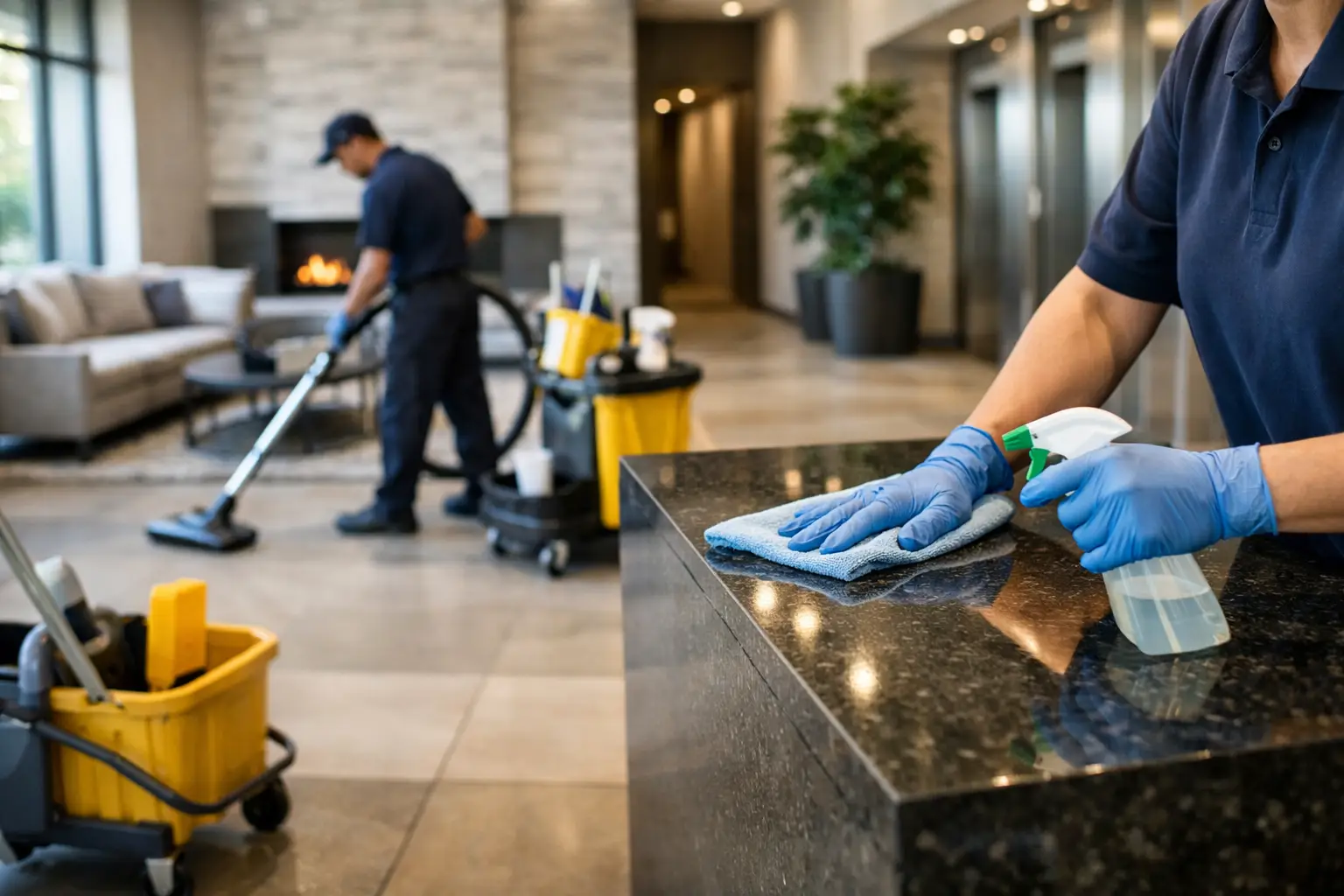
A condo lobby is judged in seconds. Dull floors, streaks on the windows, carpets saturated with moisture, lingering odours near the entrance—residents and visitors alike immediately gauge the building’s overall upkeep. Condo lobby cleaning isn’t just an aesthetic detail. It’s a maintenance priority that shapes perceptions of the property, extends the life of surfaces, and reduces the workload across all common areas.
In a condominium, the lobby faces multiple challenges at once. It’s a high-traffic zone, often exposed to outdoor grime, abrasive particles tracked in on shoes, handprints on glass doors, and seasonal shifts. In winter, crews manage water, calcium, sand, and soaked carpets. In spring, it’s mud and fine dust. In summer, outdoor entries bring more particles, and in fall, leaves and moisture add to the mix. A standard, year-round cleaning routine often falls short.
Why condo lobby cleaning demands a real method
The first challenge is frequency. A spotless lobby on Monday morning can lose its polish by day’s end if traffic is heavy. This doesn’t mean deep cleaning every day—it means distinguishing between routine maintenance and targeted interventions.
Routine maintenance covers highly visible, high-impact elements: floors, entryway windows, door handles, surface smudges, overflow near mats, dust on baseboards, and trash bins. This keeps the hall presentable day to day. Alongside this, periodic, more technical tasks are needed, such as stripping certain floor finishes, mechanical floor washing, deep-cleaning entry mats, or refreshing grout and hard-to-reach corners.
The second challenge is material diversity. A condo lobby may combine porcelain, natural stone, commercial vinyl, built-in carpeting, stainless steel, glass, architectural wood, and painted surfaces. Each material reacts differently to cleaning products, moisture, and friction. An overly aggressive protocol can dull finishes, leave residue, or accelerate wear. Conversely, light cleaning allows deposits to build up, making surfaces harder to restore later.
The lobby areas that wear fastest
Entryway windows are often the most visible weak point. Fingerprints, door tracks, frames, and handles accumulate marks quickly. Even if the floor is clean, a poorly maintained glass door gives an impression of neglect.
The floor just inside the entrance is another critical zone. This is where water, gravel, street dust, and abrasive particles settle. If this section isn’t treated properly, particles spread to elevators, hallways, and stairwells. Poor lobby maintenance indirectly increases cleaning needs throughout the building.
Entry mats deserve special attention. They protect floor coverings but become dirt reservoirs if not vacuumed deeply or replaced or cleaned on schedule. A saturated mat no longer absorbs moisture—instead, it spreads contaminants.
Peripheral details also matter: baseboards, corners, thresholds, metal frames, mailboxes, reception furniture, and interior glass panels. These are often the elements that distinguish a merely passable space from a truly polished hall.
What a property manager should expect from an effective service
A good condo lobby cleaning service isn’t just about a quick mop and emptying a bin. For property managers or maintenance leads, real value lies in consistent execution. The lobby must stay clean even when weather worsens, entries are heavily used, or the building undergoes renovations.
This starts with a realistic site assessment. A small, low-traffic building has different needs than a large condo with frequent deliveries, moves, strollers, pets, and constant foot traffic. Frequency, timing, and methods must align with the building’s reality.
Next, adaptability is key. Some contexts call for routine maintenance alone. Others require periodic deep-cleaning, such as after renovations in common areas, seasonal damage, or unusual residue buildup. This is where a specialized provider makes a difference—switching seamlessly from routine to technical intervention without improvisation.
Condo lobby cleaning and building image
In a condominium, the lobby plays a more strategic role than many realize. It shapes daily resident experience and influences perceptions of prospective buyers, tenants, visitors, and suppliers. A well-kept lobby supports the building’s perceived value. Conversely, a neglected space signals poor management, even if the rest of the property is well maintained.
This is especially true in buildings aiming to maintain a certain standard. Finishes are often more visible and costly to replace. Serious upkeep protects both image and investments already made in materials.
There’s also a preventive aspect. When grime lingers too long, it sets in. The cost of a well-planned preventive cleaning program is usually lower than the price of major restoration. This applies to clogged grout, entry mats worn down by residue, streaked glass, or finishes losing their shine due to lack of care.
How often should cleaning occur?
The right answer depends on traffic, layout, and seasons. In many cases, a single year-round frequency isn’t the most effective. A building may run smoothly with a standard schedule during some periods, then require more frequent interventions in winter or during rainy weeks.
For high-traffic buildings, multiple cleanings per week may be justified, with targeted touch-ups on entry windows and mat zones. For quieter condos, a less frequent schedule may work, provided periodic deep-cleaning is included.
The key isn’t over-cleaning—it’s cleaning at the right time, with the right intensity. Too little maintenance leads to visible deterioration. Too many poorly calibrated interventions can prematurely wear materials or inflate budgets unnecessarily.
When to go beyond routine cleaning
Certain signs indicate a lobby has outgrown routine maintenance. If floors remain dull even after washing, if mats emit persistent odours, if corners and thresholds stay grimy, or if streaks reappear almost immediately, a deeper intervention is often needed.
The same applies after renovations. Even when work doesn’t take place directly in the lobby, fine dust circulates, settles on vertical surfaces, and lodges in grout lines, grilles, and frames. Post-construction cleaning or targeted restoration resets the space to a clean baseline, avoiding the need for repeated partial fixes.
In the Greater Montreal area, where freeze-thaw cycles, rain, and urban dust put entryways to the test, the ability to adjust cleaning methods isn’t a luxury—it’s often what keeps a lobby presentable without multiplying repairs or surface replacements.
Choosing a provider for a condo lobby
The main criterion isn’t the sales pitch—it’s the ability to execute cleanly, consistently, and in real-world conditions. For a property manager, this means a provider that understands the constraints of multi-unit buildings, respects schedules, works safely in occupied common areas, and adapts methods to existing surfaces.
It’s also helpful to choose a partner capable of handling related needs. A lobby doesn’t operate in isolation from the rest of the building. When corridors, vestibules, outdoor entries, or common areas demand the same level of rigour, a cohesive approach simplifies management. This is precisely the kind of specialized service companies like Nickel & Krome provide to buildings across Montreal, Laval, and the North Shore.
A well-maintained condo lobby doesn’t stand out because it’s artificially shiny. It stands out because it remains clean, stable, and controlled despite foot traffic, seasons, and unexpected events. This level of consistency saves time for property managers and gives occupants confidence that the building is in good hands.
Apply this guide to your property
Review the scope, access requirements and service details for Recurring common-area cleaning for condos and managed buildings.