
Common-area cleaning: methods, frequency and control points
Common-area cleaning — methods, frequency and control points to keep lobbies, corridors and stairwells spotless.
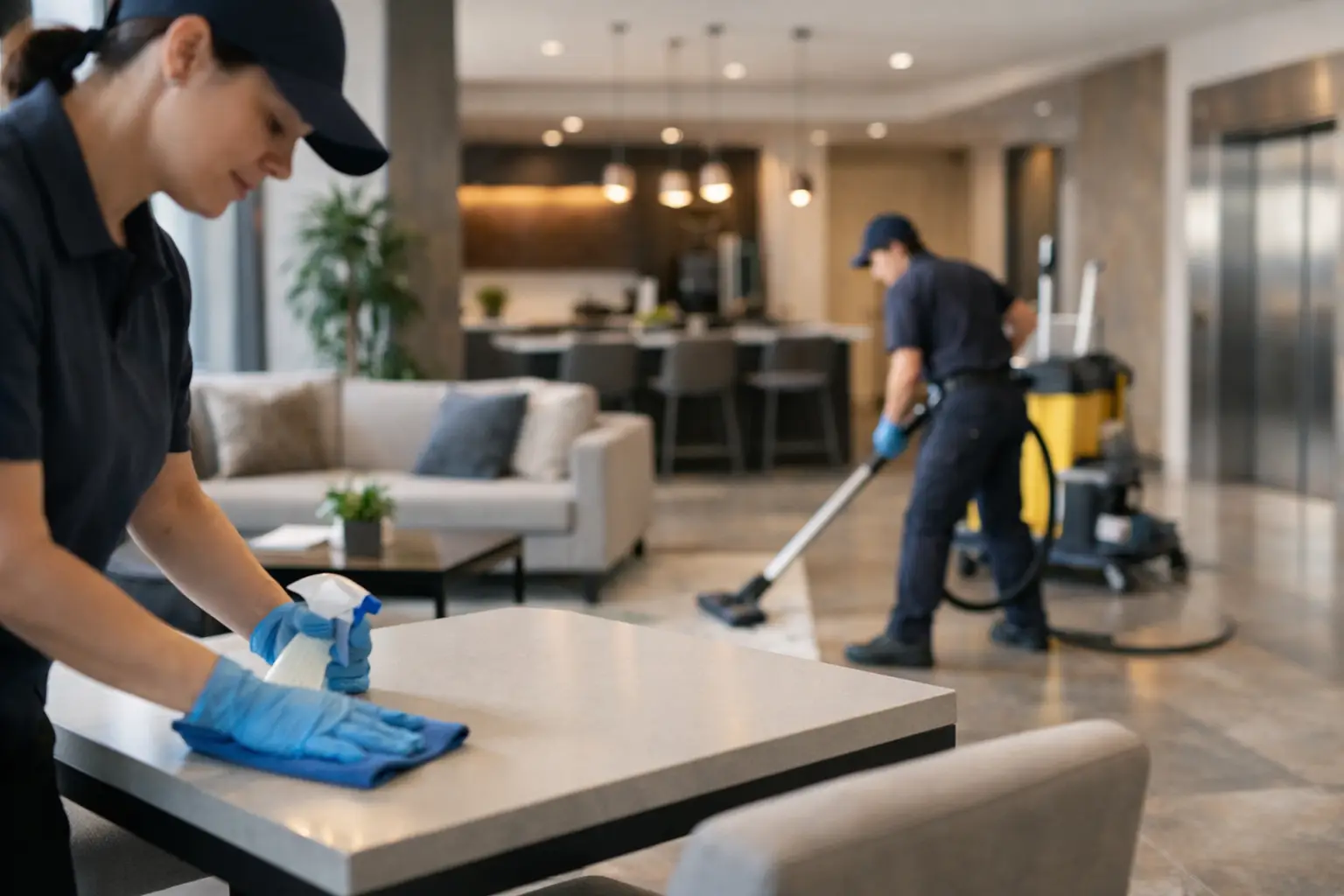
A dirty lobby at 8 a.m., smudges in the elevator by noon, overflowing bins by end of day — these are the moments that shape how people perceive a building. Common-area cleaning isn’t just about aesthetics. It directly impacts a building’s image, occupant comfort, and the workload of property managers who must respond to complaints, unexpected issues, and increasingly frequent visual inspections.
In a commercial building, multi-unit residence or condo, common areas take a beating. Foot traffic, moisture, winter salt, waste, construction dust, moves, deliveries — these are the most visible spaces in any building. When they’re poorly maintained, the entire building appears less well-managed, even if the rest is in order.
Why common-area cleaning requires a real method
Cleaning common areas isn’t just about sweeping floors and emptying a few bins. The challenge lies in usage patterns, the diversity of surfaces, and the need to intervene without disrupting occupants. A condo corridor, a commercial vestibule and a rear stairwell have neither the same constraints nor the same level of exposure.
The first mistake is treating all spaces the same way. Entry zones quickly accumulate abrasive outdoor debris, elevators immediately show fingerprints, and stairwells trap dust in corners, risers and moldings. Without a clear plan, you clean a lot but don’t achieve consistent results.
Another key challenge is frequency. A one-time intervention can restore a good appearance for hours or days. But if the cleaning schedule isn’t adjusted to actual foot traffic, the building quickly reverts to a mediocre state. This is often what creates the impression that a provider is inconsistent, when the real issue is an improperly calibrated service schedule.
Which areas should be included in common-area cleaning
Common areas encompass more spaces than you might think. Well-structured service plans don’t just focus on the most visible spots. They include lobbies, vestibules, corridors, stairwells, elevators, mail rooms, community rooms, laundry areas, waste rooms, indoor loading docks and, depending on the building, shared management offices or washrooms.
Each zone should be defined with its expected level of cleanliness. A lobby must remain spotless at all times because it sets the first impression. A waste room must be controlled primarily for sanitation and odour. A stairwell must remain safe and clean, even if its visual finish can be slightly less demanding than a main lobby.
This distinction helps property managers allocate effort where it has the greatest impact. A good cleaning plan doesn’t try to apply the same level of perfection everywhere. It aims for consistent, logical and visible execution.
Frequency depends on the building, not a standard package
There’s no universal frequency. In a small, quiet residential building, some tasks may be weekly. In a high-traffic property with heavy entry use or frequent deliveries, multiple cleanings per week — or even daily — may be necessary.
Winter changes everything. In Montreal, Laval and on the North Shore, the buildup of calcium, water, gravel and slush in entryways can quickly deteriorate floor appearance. During these periods, cleaning door thresholds, entry mats, corridors near access points and stairwells must be intensified. Otherwise, the building appears neglected even when cleaning is done regularly.
Summer brings other challenges: more dust, pollen, shoe marks and sometimes outdoor work that soils entryways. The right approach is to adjust the schedule based on season, occupancy and site-specific events.
What effective common-area cleaning really covers
Effective common-area cleaning relies on simple tasks performed consistently. Floors must be dusted and washed according to surface type. Entry glass and accessible windows must be cleared of visible marks. Handles, elevator buttons, railings, intercoms and contact points must be cleaned regularly.
Attention to detail also matters. Corners, baseboards, low moldings, door frames and sills quickly accumulate dirt — often betraying superficial cleaning. Odours in waste rooms, persistent wall stains or black marks in stairwells carry more weight than a passing speck of dust.
In some buildings, periodic deep cleaning is needed. Floor stripping, mechanical scrubbing, intensive cleaning after moves, post-minor-works restoration or spring cleanup. These operations don’t replace routine maintenance but prevent visual wear from setting in.
Most common mistakes in buildings
The most frequent issue is a lack of visibility into what’s been done. When no clear method governs cleaning passes, managers end up judging service based on feelings or complaints alone. This creates grey areas, misaligned expectations and an impression of inconsistency.
Another common mistake is underestimating critical periods. A building may appear well-maintained for nine months of the year but become difficult to manage after a construction site, a storm or a wave of moves. Without the ability to adapt, cleanliness levels drop quickly.
There’s also the issue of using products or methods unsuitable for the surfaces. Some floors can’t tolerate overly aggressive treatments. Poorly wiped glass surfaces show streaks more easily. Concrete stairs with painted surfaces or textured finishes require specific techniques to achieve clean results without premature wear.
How to evaluate a provider for your common areas
A good provider doesn’t just promise clean spaces. They must be able to define a scope, a frequency, a level of intervention and possible adjustments based on the building’s reality. This is what sets a serious service apart from a simple cleaning pass.
For managers, the best indicators are concrete. Are critical zones identified from the start? Are periodic tasks planned or left to chance? Does the provider understand the difference between an occupied building, a post-construction phase or a condo with strict scheduling constraints?
Ability to intervene in demanding contexts also counts. After renovations, a spill, or a period of heavy traffic, the ability to quickly restore the space is key. That’s where a specialized partner adds more value than a generalist service stuck in a rigid routine.
A more cost-effective long-term approach
Cleaning is often seen as a cost to control. In reality, poorly scaled cleaning can be just as expensive — sometimes more. It generates callbacks, complaints, corrective interventions, accelerated surface wear and a drop in perceived building quality.
Conversely, rigorous common-area management stabilizes overall appearance, better protects materials and reduces the need for major restorations. This is especially true for commercial properties and multi-unit residences, where user experience influences satisfaction, retention and even perceived property value.
For managers seeking a reliable service, the real question isn’t just how much common-area cleaning costs. It’s about what level of consistency it can maintain, under what conditions and with what adaptability when the building deviates from its normal routine.
At Nickel & Krome, this on-the-ground logic guides both routine cleaning and more technical interventions. When common areas are managed methodically, the building appears better maintained, occupants notice less because everything works, and managers gain time to focus on what truly matters.
Cleanliness in common areas isn’t an afterthought. It’s a daily signal of rigour. When that signal remains constant, the building works for you instead of creating problems.
Apply this guide to your property
Review the scope, access requirements and service details for Recurring common-area cleaning for condos and managed buildings.