
How to Get Commercial Post-Work Cleaning Right
Commercial post-work cleaning needs the right sequence, quality checks and site coordination so spaces are clean, safe and ready to occupy.
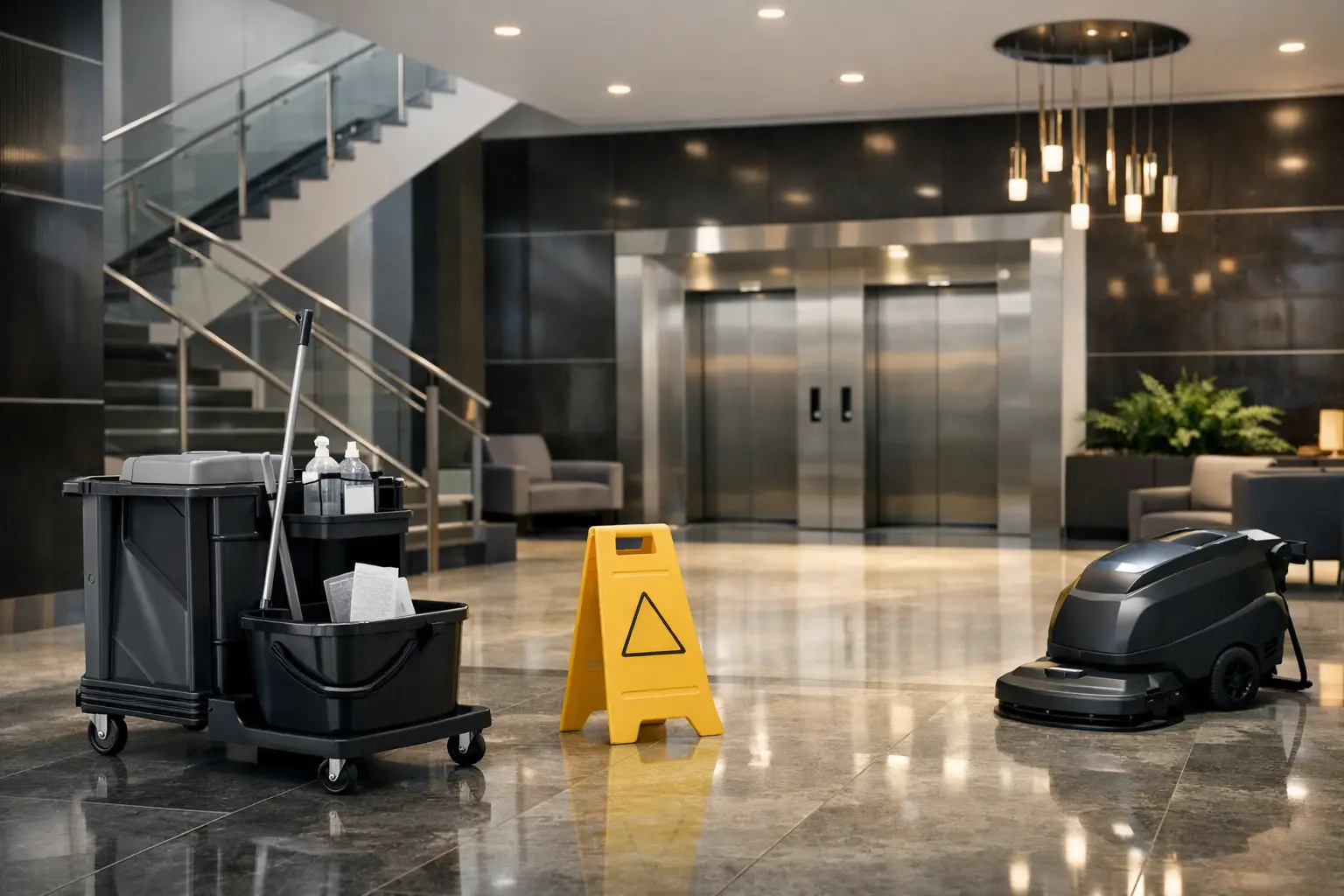
A commercial space can look finished from a construction standpoint and still be unfit for occupancy. Getting commercial post-work cleaning right is not a quick wipe of visible surfaces. The difference is in the details that later create complaints, opening delays or a poor first impression: fine dust in frames, marks on glass, residue in corners, construction film on floors, odours and debris in technical areas.
For a property manager, general contractor or site lead, the goal is simple: deliver a clean, safe space that matches the expected finish level. A good post-work cleaning also protects new materials, supports project handover and prevents the operations team from inheriting problems on day one.
Why commercial post-work cleaning often fails
The most common mistake is treating this stage like standard housekeeping. After work is completed, the problem is not only visible dirt. It can include gypsum dust that resettles, adhesive, silicone residue, paint marks, forgotten protective film and particles that migrate into corridors, elevators and ventilation areas.
Timing is another frequent issue. If cleaning begins while trades are still circulating, surfaces can be contaminated again within hours. Waiting too long can let residue set on floors, metal frames or glass. In stores, offices, clinics and schools, that can delay installation, occupancy or reopening.
Start with a real sequence
A successful intervention starts with a clear reading of the site. A renovated clinic with extensive glass does not require the same approach as a retail space with a back room, staff area and receiving zone. Dust volume, residue type and surface sensitivity all change the method.
Remove residue and stabilize the site
Before final detailing, light construction waste, labels, protective plastics, cardboard and leftover materials should be removed. This makes the real condition of the premises visible and avoids moving dust unnecessarily during the next steps.
The site also needs to be stable. Dust-producing work should be finished, water and power should be available if required, and access should be coordinated. In an occupied building or partially open commercial space, hours, service elevators and protected zones must be planned.
Work from high surfaces down
The sequence matters. Accessible high points, light fixtures, frame tops, ledges, partitions and walls are handled before doors, counters, storage, interior glass and floors. This reduces rework and helps capture fine dust before it lands again.
In commercial spaces, this phase has a direct visual impact. A clean floor with white dust on baseboards or frames still reads like an unfinished project.
Finish floors according to the material
Not every floor can be treated the same way. Tile, resilient flooring, concrete, carpet tile and clinic surfaces do not accept the same products or mechanical intensity. Depending on the condition, the work may require fine filtration vacuuming, careful residue removal, mechanical washing or a more technical reset.
Zones that should not be missed
Some areas generate most handover complaints even when they are not the largest spaces. Glass reveals marks immediately. Entry doors, office partitions and commercial storefronts shape the first impression.
Washrooms, kitchenettes, reception counters and handles also need attention. So do elevators, halls, corridors and stairwells when work took place inside an occupied building. For managed buildings, this is where property-management coordination and field cleaning need to work together.
What to check before accepting the result
Do not inspect only the centre of the room. Check edges, corners, tracks, frames, thresholds and eye-level surfaces. Look at glass in natural light, feel whether floors remain sticky and verify whether dust reappears when cabinets, ledges or workstations are opened.
The expected use of the space matters. A clinic, retail opening, office handover and technical room do not share the same visual and hygiene expectations. The quality check should also include the path to the space: corridors, service elevators, stairs and shared access points.
When a specialized team is needed
A general cleaning crew may be enough for a light refresh, but not when surfaces are varied, dust is heavy, the building is occupied or the opening date is tight. In those cases, the work needs clear methods, adapted equipment and simple coordination with the contractor or building manager.
In Montreal, Laval and the North Shore, many decision-makers need more than a one-time cleaner. They need a field partner that understands post-work reset and the follow-up that often comes next: post-construction cleaning, commercial janitorial maintenance and common-area upkeep after occupants return.
The real goal is an operable space
Getting commercial post-work cleaning right is not about producing a quick visual effect for a final photo. It is about returning a space that is usable, presentable and prepared well enough to avoid complaints in the first days of operation.
When this step is handled properly, opening, inspection and handover are smoother. The difference between an improvised cleanup and a real reset is usually visible as soon as people start using the space.
Apply this guide to your property
Review the scope, access requirements and service details for Post-construction cleaning for general contractors, developers and phased handovers.