Commercial Building Maintenance: What to Plan
Commercial building maintenance reduces complaints, protects the image of the premises and stabilizes operations in high-traffic areas.
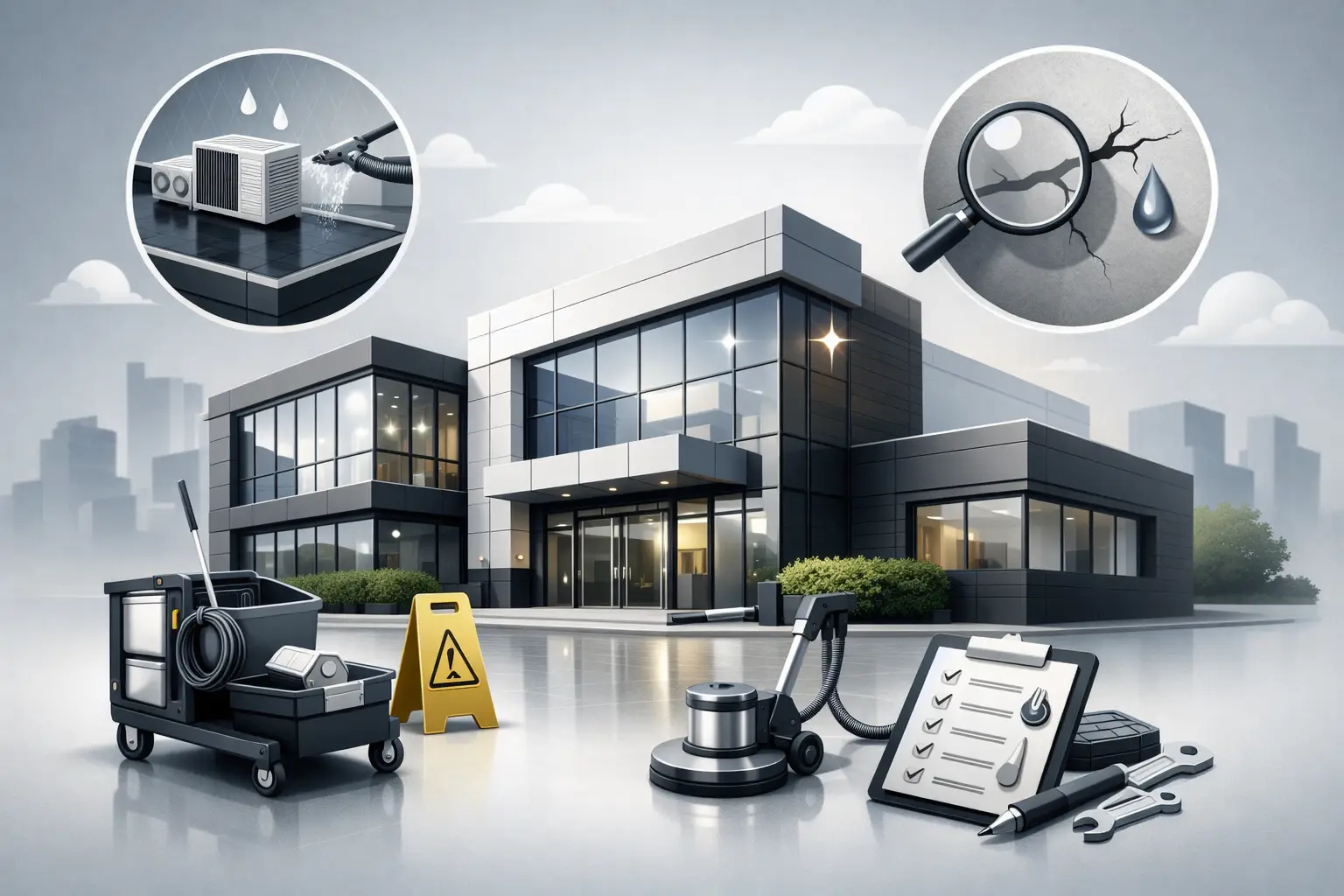
A clean lobby at 8 a.m. means little if elevators are marked by noon, the waste room smells bad by mid-afternoon and the underground garage accumulates dirt for weeks. Commercial building maintenance is about consistency, sensitive zones and the ability to keep a property presentable despite traffic, weather and occupant expectations.
For a property manager, condo board or maintenance lead, the issue is not only visual. Poorly planned maintenance creates complaints, wears surfaces faster, complicates operations and damages the building's image. A structured plan creates stability.
What commercial building maintenance really means
This service is often reduced to commercial cleaning. In practice, it is broader. Commercial building maintenance includes daily or periodic upkeep of the shared and operational areas that influence cleanliness, user experience and site function.
That usually includes lobbies, corridors, stairwells, elevators, vestibules, waste rooms, recycling rooms, shared washrooms, administrative offices, glass entrances, indoor garages and sometimes underground parking areas.
Who maintains a building
A building is maintained by a building janitorial or commercial cleaning team working from a clear task list, defined frequency and realistic standards for the property type. Depending on the site, that can mean a regular presence, planned visits several times a week or specialized interventions as needed.
For a multi-unit building or condominium, responsibility may sit with the property manager or board, but field execution is usually handled by an outside provider.
What building janitorial services include
Building janitorial services include recurring maintenance of common areas, cleanliness upkeep in high-traffic zones and regular follow-up on sensitive points. This goes beyond sweeping and emptying bins.
It includes floor care, entrance mats, touch surfaces, mirrors, elevator buttons, glass doors, stairwells and transition zones. It also includes waste and recycling rooms, where odours, liquids and overflow quickly create complaints.
Zones that need the most attention
The most problematic zones are often entrances, elevators, stairwells, waste rooms and indoor garages. The entrance sets the tone immediately. Marked glass, wet mats or black floor traces lower the perceived quality of the whole building.
Elevators concentrate fingerprints, splashes, rail residue and panel marks. Waste and recycling rooms require more technical attention than many people expect. Underground garages collect dust, abrasives, dirty water, oil stains and debris in corners.
Choosing the right frequency
There is no universal frequency. It depends on building type, occupancy, circulation, season and presentation standard. A busy residential building does not have the same needs as a small administrative property.
In winter or rainy periods, entrances, corridors and elevators need more attention. After work, a full reset may be required before returning to recurring maintenance.
Who cleans condominium common areas
Condominium common areas are usually cleaned by a building maintenance or janitorial company hired by the condo board or management firm. The goal is not only to keep spaces clean, but to maintain a consistent standard in areas used daily by residents.
In a condominium, common areas influence the perceived value of the property. Lobby, corridors, elevators, stairs, amenity rooms, waste rooms and garages must feel coherent.
Good maintenance versus acceptable maintenance
Acceptable maintenance completes the task list. Good maintenance anticipates. It notices when an entrance mat no longer holds dirt, when a corridor needs an extra pass, when a recycling room needs a reset and when an elevator should be touched up before the end of the day.
The difference also shows in communication. If a provider waits for every issue to be reported, the manager ends up coordinating the work. An organized team follows the building and acts methodically.
What to verify before assigning your building
Before choosing a provider, validate field experience. Does the team understand occupied buildings? Does it know the difference between common-area maintenance, commercial cleaning and post-construction restoration? Can it work in condos, multi-unit buildings, offices, clinics or schools without disrupting operations?
Consistency matters more than the lowest price. In Montreal, Laval and the North Shore, properties differ, but the need is the same: stable, professional maintenance adapted to how the building is actually used. Nickel & Krome, NEQ 3381837957, supports managers with a field-based, structured and results-oriented approach. For a concrete need, call +1 514-974-3311.
Apply this guide to your property
Review the scope, access requirements and service details for Commercial cleaning services for offices and managed buildings.