Applying paver sealer: when and how
When to apply paver sealer, how to prepare the surface properly, and how to avoid mistakes that shorten protection. Essential tips for commercial properties and condo boards.
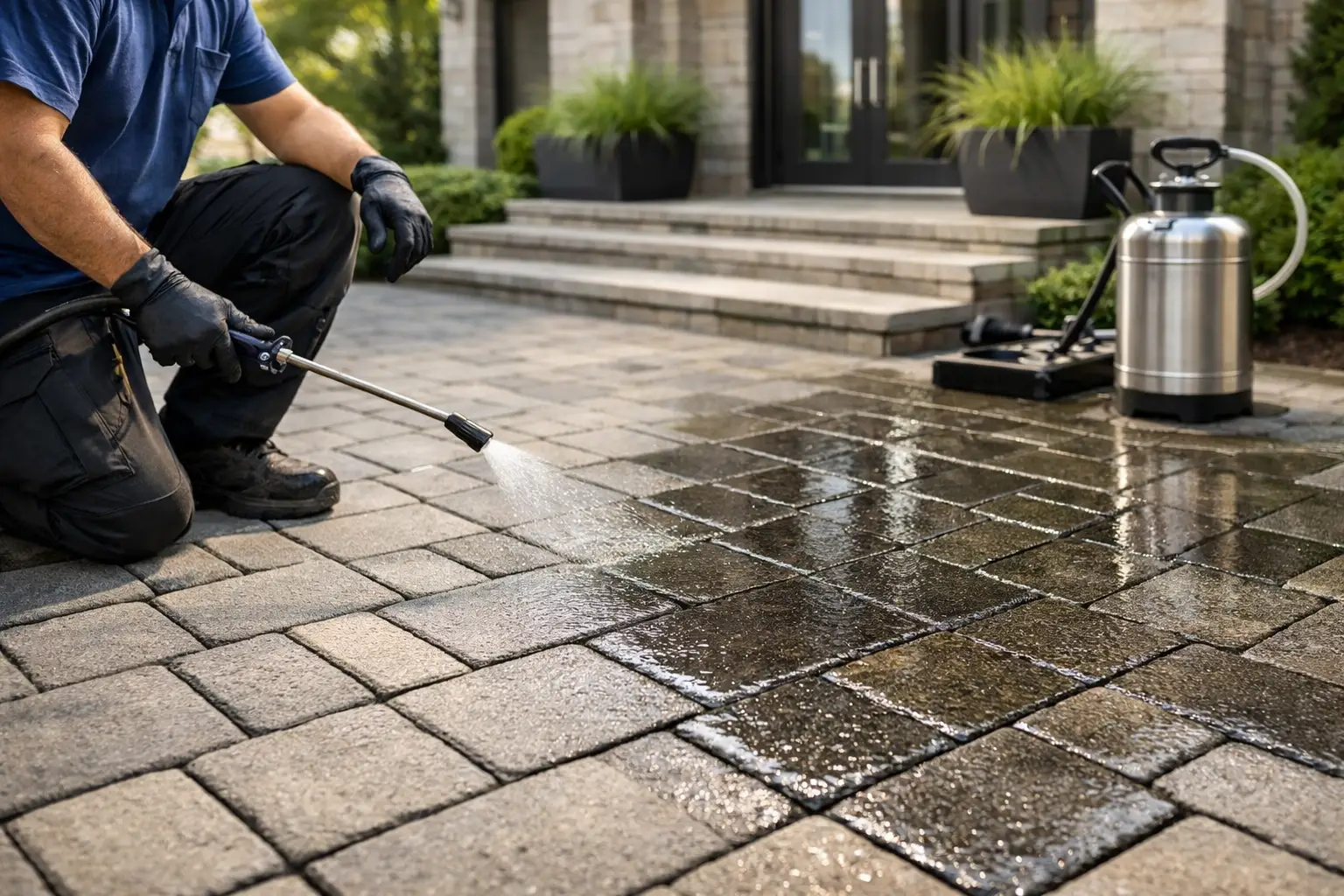
A paver surface that darkens, turns green or loses its finish doesn’t just look bad. On a commercial entrance, a condo courtyard or the perimeter of a building, it also sends a message of neglect. Applying paver sealer is designed to protect the surface, stabilize its appearance and extend the results of a thorough cleaning. But it must be done at the right time, on a surface that is truly ready.
For property managers or commercial owners, the real challenge isn’t just "applying a product." It’s about durability. A sealer applied too early—on pavers that are still damp, dirty or poorly rinsed—won’t last and can even create an uneven finish. Conversely, a well-planned intervention reduces visual wear, limits future buildup and makes routine maintenance easier.
What paver sealer really does
Sealer doesn’t repair sunken pavers, eroded joints or an unstable base. Its role is more specific. It acts as a protective layer against water penetration, dirt, light oils and some contaminants that become embedded over time. Depending on the product chosen, it can also restore colour and create a more uniform finish.
In a commercial or multi-unit setting, the visual impact matters, but the main benefit is operational. A protected surface is generally easier to clean. It resists black marks, organic deposits and certain seasonal stains more effectively. This doesn’t eliminate maintenance, but it can reduce the need for heavy restoration work.
It’s important to understand the limits. A sealer won’t prevent moss growth if the area remains very shady and damp. It won’t fix poor slope or structural movement. And on a paver that’s already heavily worn, the result will rarely be as clean as on a healthy surface. That’s where a proper assessment makes all the difference.
When to apply paver sealer
The right timing depends first on the condition of the pavers, then on the weather. In practice, avoid rainy periods, temperatures that are too low and days when humidity remains high. The surface must be clean, dry and stable. It’s easy to say, harder to achieve.
After pressure washing, many surfaces appear ready when they’re not. Water remains trapped in the joints, in the material’s pores and in poorly ventilated areas. Applying sealer over this residual moisture increases the risk of whitening, uneven adhesion or patches that look glossier than others.
The ideal window often falls between late spring and early fall, when conditions are relatively stable. In the Montreal, Laval and North Shore regions, this window must also account for temperature swings, frequent rain and the actual drying time between cleaning and application.
For high-traffic sites, another factor comes into play: temporary closure of the area. Pedestrian or vehicle traffic too soon after application can compromise the finish. In an occupied building, planning is just as important as the technique itself.
Surface preparation accounts for 80% of the result
Before any paver sealer application, the surface must be free of visible and invisible contaminants. Dust, algae, grease stains, organic deposits and loose sand residues interfere with adhesion. That’s why a simple rinse isn’t enough in most cases.
Proper preparation starts with an inspection. Identify areas with eroded joints, sunken sections, efflorescence, oil stains and places where water pools. Next comes technical cleaning, often with pressure washing, using an intensity suited to the paver type and joint condition. The goal isn’t to damage the surface, but to remove anything that would prevent the sealer from working properly.
After cleaning, joint sanding may be necessary. This step is often overlooked. Yet, depleted joints weaken the entire surface and encourage paver movement over time. Sealer works best when the substrate is clean and the joints have regained their function.
Finally, there’s drying. Not just "looks dry," but completely dry. This is where a specialty cleaning company makes the difference, because they don’t settle for a surface that appears dry. They assess the actual conditions for application.
Choosing the right sealer
There’s no one-size-fits-all sealer. The choice depends on traffic levels, the desired finish and the paver’s sensitivity. Some products offer a natural finish, more subtle in appearance. Others enhance colour and give a richer look. In a commercial setting, aesthetics matter, but they shouldn’t override compatibility with the surface’s actual use.
A glossier finish may seem advantageous at first, but it reveals application inconsistencies and wear marks more easily. A natural finish is often more forgiving of visual variations and blends better into a minimalist or institutional environment.
The type of solvent, paver porosity and past maintenance history also play a role. If an old product is still present, compatibility must be checked before recoating. Otherwise, surface reactions or uneven results can occur. In many cases, the right decision isn’t to seal immediately, but first to correct existing issues.
Common mistakes to avoid
The first mistake is sealing dirty or poorly prepared pavers. The product traps flaws instead of protecting a healthy surface. The second is underestimating drying time after cleaning. The third is applying too much product. An excess doesn’t provide better protection—it mostly increases the risk of streaks, sticky spots or an uneven film.
Timing errors are also common. Scheduling work just before rain, late in the season or in a tight window creates unfavourable conditions. For managers, the temptation is understandable: they need to move forward. But on these surfaces, speed without control often costs more than a well-managed delay.
Another tricky point: treating only visible areas without considering the whole. If an entrance is sealed but the edges, access ramps or adjacent walkways remain heavily soiled, the overall effect quickly loses coherence. On commercial properties, perception is shaped by the entire outdoor pathway.
DIY or hire a professional?
For a small, simple residential area, some choose to do it themselves. But for high-traffic spaces, building access, condos or commercial sites, the approach changes. It’s no longer just about applying a product—it’s about managing a precise sequence: cleaning, joint inspection, drying time, sealer selection, weather conditions, site safety and reopening.
The cost of a poor application goes beyond wasted product. It often means stripping, re-cleaning, correcting visual flaws and re-closing the space. For maintenance managers or property managers, the value of a specialized contractor lies in this operational expertise.
This is where Nickel & Krome steps in with a field-tested approach, tailored to exterior surfaces that demand real method—not an improvised treatment. When paver surfaces are part of a building’s image, consistent execution matters as much as the day-one result.
How long does the result last?
The lifespan of a sealer varies with exposure, traffic and maintenance. An interior courtyard with light use won’t age like an entrance subjected to vehicles, salt, dust and water runoff. Avoid making broad promises.
In practice, durability depends on three things: the quality of preparation, the match between product and surface, and the level of stress the surface endures. Proper maintenance between applications also extends the finish. Conversely, overly aggressive cleaning or repeated buildup of contaminants accelerates visual degradation.
The most cost-effective approach isn’t always to wait until severe damage occurs. On high-visibility sites, it’s better to monitor paver condition and intervene before it requires major restoration. This makes planning easier and protects the building’s overall appearance.
A well-maintained paver surface often goes unnoticed. That’s usually the goal. It supports the property’s image, stays cleaner longer and prevents the exterior from giving an impression of neglect. If you’re considering paver sealer application, the right question isn’t just "which product to choose," but "what is the real condition of my surface today." That answer determines a clean, durable and consistent result aligned with the standards of a well-maintained building.
Apply this guide to your property
Review the scope, access requirements and service details for Scellant pavé uni (French).