
Effective paver surface cleaning and sealing
Paver surface cleaning and sealing: best practices, timing, and common mistakes to protect outdoor surfaces and maintain their appearance.
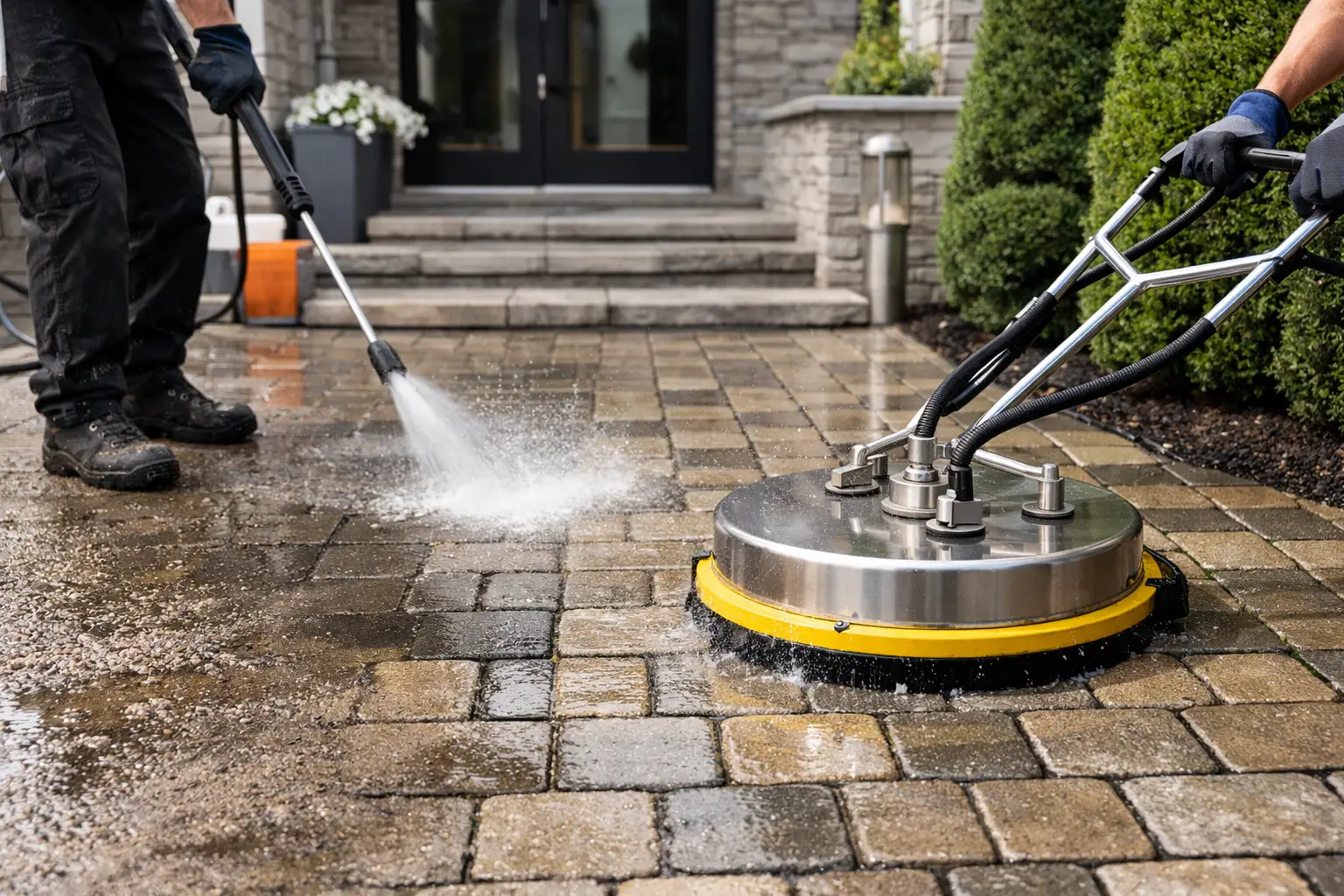
A paver surface that darkens, turns green, or loses its sand doesn’t just harm the look of an entrance or common area—it immediately signals a lack of upkeep. Cleaning and sealing interlocking pavers isn’t just about aesthetics; for commercial buildings, condos, or multi-unit properties, it’s a maintenance step that protects the surface, slows deterioration, and keeps the site looking professional.
On-site, the issue is rarely the pavers themselves. Contaminants, moisture, freeze-thaw cycles, loss of polymeric sand, and lack of follow-up maintenance are what accelerate wear. A well-installed surface can last a long time—but only if maintenance matches its real condition and usage level.
Why cleaning interlocking pavers isn’t always enough
Pressure washing can quickly improve a surface’s appearance: dark stains fade, moss disappears, and the pavers look fresher. But this visual fix doesn’t solve everything. If the joints are weakened, sand is already missing in spots, or the material’s porosity is too high, dirt and moisture often return faster than expected.
That’s where sealing comes in. It doesn’t replace proper cleaning, nor does it fix an unstable base. Instead, it acts as a protective layer that helps reduce water penetration, staining, and some contaminants. In high-traffic areas—like building entrances, driveways, or walkways—this protection makes a real difference in keeping the surface in good shape.
It’s also important to remember that outdoor interlocking pavers face unique stresses. In winter, salt, abrasive sand, and moisture build up. In spring, organic deposits resurface. In summer, UV rays and heat affect both the pavers and the joints. That’s why a one-time approach—only when the surface looks too worn—often costs more in the long run than planned maintenance.
Cleaning and sealing interlocking pavers: the right order
The sequence matters. First, assess the surface: its level of grime, joint condition, and stubborn stains like oil, rust, or construction residue. Next comes cleaning, usually with controlled pressure washing suited to the pavers’ age and type. Too much pressure can displace joint sand, damage the surface, or weaken already fragile areas.
After cleaning, the pavers must dry thoroughly. This step is often overlooked. Applying sealer to a damp or unstable surface ruins adhesion and the final result. If re-sanding the joints with polymeric sand is needed, it must also be done at the right time, under the right weather conditions.
Sealing comes last—never to mask incomplete cleaning. When applied to a properly prepared surface, it helps lock in maintenance over time. When rushed or applied to a poorly cleaned base, it can trap visual flaws and speed up the need for repairs.
When should you intervene?
There’s no single best time for every site, but some windows are more ideal. Spring and early fall are often best, with stable temperatures and manageable moisture. In peak summer, watch for excessive heat, which can interfere with even sealer application. After heavy rain, wait several days before proceeding.
The right schedule also depends on usage. A high-traffic condo entrance, commercial sidewalk, or courtyard that’s recently undergone construction ages differently than a low-traffic residential driveway. For property managers, the smart move is to plan the intervention before the surface reaches a visibly degraded—and costly—state.
Certain signs mean it’s time to act. Frequent moss regrowth, missing joint sand, rapid discoloration, quick water absorption, or stains reappearing shortly after cleaning usually mean the surface needs more than just a quick wash.
What a sealer actually protects
A sealer isn’t a miracle product, but a good one, properly applied, delivers real benefits. It reduces water penetration, helps limit certain stains, makes routine cleaning easier, and can slow surface erosion from weathering. On some pavers, it can also slightly enhance appearance, depending on whether you choose a natural or enhanced finish.
Product choice depends on paver type, porosity, age, and the desired look. A high-gloss finish isn’t always ideal for commercial areas or common spaces, where a clean, uniform, and understated appearance is often preferred. Conversely, some clients want to restore depth to a dull surface. Context matters.
It’s also important to be realistic about protection duration. A sealer won’t last as long on a lightly used patio as it will on a heavily trafficked zone exposed to snow removal, contaminants, or mechanical wear. Reapplication frequency varies with exposure and usage intensity.
Common mistakes with interlocking pavers
The first mistake is treating interlocking pavers like a simple surface to blast clean. In practice, poorly calibrated cleaning can create more work later. Removing too much sand or weakening joints invites paver shifting, weeds, and water infiltration.
The second mistake is applying sealer too soon—without proper drying time—or on a surface that wasn’t properly decontaminated. The result may look fine at first, but can quickly degrade with uneven patches, stains, or reduced durability.
The third mistake is delaying intervention until the surface is severely degraded. When joints are mostly empty, stains are deeply embedded, or organic growth is entrenched, the job becomes more complex and time-consuming.
Tailoring the approach to your property type
For a retail space or office building, the main concern is often the site’s image. Interlocking pavers frame entrances, walkways, and façade edges. A clean, stable surface immediately supports a professional impression.
For a condo or multi-unit property, durability and cost management also matter. Well-planned maintenance prevents multiple zones from deteriorating at once and reduces disruptive, heavy-duty interventions that disturb residents or traffic flow.
In post-construction settings, vigilance is even more critical. Construction residue, mineral dust, material stains, and wear from repeated traffic often require more technical cleaning before sealing. This is exactly where a specialized approach adds value.
What decision-makers should check before hiring
The real question isn’t just whether to wash or seal—it’s whether the intervention accounts for the surface’s actual condition. Verify the cleaning method, joint maintenance, pre-application requirements, and the logic behind the service. A reputable provider doesn’t use the same treatment for every surface.
They should also be able to work around occupied sites, manage traffic flow, and provide a clear timeline. In Greater Montreal, where weather windows are tight and surfaces see heavy use, operational rigour often makes the difference between a decent result and a lasting one. It’s in this spirit that Nickel & Krome approaches specialized exterior interventions.
Interlocking pavers say a lot about a building’s upkeep before you even step inside. When cleaning and protection are done at the right time, with the right method, the surface stays cleaner, more stable, and easier to maintain. For managers, that means fewer surprises, less reactive work, and an exterior that fulfills its role without drawing attention for the wrong reasons.
Apply this guide to your property
Review the scope, access requirements and service details for Scellant pavé uni (French).