
Post-construction cleaning in Montreal
Post-construction cleaning in Montreal for commercial sites, multi-unit buildings, and fast turnovers that leave spaces clean, safe, and move-in ready.
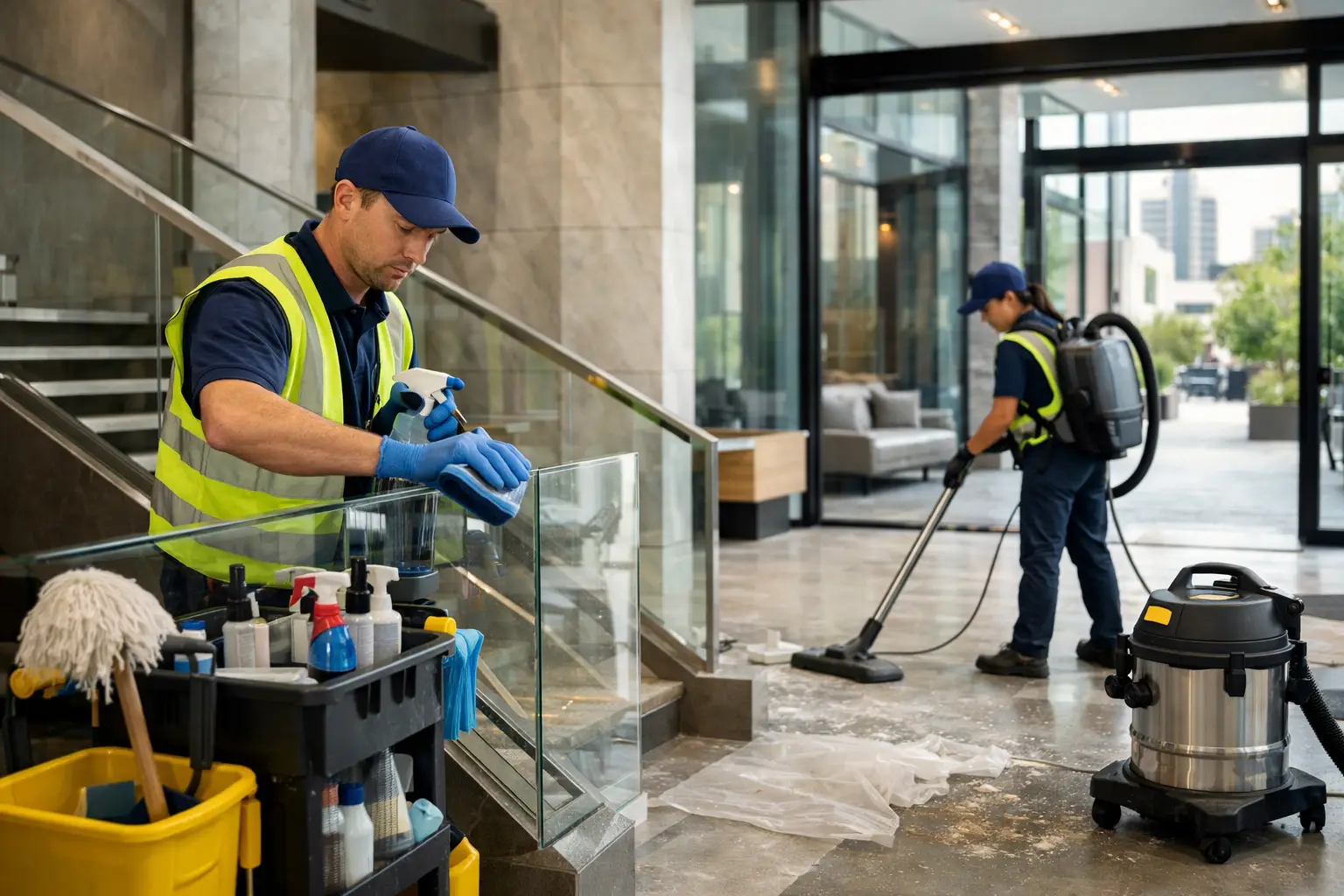
A construction site may be structurally complete, but until fine dust is removed from surfaces, material stains are gone from windows, and common areas are truly ready, the building isn’t truly move-in ready. Post-construction cleaning in Montreal addresses this critical phase between the end of trades work and the handover of the space. For managers, general contractors, or commercial property owners, this isn’t just a finishing touch—it’s a restoration step that shapes the site’s image, occupant safety, and adherence to schedule.
What post-construction cleaning in Montreal really involves
Post-construction cleaning is often underestimated because it seems straightforward from a distance. In reality, it requires a rigorous method, especially in commercial buildings, multi-unit properties, or common areas that need to be quickly brought back into service. After a construction project, the residue isn’t limited to visible debris. Fine gypsum dust clings to baseboards, trim, exposed ducts, window sills, and vertical surfaces. Traces of adhesive, paint, silicone, or grout may also remain on new materials that must be treated without damage.
In the Montreal area, this step becomes even more critical when deadlines are tight. A commercial space must open on a fixed date. A condo building must make common areas accessible. A rental property must allow new tenants to move in without delay. Cleaning must therefore be precise, fast, and coordinated with the realities of the construction site.
Why this phase shouldn’t be left to chance
Outsourcing the final cleanup to a non-specialized team may seem cost-effective at first, but the risks are often shifted elsewhere. A poorly sequenced intervention can leave dust to resettle after the work is done. The wrong product can dull a new surface. A rushed cleanup might miss visible areas during the final walkthrough, directly harming the building’s perceived quality.
The real challenge isn’t just making spaces clean—it’s making them presentable, safe, and consistent with the quality of the completed project. In commercial or real estate environments, a marked floor, a window streaked with dust, or an elevator still soiled immediately conveys an unfinished project.
It’s also about organization. At the end of a construction project, multiple trades may still be on-site. Knowing when to intervene, the order in which to clean zones, and how to minimize unnecessary rework is where a specialized provider adds real operational value.
The areas that demand the most attention
Fine dust and construction residue
Construction dust is the most common—and most deceptive—issue. It settles everywhere, including areas that aren’t immediately visible. It lodges in frames, grilles, sills, joints, and textured surfaces. If it’s merely moved rather than removed, it quickly returns after the work is done.
An effective cleanup follows a progressive approach. First, remove coarse debris, then treat high surfaces, followed by mid-level areas, and finally floors. This logic minimizes recontamination and improves the final result.
Windows, frames, and finished surfaces
Windows, mirrors, aluminum frames, glass doors, and interior partitions immediately reveal the quality of the cleaning. After construction, these are often the elements that show remaining stains. Paint splatters, dust films, and handling marks must be removed carefully.
The key here is compatibility with materials. Not all new surfaces tolerate the same products or tools. A well-executed cleanup leaves no scratches or residual film.
New floors and coverings
Floors require special attention because they bear the brunt of end-of-project traffic. Ceramic, vinyl, polished concrete, commercial carpet, or floating flooring—each requires a different cleaning approach. Embedded dust, boot marks, material residue, and sometimes protective films must be removed without damaging the finish.
The right reflex is to adapt the method to the flooring rather than applying a one-size-fits-all solution. This is often where the difference lies between a quick clean and a true restoration.
When to schedule post-construction cleaning in Montreal
The right timing depends on the type of project. On some sites, a single final intervention is enough. On others, multiple passes are preferable. For example, an initial cleanup may follow heavy construction to clear spaces, followed by a finishing pass just before handover.
This distinction is useful when the site includes common areas, corridors, lobbies, stairwells, or multiple units. If trades return after an initial pass, targeted follow-up may be needed. This isn’t a problem if it’s part of the plan. It becomes one if no one anticipated it.
In partially occupied environments, the schedule must also account for traffic, noise, and safety. A well-planned cleanup reduces friction with occupants and avoids unnecessarily slowing the handover.
What an owner should check before hiring a provider
The first criterion is the ability to work in demanding contexts. Post-construction cleaning isn’t the same as routine maintenance. It requires handling sensitive surfaces, large volumes of dust, tight deadlines, and sometimes complex access.
The second criterion is clarity of scope. Decision-makers save time when the mandate precisely defines what’s included: units, corridors, windows, stairs, elevators, common areas, immediate exterior zones, or targeted restoration. The clearer the scope, the fewer gray areas at handover.
Finally, execution reliability matters. On a construction site, schedules shift. Access changes. Priorities move. A good partner doesn’t just clean—they adapt to real-world constraints without compromising the expected level of finish.
The special case of commercial buildings and multi-unit properties
In a commercial space, cleanliness after construction directly affects the perception of customers, employees, and partners. A delayed opening or a space still marked by the project can cost more than the cleaning itself. The restoration must go beyond immediate visibility to ensure a smooth handover.
In a multi-unit building or condo, expectations differ slightly. Managers want clean spaces, but also consistency throughout the building. The entrance, corridors, stairs, elevators, and circulation areas must convey a neat, uniform impression. If even one area seems neglected, it reflects poorly on the entire building’s image.
This is where a company like Nickel & Krome fits in, because the challenge isn’t just about washing surfaces—it’s about restoring spaces professionally, with a building-focused approach rather than a one-time cleaning job.
How the local context really changes things
In Montreal, Laval, and the North Shore, the realities of a construction site vary by season, building type, and occupancy density. In winter, moisture, slush, and outdoor residue complicate finishing. In spring, some projects wrap up during peak rental turnover. In denser areas, intervention windows may be short, and access more restricted.
This doesn’t change the nature of the service, but it does affect how it’s delivered. A local provider who understands these constraints works faster, anticipates issues better, and aligns with the standards expected in the region’s real estate market.
How a well-done cleanup also protects ongoing operations
A poorly restored site creates cascading irritants. Occupants report defects that are actually cleaning-related. Maintenance teams must redo overlooked areas. Managers waste time on avoidable follow-ups. Conversely, when the end-of-project cleanup is handled properly, the transition to operations runs smoother.
Post-construction cleaning isn’t a last-minute formality. It’s a technical step that supports handover, the building’s image, and smooth operations from day one. If you manage a building, a commercial space, or a restoration project, the right partner is often the one who understands that a project isn’t truly finished until the space is ready to be shown, occupied, and used without reservation.
Apply this guide to your property
Review the scope, access requirements and service details for Post-construction cleaning for general contractors, developers and phased handovers.