
When to schedule commercial pressure washing
When should you schedule commercial pressure washing? Seasons, surfaces, risks, and the right cadence for facades, entrances, and exterior areas.
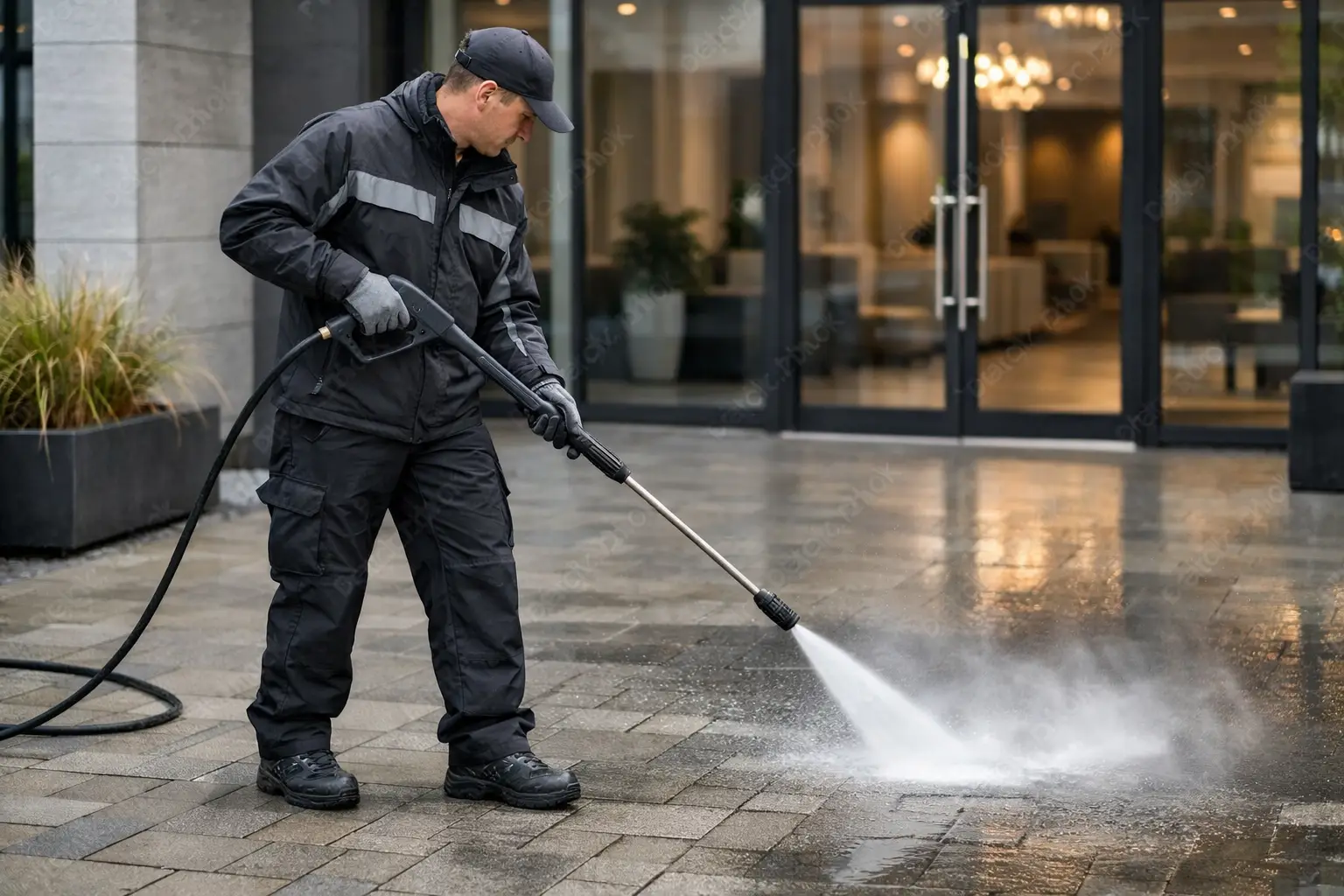
An entrance stained by salt, a blackened sidewalk, a loading dock that creates the wrong first impression: in a commercial building, exterior washing should not be decided at random. The real question is not only when to schedule commercial pressure washing, but when to act in order to protect surfaces, maintain the site's image, and prevent ordinary buildup from becoming a more expensive problem.
For a property manager, commercial owner, or maintenance lead, the right timing always depends on three variables: the season, the type of surface, and the level of use. A pedestrian entrance, an exterior common area, or interlocking pavers exposed to weather do not age at the same pace. Washing everything on a fixed calendar may seem simple, but it is not always the best approach.
When to schedule commercial pressure washing by season
In most cases, spring remains the most strategic period. After winter, exterior surfaces collect salt, sand, mud, traffic residue, and organic traces. This is often when visual defects stand out the most. Well-planned pressure washing restores entrances, lower facades, curbs, sidewalks, and some loading zones before exterior activity fully resumes.
Summer is often the best window for more sustained interventions. Temperatures are stable, drying is faster, and certain surfaces can be treated under better conditions. This is especially useful for multi-unit buildings, condos, and businesses that want to maintain a clean appearance during high-traffic periods. That said, summer is not always the time to do everything if the site is very busy. Specific time slots may be needed to limit the impact on occupants, clients, or operations.
Fall is often underestimated. Yet it is a good time to remove dust buildup, leaves, organic matter, and grime before freezing temperatures arrive. When these deposits remain too long, they can encourage stubborn stains, retain moisture, and make spring maintenance harder. On some sites, a fall intervention clearly reduces the workload at the start of the next season.
Winter is more delicate. Commercial pressure washing during freezing conditions has obvious limits. Ice formation, safety constraints, and drying time make many interventions unsuitable. That does not mean exterior cleaning is impossible, but pressure washing should be reserved for specific, controlled contexts and performed with an adapted method.
Signs that show it is time to act
The calendar helps, but the actual condition of the site remains the best indicator. When water no longer drains properly because of deposits, when surfaces become slippery, or when rust, oil, or pollution stains settle in, the issue is no longer only aesthetic. At that point, maintenance also affects safety, material durability, and the building's image.
The most revealing zones are often the main access points. If a store or building entrance shows black marks, dirty joints, or visible grime buildup, the building looks less maintained even if the interior is spotless. For a manager, this gap is often counterproductive: money is invested in operating the site, but the first impression remains weak.
Porous surfaces also need attention. Interlocking pavers, concrete, and some masonry hold contaminants more easily. The longer you wait, the more cleaning may require a technical intervention, with pressure adjustment, product selection, and a specific rinsing method. Late washing is not only heavier to execute; it can also produce a less uniform result.
When to schedule commercial pressure washing by surface
Not all exterior surfaces react the same way. This is where many maintenance decisions become more complex. The right timing depends as much on the material as on the level of soiling.
For interlocking pavers, cleaning in spring or early summer often works well, especially after snowmelt. It removes winter deposits and restores a clean appearance to circulation areas and entrances. If the zone is surrounded by vegetation, a second pass in fall may be relevant.
For concrete, everything depends on use. A pedestrian walkway or commercial entrance curb may need classic seasonal maintenance. A dock, access ramp, or service area exposed to oils, tires, and industrial grime may require a tighter frequency. In these environments, maintenance becomes operational before it becomes aesthetic.
Lower facades and walls exposed to splashes also deserve special attention. They get dirty quickly, especially near parking areas, busy streets, or waste drop-off zones. Here, the question is not only when to schedule commercial pressure washing, but how to avoid damaging joints, cladding, or finishes. A commercial facade is not treated like a sidewalk.
Ideal frequency: once a year or more?
There is no universal frequency. For some buildings, one annual wash is enough. This is often true for well-maintained properties with little heavy traffic and relatively protected exterior surfaces. But once a site has high foot traffic, sits along a busy street, includes exterior common areas, or depends heavily on its image, one intervention per year may be too limited.
In practice, many sites benefit from a two-step rhythm: a main wash in spring, followed by a reset in fall or during the season. This logic works well for entrances, sidewalks, common areas, interlocking pavers, and certain facades. It maintains a consistent cleanliness level instead of waiting until buildup is too advanced.
On the other hand, multiplying washes without reason does not always add value. Poorly adjusted pressure or overly frequent interventions on some surfaces can accelerate wear. The goal is not to clean more. It is to clean at the right time, with the right method.
Contexts where you should act sooner
Some situations justify commercial pressure washing outside the usual cycle. This is the case after work, after a final site cleanup, or when a building has gone through an extended period of neglect. Dust residue, material traces, traffic grime, and deposits stuck to surfaces often require targeted intervention to regain a presentable condition.
Another common case involves important visits, possession dates, the relaunch of a commercial site, or bringing a building to market. When a property must be seen, evaluated, or occupied, exterior surfaces matter immediately. Clean common areas, a neat facade, and clear access points communicate control and rigour.
In Greater Montreal, weather cycles are also more aggressive. Freeze-thaw cycles, winter abrasives, and urban traffic quickly mark surfaces. On some buildings, waiting too long between washes means letting grime anchor into the materials.
What good timing really helps avoid
Planning the right moment does more than make a site cleaner. It helps avoid emergency interventions, complaints about the appearance of the premises, slippery surfaces, and premature degradation of certain finishes. For a manager, the real value is there: less catch-up work, fewer surprises, and more consistency.
It is also a way to coordinate other maintenance operations more effectively. When pressure washing fits into a broader maintenance logic, with common area cleaning, post-work restoration, or seasonal exterior upkeep, decisions become simpler. You act before the building appears neglected, not after.
A specialized partner like Nickel & Krome can also help define a realistic cadence based on property type, materials, and intensity of use. That field perspective often makes the difference between a one-off cleaning and a real maintenance strategy.
The right time to pressure wash a commercial site is therefore not a fixed date on the calendar. It is the balance point between surface condition, season, and building requirements. When that reading is accurate, exterior maintenance stops being reactive and becomes a simple lever for keeping a building clean, credible, and easier to manage day to day.
Apply this guide to your property
Review the scope, access requirements and service details for Commercial pressure washing in Montreal, Laval, and the North Shore.