
Post-work restoration: the real issue
Post-work restoration removes dust, residue, and construction traces so spaces can be delivered clean, safe, and ready to use.
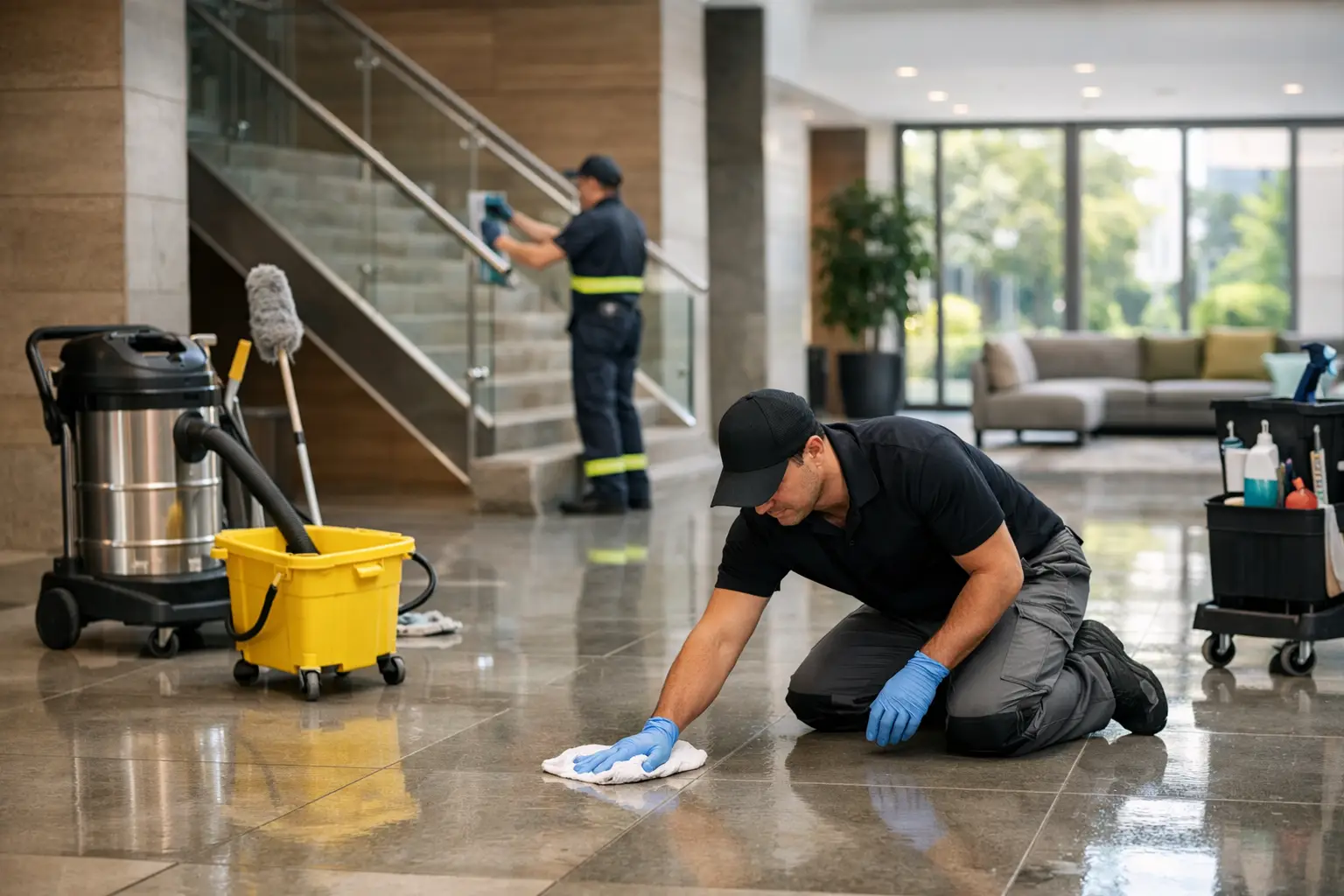
A project can be finished on paper and still be impossible to hand over in practice. Powdery floors, marked windows, grout residue, fine dust on baseboards, traces on washrooms or light fixtures - this is often where the real perception of the result is decided. Post-work restoration is not a simple cosmetic finish. It is the step that makes spaces clean, presentable, and truly usable.
For a property manager, general contractor, or commercial owner, this phase has a direct impact on delivery, the building's image, and final client satisfaction. It requires method, time, and an intervention adapted to the materials already in place. It is also an operation where improvisation becomes expensive, especially when marks have to be corrected on newly installed surfaces.
Why post-work restoration is more than cleaning
After construction or renovation work, visible dirt is only part of the problem. There is heavy dust, of course, but also fine dust that settles everywhere, including window frames, exposed ventilation ducts, mouldings, shelves, light fixtures, and vertical surfaces. This dust often comes back after a first pass if the cleaning is not done in the right order.
Then there is construction residue: silicone traces, paint splashes, plaster haze, adhesive marks, fine cement, streaks on glass, dirt on aluminum frames, and deposits on floor coverings. Every material reacts differently. A method that is too aggressive can scratch, dull, or damage a new surface that has just been installed.
That is why effective restoration depends more on precision than speed. Cleaning a room quickly after work is relatively simple. Restoring it properly without creating new defects is specialized work.
When to plan post-work restoration
The right timing depends on the type of project and its actual stage of completion. In a light commercial space, one final intervention may be enough. In a multi-unit building, a renovated common area, or a more complex project, it is often more logical to schedule several passes.
A first cleaning can remove debris, heavy dust, and the most visible residue. A second, more detailed pass then takes place at the very end, once the trades have left the site. This distinction matters because final cleaning done too early quickly loses value if work continues or corrections still need to be made.
For decision-makers, the issue is simple: it is better to integrate this step into the schedule than to treat it as a last-minute emergency. Planned restoration reduces delivery delays and avoids unnecessary callbacks.
What a properly executed restoration includes
The exact scope varies by site, but some expectations are constant. Floors must be cleared of dust and residue, then washed with products compatible with their finish. Interior windows, frames, sills, and glass surfaces must be cleared of construction traces. Washrooms, counters, handles, switches, baseboards, doors, and contact surfaces need detailed cleaning.
The areas most often neglected are precisely the ones that catch the eye during a handover visit. Corners, frame tops, window tracks, accessible ventilation outlets, light fixtures, and walls near cutting or sanding zones are all sensitive points. In a lobby, stairwell, or common area, the perception of cleanliness depends heavily on these details.
It is also important to separate debris removal from finish cleaning. Picking up abandoned materials or clearing a site is not the same service as removing fine residue and marks from surfaces ready for occupancy. The two can be connected, but they do not require the same approach.
Common mistakes that complicate delivery
The most common mistake is underestimating the amount of fine dust. It resettles easily and requires precise sequencing. If floors are cleaned before higher surfaces have been treated, the work often has to be repeated.
Another frequent mistake is using the same products and tools on every material. A scraper used poorly on glass, an abrasive pad on a glossy surface, or the wrong product on a new finish can leave permanent marks. This risk is especially present on contemporary finishes, black frames, stainless steel, textured ceramics, and some resilient floors.
Expectations can also be poorly defined. Some stakeholders think a space is ready because rubble has been removed. Others expect an impeccable presentation, ready for possession or public opening. Without a clear scope, gaps appear quickly.
Where this service has the most value
Post-work restoration is especially useful in environments where the image of the space matters immediately. That includes offices, retail spaces, condos, entrance halls, corridors, rental units returning to market, and renovated common areas. In these contexts, cleanliness is not a detail. It shapes the first impression and sometimes even the authorization to occupy the space.
It also becomes highly valuable on projects where several trades follow one another. The more trades have moved through a site, the more overlapping traces remain. The electrician leaves drilling dust, the painter leaves protection marks, the installer leaves packaging and handling traces. No one has the full picture except the team responsible for restoring the site.
In the commercial and real estate market across Greater Montreal, this reality is common. Schedules are tight, tenant turnover is fast, and presentation standards are high. A specialized intervention closes the project properly without transferring the problem to the tenant, the manager, or the regular maintenance team.
How to evaluate the right approach for your building
Everything depends on three variables: the nature of the work, the type of surfaces, and the presentation level expected at handover. A freshly repainted space with new light fixtures does not require the same intervention as a complete renovation involving cutting, plaster, tile, and heavy worker traffic.
The occupancy type matters too. In an office building, the goal is often fast, visually flawless recommissioning. In a multi-unit property, the goal may be to accelerate re-rental while protecting renovated surfaces. In common areas, the intervention often has to happen without disrupting occupants or building circulation.
A serious approach therefore starts with a concrete reading of the site. Which zones are critical, which surfaces are sensitive, what residue is present, and what finish level is expected? This evaluation prevents gaps between what was requested and what will actually be delivered.
What a specialized provider changes on-site
The difference shows in execution. A specialized provider does not treat post-work restoration as a more intensive janitorial pass. The intervention is organized around the logic of the project, priority surfaces are identified, products are adapted, and the details that matter at acceptance are controlled.
It also brings operational reliability. For a maintenance lead or property manager, that means less last-minute coordination, fewer callbacks, and less friction between stakeholders. When timelines are short, this consistency is often worth as much as the cleaning itself.
This is exactly where Nickel & Krome adds value: structured interventions adapted to commercial and real estate environments, with a results-first logic rather than a simple pass-through service.
The end of the work does not mean the end of the project until the space is ready to be seen, used, and delivered with confidence. Planning this step with the same seriousness as the rest of the work is often what prevents a successful project from leaving one final bad impression.
Apply this guide to your property
Review the scope, access requirements and service details for Post-construction cleaning for general contractors, developers and phased handovers.