
Effective post-construction cleanup and final site restoration
Post-construction cleanup ensures clean, safe, and ready-to-occupy spaces. Key methods, timelines, and inspection points to plan for.
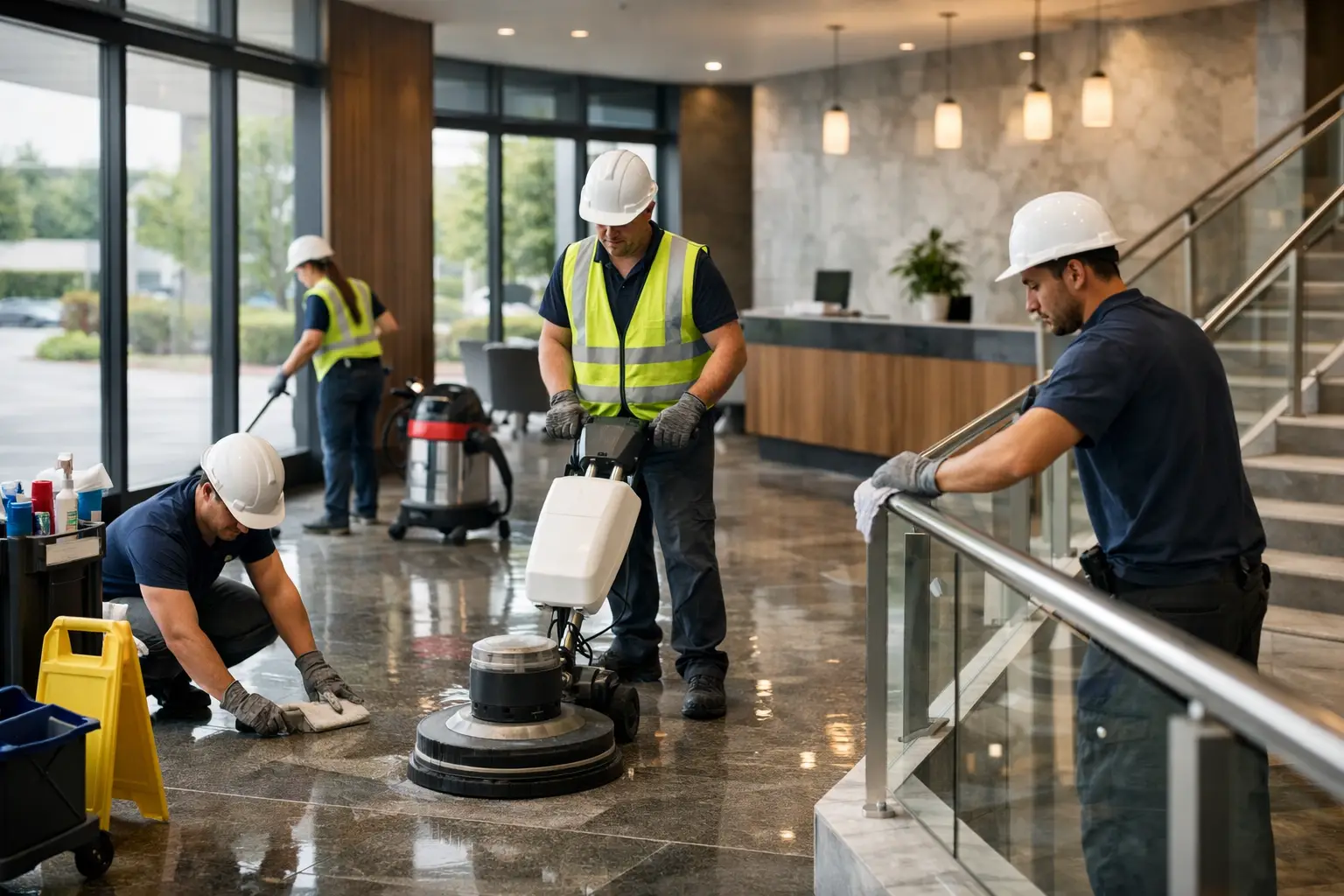
A construction project can be technically complete yet still unsuitable for handover. Fine dust, joint residue, paint splatters, half-peeled protective film, dull windows, and scuffed floors—this is often when post-construction cleanup becomes critical. For contractors, property managers, or commercial owners, this isn’t just a finishing touch. It’s the final step that shapes the client’s first impression, the handover process, and in some cases, how quickly the space can become operational.
Why post-construction cleanup can’t be improvised
On-site, post-construction cleaning isn’t the same as regular janitorial work. The dirt is different, surfaces are often new or freshly restored, and mistakes can be costly. A poorly used blade can scratch glass. An overly aggressive product can dull flooring, damage hardware, or leave stubborn residues. Timing matters too. Arriving too early means redoing work after other trades pass through. Arriving too late can delay inspections or tenant move-ins. The solution? A clear method, minimal coordination with the site, and meticulous execution.
In commercial buildings, condominiums, and multi-unit properties, the stakes go beyond aesthetics. A clean site helps identify remaining defects, secures circulation areas, and presents a truly ready space. This is often where the perceived quality of the project is decided.
What a post-construction cleanup actually includes
This service isn’t just about removing visible dust. It’s about eliminating construction residue, deep-cleaning surfaces, and ensuring spaces are presentable, functional, and safe. This typically covers floors, baseboards, frames, doors, windows, sills, washrooms, service kitchens, accessible fixtures, and high-traffic areas.
Depending on the project, it may also involve removing silicone stains, paint splatters, grout residue, embedded gypsum dust, adhesives, protective films, and fine debris lodged in tracks, joints, and grilles. In stairwells, lobbies, or building corridors, details matter as much as large surfaces.
It’s also important to distinguish between rough cleaning and finishing. The first pass removes debris, heavy residue, and accumulated dust. The finishing pass ensures a pristine result. It’s often this second step that makes the difference between a space that’s merely clean and one that’s truly ready for handover.
Not all construction sites have the same needs
A renovated retail space in an occupied building doesn’t require the same approach as a brand-new building or a technical room. In an office, attention focuses on windows, floors, touchpoints, and overall appearance. In a multi-unit building’s common areas, access management, protection of already-clean zones, and minimizing disruptions for residents are key.
For general contractors, the priority is often meeting tight deadlines. For property managers, the goal is broader: delivering a clean, cohesive environment that’s easy to maintain afterward. The right approach depends on context, expected finish level, and the actual handover date.
The most common trouble spots
The first challenge is fine dust. It settles everywhere, resettles after air circulation, and is especially visible on dark surfaces, windows, and glossy finishes. If not handled properly, it’s more likely to be spread than removed.
The second issue is stubborn residue. Dried grout, paint, cement, silicone, or stickers require precise techniques. Scrubbing harder isn’t the answer—choosing the right tool, surface, and timing is.
The third challenge is coordination. Many post-construction cleanups need partial rework because touch-ups, material deliveries, or technical adjustments happen after the fact. On these jobs, efficiency depends not just on cleaning quality but on timing and adaptability.
How to organize a post-construction cleanup without delays
The first rule is to clarify the scope. Are basements, stairwells, elevators, technical rooms, parking garages, or exterior storefronts included? Ambiguity here almost always leads to mismatched expectations.
Next, define the desired finish level. A pre-inspection cleanup isn’t always the same as a pre-public-opening cleanup. In some cases, an intermediate pass makes sense, especially when projects finish in phases.
A pre-cleanup walkthrough is a real time-saver. It helps identify materials, residue volume, access constraints, possible schedules, and required equipment. On active commercial or partially occupied sites, this step also prevents logistical bottlenecks.
Finally, plan a final validation. A room-by-room or zone-by-zone check reduces rework and eases handover. In high-stakes environments, this isn’t just formality—it’s a way to secure the delivery.
When to schedule the cleanup
There’s no one-size-fits-all answer. Ideally, post-construction cleanup happens after the dustiest work is done and unnecessary protections are removed, but before occupancy. If multiple teams are still active, a two-phase approach may be more effective than a single early pass.
On some projects—especially commercial renovations or common areas—scheduling is constrained. Early mornings, evenings, or sector-based interventions can minimize disruption to building operations. Here again, method matters as much as manpower.
What a specialized provider brings to the table
The difference isn’t just in equipment or products. It’s in experience with post-construction environments. A specialized cleaner knows what’s construction waste, what’s technical cleaning, and what needs to be flagged before handover. They work faster because they know where overlooked zones are and which surfaces require extra care.
They also adapt their approach to the building. A building lobby, common area, retail space, renovated office, or multi-unit property doesn’t call for the same pace or priorities. In the Greater Montreal area, where deadlines are tight and access can be tricky, this adaptability saves real time.
For managers and maintenance teams, the benefit is simple: fewer callbacks, fewer missed spots, and less rework after inspections. A specialized company like Nickel & Krome focuses on these concrete needs, prioritizing execution and results over a one-size-fits-all approach.
Key criteria to check before hiring
The right provider should understand the site’s context before quoting or starting work. If they don’t ask about surfaces, project phase, access, or finish expectations, the risk of misalignment is high. Post-construction cleanup requires precise site assessment.
It’s also important to verify their ability to work within tight deadlines without compromising detail. A site may look clean from a distance but still fall short on windows, corners, frames, or washrooms. Consistent execution matters more than broad promises.
Last but not least: communication. When a site evolves quickly, you need a contact who can confirm what’s included, flag real constraints, and adjust the cleanup if a phase shifts. For project owners, this clarity simplifies everything.
A final step that protects project value
The end of a construction project is a moment of truth. Work is done, costs are locked in, and deadlines are often tight. Leaving the final impression to chance doesn’t make sense. A well-restored space immediately enhances the work completed, eases handover, and gives occupants or clients a truly ready environment.
When this step is handled methodically, it prevents last-minute headaches. For decision-makers managing multiple sites or regular handoffs, choosing a reliable partner isn’t just about cleanliness. It’s a simple way to maintain control right down to the final detail.
Apply this guide to your property
Review the scope, access requirements and service details for Post-construction cleaning for general contractors, developers and phased handovers.