
Effective post-construction cleaning guide
Post-construction cleaning guide for buildings and commercial spaces: key steps, priorities, risks to avoid, and expected finish level.
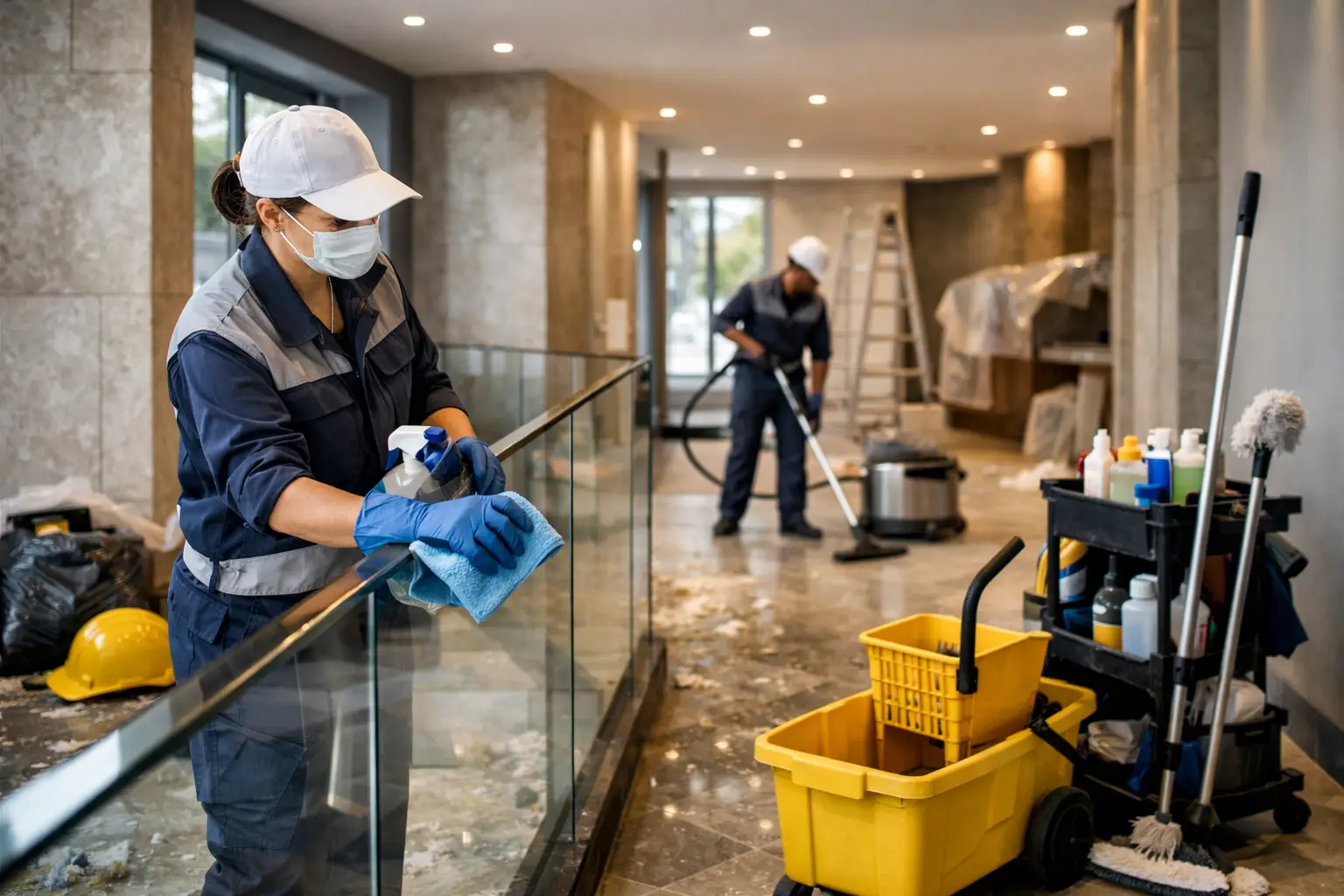
A construction project may be technically complete, yet unusable in practice. Fine dust on surfaces, adhesive residue on windows, leftover debris in common areas, and forgotten scraps in hallways—this is exactly why a post-construction cleaning guide is essential to prevent delays in occupancy and costly rework.
For property managers, general contractors, or maintenance supervisors, the goal isn’t just to "make things clean." The spaces must be presentable, safe, and aligned with the expected finish level. In commercial or multi-unit buildings, poorly executed post-construction cleaning is immediately noticeable.
Why post-construction cleaning isn’t a DIY job
Post-construction cleaning is nothing like routine janitorial work. The mess is more technical, stubborn, and widespread. It’s not just about visible dust—it’s also about fine particles settled on ledges, light fixtures, exposed ducts, frames, moldings, and vertical surfaces.
The biggest risk? Acting too soon or using the wrong products. Moving gypsum dust too quickly can redistribute it elsewhere. A poorly used scraper can scratch new glass or flooring. Starting wet cleaning too early can turn residue into stubborn stains. The quality of the result depends as much on the method as on the effort applied.
Post-construction cleaning guide: the steps that really matter
The first step is assessing the site’s actual condition. Not all construction sites leave the same level of residue. A minor office renovation doesn’t require the same intervention as a complete overhaul of a lobby, retail space, or apartment building. Factors like the type of work done, materials present, expected finish level, and move-in timeline must be considered.
Once the assessment is complete, clearing visible waste comes first. This includes packaging, material scraps, protective coverings, accumulated dust on floors, and other debris that obstructs a clear view of surfaces. While this step seems simple, it sets the stage for everything that follows. Skipping or rushing it makes detailed cleaning ineffective.
Next comes thorough dust removal, working from top to bottom. It’s a basic rule, but one often overlooked. Start with high surfaces—ledges, light fixtures, door frames, shelves, visible ducts, and vertical surfaces—before finishing with floors. The goal is to prevent particles from resettling on already cleaned areas.
Detailed cleaning follows. This is where paint splatters, adhesive residue, silicone, caulking, or fingerprints are removed from finished surfaces. Windows, mirrors, frames, switches, handles, baseboards, moldings, and washrooms require special attention. In commercial spaces or common areas, these details often determine the final perception of the work.
Finally, floor treatment wraps up the process. Depending on the material, this could mean industrial vacuuming, controlled wet washing, light degreasing, or a more intensive restoration. The key here is to adapt the method to the flooring rather than relying on a one-size-fits-all approach.
Commonly overlooked areas after construction
On-site, the same oversights keep recurring. Window tracks, electrical outlet surrounds, door tops, ventilation grilles, cabinet corners, thresholds, and storefront edges easily trap residue. In multi-unit buildings, stairwells, hallways, elevators, and secondary entrances are also critical zones.
These overlooked areas create an unfinished look, even when main spaces appear clean. For commercial property owners, this can affect a client’s first impression. For property managers, it signals rushed delivery. A thorough cleaning is measured precisely in these less visible but highly revealing spots.
What changes based on building type
Offices, condos, and retail spaces don’t share the same priorities. In office environments, the focus is often on quickly making spaces functional, with attention to workstations, interior windows, and high-traffic flooring. In condos or rental buildings, the emphasis shifts to common areas—lobbies, stairwells, landings, and access zones.
In retail, presentation is everything. Storefronts, entryway flooring, and high-touch surfaces must be immaculate. If opening or reopening is imminent, post-construction cleaning becomes directly tied to brand image. The level of expectation rises, as does the need to meet tight deadlines.
Mistakes that waste time and money
The most common error is scheduling cleaning too early. If tradespeople still need to return for touch-ups, part of the cleaning will have to be redone. Conversely, waiting too long can allow some stains to set permanently, especially on windows, joints, or certain finishes.
Another classic mistake is underestimating construction dust. It settles everywhere and continues to shift for hours after work wraps up. Without proper vacuuming and a methodical approach, a space may look acceptable from a distance but fall short on close inspection.
It’s also crucial to avoid using products that aren’t suited for new surfaces. Recent finishes can be more sensitive than expected. Some strippers, abrasive sponges, or improvised scraping tools can cause irreversible damage. The apparent time saved often turns into costly corrections.
Should you handle cleaning in-house or hire a specialist?
It depends on the site type, timeline, and finish expectations. A small cleanup after minor work might sometimes be managed internally if the on-site team is equipped, available, and trained for this type of cleaning. But as soon as surfaces multiply, deadlines tighten, or the building’s image is on the line, limitations quickly become apparent.
A specialized provider brings method above all else. They know how to manage the intervention logic, product selection, material protection, and the level of detail expected at the end of a project. For managers who need to quickly return spaces to rental, operational, or circulation status, this reliability matters more than just executing intensive cleaning.
In Greater Montreal, where delivery schedules are often tight and expectations high for commercial and multi-unit buildings, this difference is immediately noticeable. A specialized company like Nickel & Krome steps in precisely for these contexts—where the goal is to deliver clean, fast, and without improvisation.
How to tell if cleaning is truly complete
A site isn’t ready just because it smells clean or the floors have been washed. It’s ready when surfaces can withstand close inspection. Windows should be clear in natural light. Ledges and moldings shouldn’t release dust when wiped with a finger. Washrooms, handles, frames, and baseboards should show a uniform finish, free of residue or intervention marks.
Consistency across the space also matters. A flawless entrance with dusty corners in the hallway isn’t enough. A clean room with stained doors or grimy tracks gives the impression of incomplete work. At the end of a project, quality is measured in the uniformity of the result.
Preparing the site to simplify final cleaning
Post-construction cleaning actually begins before work wraps up. When zones are better protected, waste is removed as it accumulates, and touch-ups are grouped rather than scattered, the final cleanup becomes faster and more reliable. This coordination reduces double passes and unnecessary rework.
For general contractors and site supervisors, a best practice is to reserve a dedicated window for cleaning at the end of the sequence, without excessive post-cleanup traffic. This prevents a freshly cleaned space from being immediately recontaminated by technical comings and goings.
A good post-construction cleaning job isn’t just about erasing construction traces. It validates the perceived quality of the project, protects the building’s presentation, and eases the real-world activation of the space. When this step is handled methodically, delivery feels effortless—and that’s often the best sign that the work was done right.
Apply this guide to your property
Review the scope, access requirements and service details for Post-construction cleaning for general contractors, developers and phased handovers.